
TL;DR
A 2026 analysis from the Center for Food as Medicine and Longevity assessed onboard drinking water from 21 U.S. carriers between Oct. 1, 2022 and Sept. 30, 2025 and found large differences in water safety by airline. The study says some major airlines scored highly while others and many regional carriers showed troubling results, and it flags limited EPA enforcement of the Aircraft Drinking Water Rule.
What happened
The Center for Food as Medicine and Longevity published a 2026 Airline Water Study that evaluated water quality on 10 major and 11 regional airlines over a three-year period. Researchers assigned each carrier a Water Safety Score from 0.00 to 5.00 using five weighted criteria: violations per aircraft, Maximum Contaminant Level (MCL) E. coli violations, indicator-positive rates, public notices, and how often aircraft water systems were disinfected and flushed. The analysis covered 35,674 sample locations for total coliform bacteria, of which 949 (2.66%) tested positive. The study ranked Delta and Frontier highest, with perfect or near-perfect scores, and placed American Airlines and JetBlue at the bottom among majors. Regional carriers largely scored poorly, though GoJet received the top regional grade. The report also notes 32 MCL E. coli violations across the measured carriers and criticizes the Environmental Protection Agency for rarely imposing civil penalties under the Aircraft Drinking Water Rule.
Why it matters
- Contaminated aircraft water can signal the presence of pathogens that pose acute gastrointestinal risks, particularly for vulnerable passengers and frequent crew.
- Aircraft water systems face operational challenges—stagnation, temperature and pressure changes, and variable sourcing at different airports—that differ from municipal systems and can promote microbial growth.
- The study suggests gaps between regulatory requirements and industry practice, with limited civil penalties potentially reducing enforcement incentives.
- Passengers and crew have limited alternatives inflight, so water quality on aircraft can have direct public health consequences during travel.
Key facts
- Study period: October 1, 2022 through September 30, 2025.
- Sampled locations for total coliform bacteria across all airlines: 35,674; coliform-positive locations: 949 (2.66%).
- Water Safety Scores range from 5.00 (highest) to 0.00 (lowest); a score of 3.5 or above earns a Grade A or B.
- Top-rated major carriers: Delta Air Lines (5.00, Grade A) and Frontier Airlines (4.80, Grade A); Alaska Airlines ranked third (3.85, Grade B).
- Lowest-rated major carriers: American Airlines (1.75, Grade D) and JetBlue (1.80, Grade D).
- Highest-rated regional carrier: GoJet Airlines (3.85, Grade B); lowest regional carrier: Mesa Airlines (1.35, Grade F).
- CommuteAir showed a 33.33% total coliform positive rate according to the study.
- There were 32 Maximum Contaminant Level violations for E. coli identified across the 21-airline sample.
- ADWR requirements cited include periodic testing for coliform and E. coli and disinfection/flushing schedules: four times per year or an alternative of annual disinfection combined with monthly testing.
What to watch next
- Whether the Environmental Protection Agency will increase enforcement or civil penalties under the Aircraft Drinking Water Rule — not confirmed in the source.
- Responses and remediation plans from the lowest-scoring airlines (for example, American Airlines, JetBlue, Mesa) after release of the study — not confirmed in the source.
- Any follow-up studies or expanded testing that track changes in water-safety scores over time nationally — not confirmed in the source.
Quick glossary
- Aircraft Drinking Water Rule (ADWR): A federal rule that requires airlines to monitor and maintain the safety of aircraft drinking water systems, including testing for coliform bacteria and procedures for disinfection and flushing.
- Total coliform bacteria: A group of related bacteria used as an indicator to show whether drinking water might be contaminated and potentially contain disease-causing organisms.
- E. coli (Escherichia coli): A type of bacteria; certain strains indicate fecal contamination and can cause illness. Its presence in water triggers specific regulatory actions.
- Maximum Contaminant Level (MCL): A regulatory threshold set for a contaminant in drinking water; exceeding an MCL constitutes a violation and prompts mandated responses.
Reader FAQ
Which U.S. airlines had the safest onboard water in the study?
The study rated Delta Air Lines (5.00) and Frontier Airlines (4.80) highest among major carriers; Alaska and GoJet also received relatively high marks.
Are passengers required to be provided with safe drinking water on flights?
Yes. The Aircraft Drinking Water Rule requires airlines to provide safe drinking water and to test for coliform bacteria and E. coli, with specified disinfecting and flushing schedules.
Did the study find the EPA enforcing penalties for violations?
The report states that civil penalties from the EPA for ADWR violations remain extremely rare and criticizes weak enforcement; specific recent penalty actions are not detailed.
Should I drink tap water on a plane?
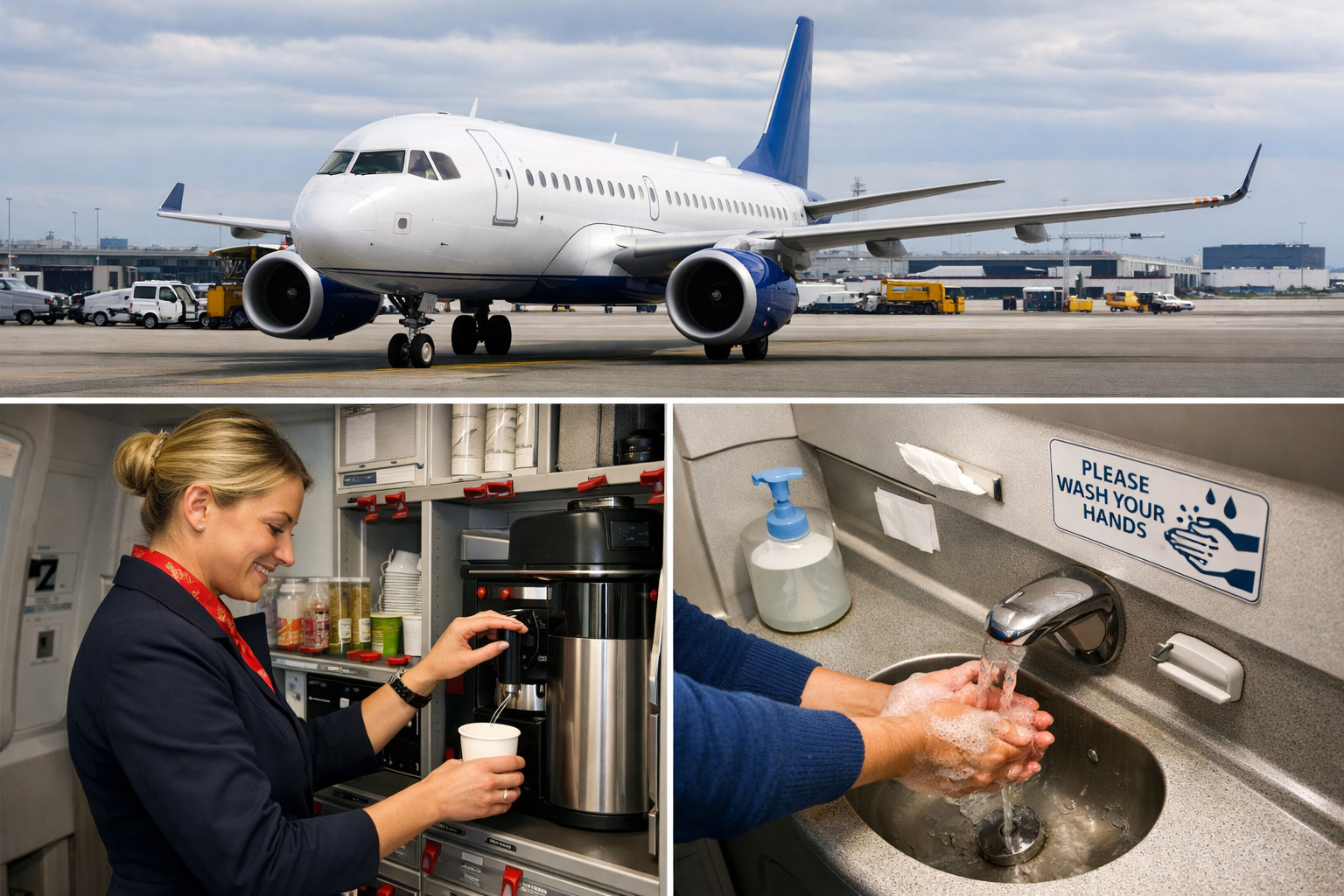
The study's bottom-line advice recommends avoiding any onboard water that is not in a sealed bottle, not drinking coffee or tea made onboard, and using alcohol-based hand sanitizer instead of washing hands with lavatory tap water.
Twitter Facebook LinkedIn Gmail Share A 2026 Airline Water Study released today by the Center for Food as Medicine and Longevity reveals that the quality of drinking water varies significantly…
Sources
- Quality of drinking water varies significantly by airline
- Airline Water Study 2026 FAQs —
- Airline Water Study Raises Concerns for New Year Flyers …
- Is airplane water safe to drink? As a cosmetologist raises …
Related posts
- Coase’s Penguin: Linux, the Nature of the Firm and Open Collaboration
- New York’s mayor-elect bars Raspberry Pi from inauguration block party
- Research: Honey Detects Testers and Conceals Affiliate Network Violations