
TL;DR
A year-end essay by Tyler Dane lists 77 activities developers can stop doing in 2026 to free up time and attention, plus four acts the author warns cannot be avoided. The piece groups avoidable items into work and life categories and frames reduction as a route to achieving priorities.
What happened
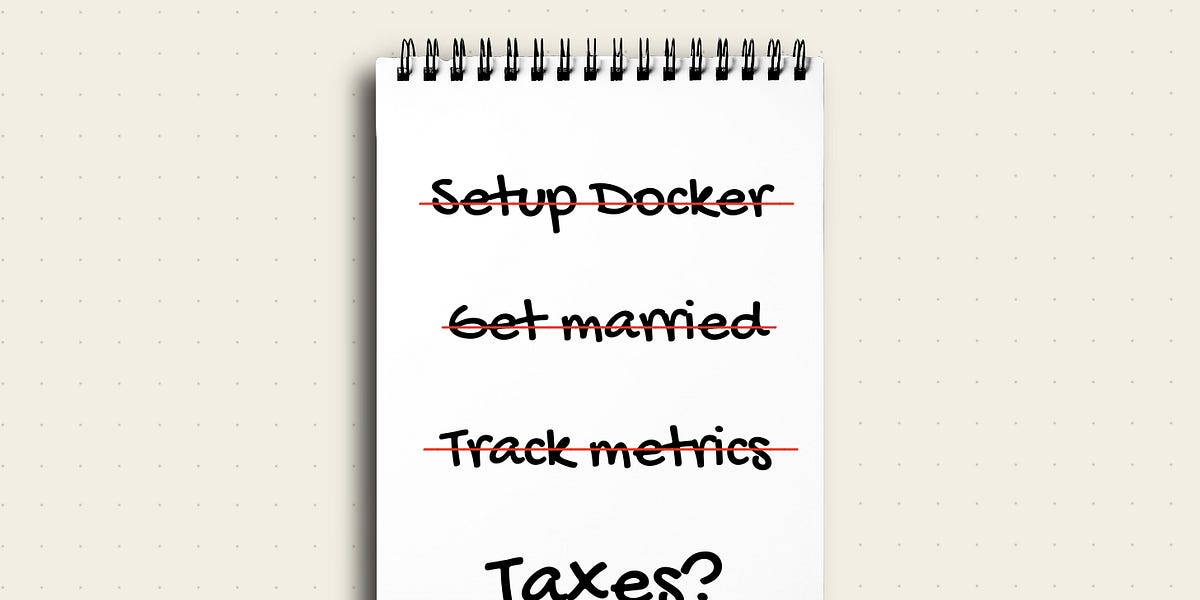
On Dec. 28, 2025, Tyler Dane published a checklist-style essay aimed at software developers proposing a broad pruning of habits and commitments for 2026. The post argues that doing less creates space for goals and offers a concrete inventory: 43 work-related items developers can drop (examples include maintaining a separate portfolio, chasing every new framework, or shipping on all device platforms), 34 personal-life activities to avoid (from constant social media consumption to buying new phones or tracking calories), and four actions labeled as unavoidable (including taxes and certain legal obligations). The author frames the list as permissive—readers may keep activities they enjoy—but emphasizes that pleasure is not the same as productivity. The piece closes by inviting suggestions for additional things to cut from one’s calendar or codebase.
Why it matters
- Encourages prioritization: the list reframes productivity as subtraction rather than addition.
- Highlights common industry distractions developers may be able to drop to reclaim time.
- Separates optional habits from legally or financially necessary obligations.
- Provides a practical prompt for individuals and teams to audit recurring work and personal commitments.
Key facts
- The author, Tyler Dane, published the piece on Dec. 28, 2025.
- The checklist is divided into three sections: 43 work items to avoid, 34 life items to avoid, and 4 items that cannot be avoided.
- Work examples include avoiding premature performance tuning, skipping microservices, and not adding every AI feature to products.
- Marketing and operations items listed to drop include building a personal brand, attending conferences, creating an LLC, and formalizing OKRs.
- Life examples include avoiding constant news and social media, skipping phone upgrades, not buying a house, and opting out of certain social obligations.
- The author urges readers to retain activities done for pleasure but warns that pleasure-focused time competes with goal-oriented work.
- The four unavoidable items listed link legal and financial obligations to severe consequences (e.g., taxes and honesty with investors tied to criminal risk in the author’s framing).
What to watch next
- Whether developers or teams widely adopt similar reductionist checklists in 2026 — not confirmed in the source.
- If companies adjust standard practices (like mandatory cross-platform shipping or formal OKRs) in response to individual downsizing trends — not confirmed in the source.
- Any community reactions or pushback to the specific items included in the list (e.g., microservices, AI features) — not confirmed in the source.
Quick glossary
- Microservices: An architectural approach that structures an application as a collection of small, independent services communicating over APIs.
- Canary deployment: A release strategy that rolls out changes to a small subset of users before broader distribution to detect problems earlier.
- A/B testing: A technique for comparing two versions of a webpage or feature to determine which performs better on a chosen metric.
- SSO / OAuth: Authentication protocols and standards that let users access multiple applications with a single set of credentials or authorize third-party access.
- OKRs: Objectives and Key Results, a goal-setting framework used to define measurable goals and track outcomes.
Reader FAQ
Who wrote the list and when was it published?
Tyler Dane authored the piece, published Dec. 28, 2025.
Is this a mandatory industry standard?
Not confirmed in the source; the essay presents recommendations and personal guidance rather than formal rules.
Are the items evidence-based or researched?
Not confirmed in the source.
What are the explicitly unavoidable items?
The post names four unavoidable items, framing taxes and honesty with investors as legal obligations and warning that offering or asking for key resources can lead to insolvency if mishandled.
Discover more from Fullstack Engineer How to ship like crazy … without being miserable Subscribe By subscribing, I agree to Substack's Terms of Use, and acknowledge its Information Collection Notice…
Sources
- Things Developers Can Avoid in 2026
- As Coders Adopt AI Agents, Security Pitfalls Lurk in 2026
- The inevitable rise of poor code quality in AI-accelerated …
- What You Should Focus on in 2026 to Be a Better Developer
Related posts
- Scientists Find Beer Bottle at Challenger Deep, Earth’s Deepest Ocean Point
- Engineered Beige Fat Cells Implanted to Outcompete and Starve Tumors
- C++ says “We have try…finally at home” — cleanup via destructors and scope guards