
TL;DR
Construction on New York City's Tunnel No. 3, started in 1970, has reached advanced stages and already supplies the Bronx and Manhattan. The final phase will extend service to Brooklyn and Queens, with full completion and final Queens shafts expected by 2032, enabling long-delayed repairs on older tunnels.
What happened
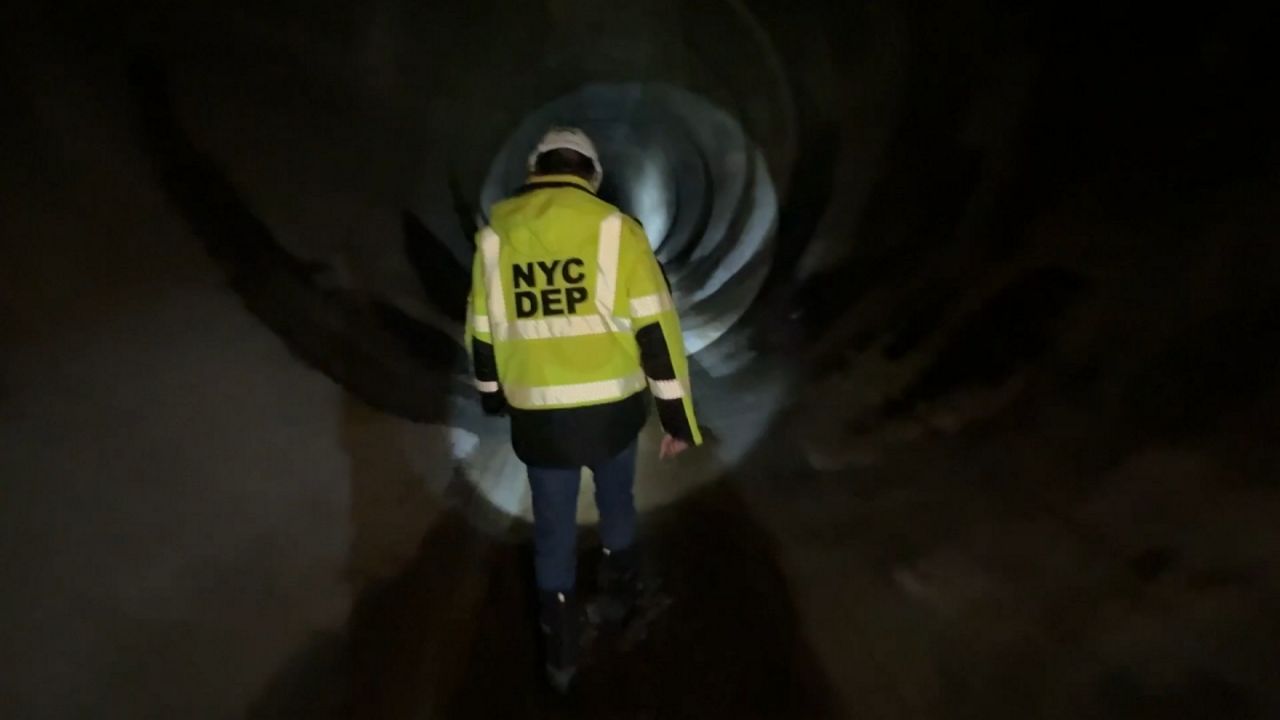
A decades-long effort to expand New York City's subsurface water system is approaching its final stretch. Tunnel No. 3, whose construction began in 1970, is substantially built and currently delivers water to the Bronx and Manhattan. City officials from the Department of Environmental Protection recently inspected the worksite, descending nearly 800 feet to view sections of the lined tunnel and observe crews finishing concrete lining and other sealing work. The tunnel was bored using a tunnel boring machine, after which engineers applied several feet of concrete to create a watertight conduit. The remaining work focuses on extending service to Brooklyn and Queens; city planners expect the last two shafts in Queens and the overall project to be finished by 2032. Once Tunnel No. 3 is fully operational, the DEP will be able to take the city’s older water tunnels offline for much-needed repairs.
Why it matters
- Secures continued delivery of clean upstate reservoir water to millions of residents.
- Allows long-postponed maintenance on Tunnel 1 (1917) and Tunnel 2 (1936), improving system reliability.
- Reduces operational risk by providing an additional, modern conduit through the city.
- Represents a long-term infrastructure investment intended to serve the city for generations.
Key facts
- About 95% of NYC’s water supply enters the city via three water tunnels.
- Tunnels 1 and 2 were completed in 1917 and 1936, respectively.
- Construction on Tunnel No. 3 began in 1970 and has taken roughly 62 years to reach this stage.
- Tunnel No. 3 already carries water to the Bronx and Manhattan.
- The final phase will extend service to Brooklyn and Queens, with completion expected by 2032.
- The last two shafts in Queens are slated to be finished by 2032.
- DEP officials Rohit Aggarwala and Lauren D’Attile inspected progress, descending nearly 800 feet.
- A tunnel boring machine was used to excavate the tunnel, which was then lined with a couple of feet of concrete to make it watertight.
- Completion will allow the DEP to take older tunnels offline for repairs.
What to watch next
- Progress on the final two shafts in Queens and the 2032 completion timeline.
- When the DEP begins taking Tunnels 1 and 2 offline for scheduled repairs.
- not confirmed in the source
Quick glossary
- Tunnel boring machine (TBM): A large mechanized device used to excavate tunnels by cutting through earth and rock while minimizing surface disruption.
- Water tunnel: An underground conduit built to convey potable water across long distances and under urban areas.
- Shaft: A vertical passage that provides access to an underground tunnel for construction, maintenance, or ventilation.
- Department of Environmental Protection (DEP): The city agency responsible for managing water supply, wastewater, and related infrastructure in New York City.
Reader FAQ
When did construction on Tunnel No. 3 begin?
Construction started in 1970.
Which boroughs currently receive water from Tunnel No. 3?
The Bronx and Manhattan are already receiving water from the tunnel.
When is the tunnel expected to be fully completed?
The final phase, including the last shafts in Queens, is expected to finish by 2032.
Will completion of Tunnel No. 3 allow repairs on older tunnels?
Yes. Once Tunnel No. 3 is fully operational, the DEP can take the older tunnels offline for repairs.
HUMAN INTEREST 62 years in the making: NYC’s newest water tunnel nears the finish line BY ROGER CLARK NEW YORK CITY PUBLISHED 6:45 AM ET NOV. 10, 2025 Turn on…
Sources
- 62 years in the making: NYC's newest water tunnel nears the finish line
- After 62 years, NYC's third water tunnel nears completion
- New York City Water Tunnel No. 3 | Ground Freezing
Related posts
- Slaughtering Competition Problems with Quantifier Elimination in Sage
- Unity’s Mono runtime falls behind modern .NET — why your C# runs much slower
- Parsing IP Addresses Quickly and Portably – Without SIMD Magic Techniques