
TL;DR
Public complaints mix factual critique with emotional regulation; addressing only facts often fuels escalation. Take responsibility first, listen, and respond with clear ownership or a straightforward apology rather than sharp rebuttals.
What happened
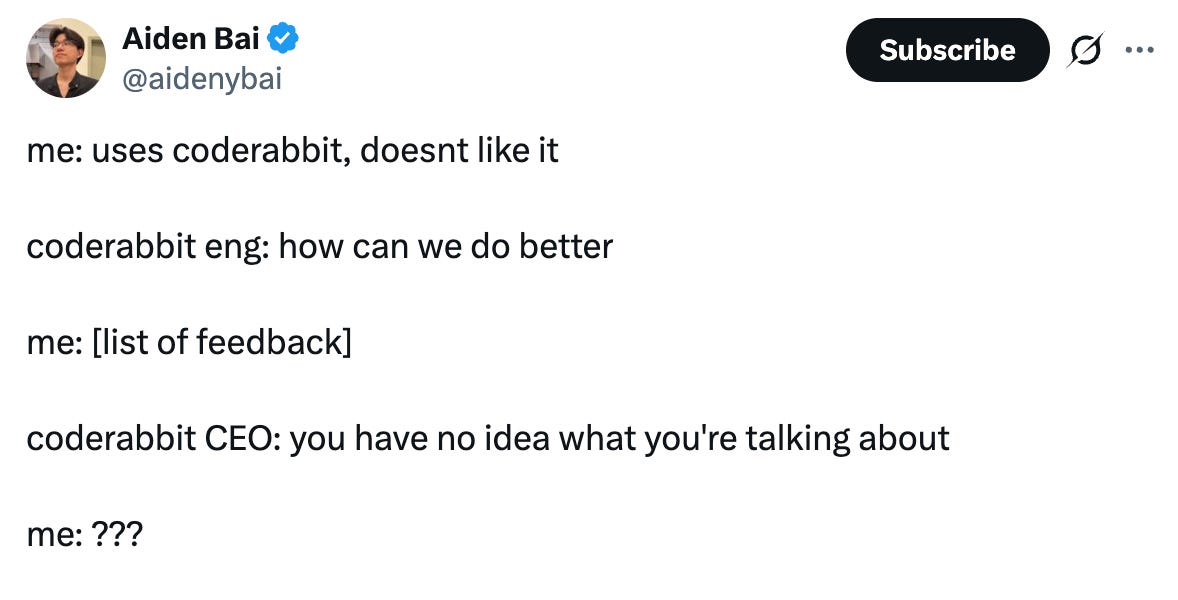
Public negative feedback can rapidly spiral when a company treats the comment as a factual attack to be defended rather than as a signal that someone feels unheard. The author frames feedback as a kind of social regulator: people try to correct what they perceive as an imbalance in reputation. When a product team or founder pushes back, that resistance usually provokes the original critic to strengthen their position and invite onlookers to take sides. The piece illustrates this with a recent exchange involving CodeRabbit: an engineer initially asked for specifics and a user replied with details. The company’s CEO then replied in a way that belittled the user and indie developers, suggesting the user didn’t understand the product and implying the feedback didn’t matter. The response intensified negative reaction, produced wider bad sentiment and created opportunity for rivals. The CEO later issued a partial apology that the author characterizes as insufficient. The columnist uses the episode to recommend different response tactics for founders and teams.
Why it matters
- Pushing back on public complaints often makes critics escalate and draws sympathies to them from observers.
- Separating emotional frustration from the informational content of feedback is necessary to resolve issues constructively.
- A tone of accountability reduces ammunition for attack and can prompt critics to soften or retract.
- Poorly handled responses can harm brand perception and create competitive openings.
Key facts
- The author compares public feedback to a regulator that corrects perceived misalignment in reputation.
- Complaints typically combine substance (facts about the product) and emotion (a desire to be heard); both must be addressed.
- Rejecting or rebutting substantive customer feedback tends to force critics to defend and escalate their claims.
- In the CodeRabbit example, an engineer invited feedback, a user supplied details, and the company CEO answered in a dismissive and insulting tone.
- That CEO reply aggravated the situation, generated negative sentiment, and reportedly benefitted competitors.
- The CEO later issued a partial apology described in the piece as an 'apologish'—a response that mixed apology with further caveats.
- Recommended tactics include aligning on shared principles first, over-indexing on accountability, explaining calmly instead of defending, and offering concise remediation steps when appropriate.
- The author notes that sometimes feedback is bad-faith trolling and calls for a different handling approach in those cases.
What to watch next
- Whether the public criticism softens if the company demonstrates genuine openness and ownership (not confirmed in the source).
- If competitors gain traction as a result of the negative exchange — the article frames that outcome as a likely short-term effect.
- Whether the company follows through on promised fixes and communicates concrete steps to prevent recurrence (not confirmed in the source).
Quick glossary
- Public feedback: Comments or complaints about a product or company made in publicly visible forums such as social media, issue trackers, or community channels.
- Escalation: The process by which a dispute grows in intensity, often involving stronger language, additional evidence, or more participants.
- Accountability: Accepting responsibility for problems, explaining what went wrong, and committing to corrective actions.
- Bad-faith trolling: Comments intended to provoke or harm rather than to provide constructive feedback.
Reader FAQ
Should you always apologize when a customer complains publicly?
Not always; the author advises a plain, proportional apology when warranted, but also says it’s acceptable to decline an apology if the complaint is bad-faith.
Is it ever smart to rebut a public complaint immediately?
Generally no for substantive customer feedback—initial rebuttals tend to escalate; sometimes ignoring or fighting back is appropriate for clear bad-faith attacks.
What’s the first thing to do when you see a harsh public critique?
Start by listening and acknowledging principles you share with the critic (e.g., quality matters), then take responsibility and offer a calm, explanatory response if needed.
Will a sincere apology always fix the reputation damage?
not confirmed in the source
Discover more from Flack A new playbook for communications Subscribe By subscribing, I agree to Substack's Terms of Use, and acknowledge its Information Collection Notice and Privacy Policy. Already have…
Sources
- When someone says they hate your product
- Turning Hate Comments Into Sales: The Counterintuitive …
- How to respond to negative comments
- How to Monitor & Respond to Negative Comments on …
Related posts
- USPS finalizes DMM rule redefining postmark dates and possession
- Left Behind: Futurist Fetishists, Prepping and Earth’s Abandonment
- Why the Future of Software Development Still Depends on Developers