
TL;DR
A Singapore longitudinal study found that higher screen use before age two was associated with faster specialization of visual–cognitive brain networks, slower decision-making in childhood, and increased anxiety symptoms in adolescence. Parental reading and engagement appeared to weaken that association.
What happened
Researchers in Singapore followed 168 children drawn from a larger birth cohort to explore connections between early screen exposure, brain development, and later behavior. Parents reported how much screen time infants had before age two; the children underwent MRI scans at roughly 4.5, 6 and 7.5 years to track brain network changes. At 8.5 years the cohort completed cognitive tests measuring decision-making speed, and at 13 years they filled out an anxiety questionnaire. The team found that greater screen exposure in infancy correlated with an accelerated maturation of the brain networks involved in visual processing and cognitive control. That accelerated specialization was linked to slower decision times in childhood and, in turn, higher anxiety symptom scores in the teenage years. The study also reported that frequent parent-child reading at age three reduced the strength of the association between infant screen time and altered brain development.
Why it matters
- Early patterns of screen exposure may influence the timing and organization of brain networks with effects that appear years later.
- Changes in decision-making speed and increased anxiety symptoms could have implications for educational and mental health support for affected children.
- Observed infant screen use in the study exceeded World Health Organization recommendations, highlighting a possible public health concern.
- Parental engagement activities such as reading may help mitigate associations between early screens and later developmental differences.
Key facts
- Study cohort: 168 children selected from the larger GUSTO birth study.
- GUSTO has followed over 1,400 mother–child pairs since 2009.
- Infant screen exposure was measured by parent self-report for children before age two.
- MRI scans were taken at approximately ages 4.5, 6, and 7.5 to assess brain network development.
- Cognitive decision-making tests were administered at 8.5 years; anxiety symptoms were measured at 13 years.
- Researchers reported accelerated maturation of the visual–cognitive control network in children with higher early screen time.
- Children with faster specialization in those networks showed slower decision-making in childhood and higher adolescent anxiety scores.
- Researchers noted infants in the cohort averaged more than one to two hours of daily screen time, and that data were collected between 2010 and 2014.
- Authors involved were primarily affiliated with Singapore’s A*STAR Institute for Human Development and Potential.
What to watch next
- Replication of these findings in other populations and larger samples — not confirmed in the source.
- Intervention trials testing whether increased parent-child reading or other engagement can prevent the observed brain and behavioral associations — not confirmed in the source.
- Policy responses or updated public-health guidance on infant screen exposure in light of rising device use since the data collection period — not confirmed in the source.
Quick glossary
- Cohort study: A research design that follows a group of people who share a common characteristic over time to observe outcomes and associations.
- MRI (magnetic resonance imaging): A medical imaging technique that uses magnetic fields and radio waves to create detailed pictures of internal structures, often used to study brain anatomy and connectivity.
- Visual–cognitive control network: A set of brain regions involved in processing visual information and supporting cognitive functions such as attention and decision-making.
- World Health Organization (WHO) guidelines: Public-health recommendations issued by WHO; in this context they advise against sedentary screen time for 1‑year‑olds and limit for very young children.
Reader FAQ
Does the study prove screens cause anxiety or slower decisions?
Not confirmed in the source; the paper reports associations linking early screen exposure with brain changes, slower decision-making, and higher adolescent anxiety, but causation is not explicitly claimed.
How much screen time did infants in the study have?
The cohort averaged more than one to two hours of daily screen time in infancy, according to the paper.
Can parents reduce the risk?
The study reported that frequent parent–child reading at age three weakened the link between infant screen time and altered brain development.
Was this research done worldwide?
Not confirmed in the source; the study was conducted by researchers in Singapore using children from the GUSTO cohort.
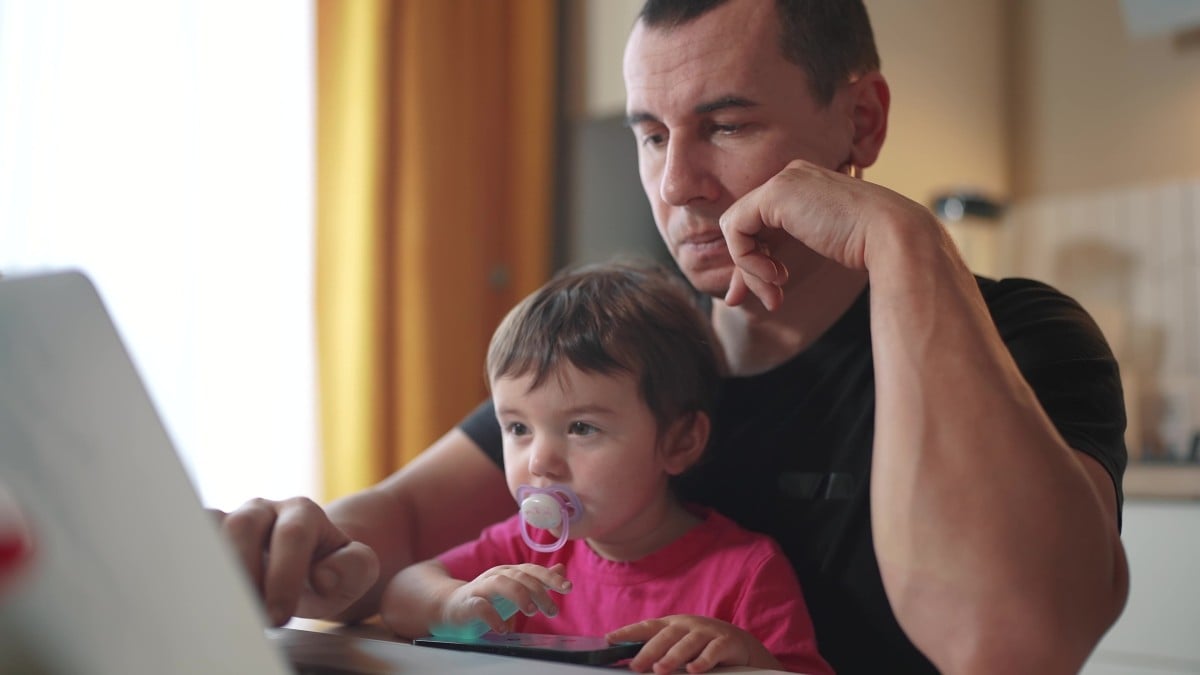
SCIENCE iPad kids are more anxious, less resilient, and slower decision makers The solution? Lock up the screens and read to your kids Brandon Vigliarolo Tue 30 Dec 2025 // 20:40 UTC If you're…
Sources
- iPad kids are more anxious, less resilient, and slower decision makers
- Infant screen exposure linked to slower decision-making, teen …
- Babies with too much screen time may become anxious …
- Singapore Study Links Heavy Infant Screen Time To Teen …
Related posts
- Samsung’s Galaxy Tab A11+ headed to US with seven years of updates
- Stranger Things creator urges viewers to disable ‘garbage’ TV settings
- TrendForce: 2026 notebook shipments to decline; Apple seen better positioned