
TL;DR
The author, once an early adopter of generative AI, says AI-generated music has permeated personal playlists and social feeds. Free tools like Suno let users, including children, create convincing full songs, raising concerns about authenticity, cultural context, and dependence on automated creativity.
What happened
A features writer says she recently discovered that some of the tracks she and her relatives replay most are not performed by humans but produced by generative systems. She describes how a family member used Suno — a free music-generation app available on the web and Google Play — to turn short text prompts or uploaded audio into complete songs with verses, harmonies and arrangements. The app stores tracks in a personal library and offers a discovery feed where users share creations, remix them and generate variations. Quick, polished output from such tools has led to viral items on platforms like TikTok and YouTube, including an afrobeat cover tied to a trending sound and purported artists such as Xania Monet, who has been linked to large streaming numbers and radio play. The author frames this as compressing long, human creative processes into minutes, and says she is deliberately stepping back from certain intelligent features after previously using AI tools for things like headshots.
Why it matters
- AI music tools can replicate trained vocal styles and production quickly, blurring lines between human and machine creativity.
- Rapid, low-cost content generation risks eroding the cultural and emotional context that typically informs artistic work.
- Widespread use by young, inexperienced users means powerful creative tools are accessible without traditional gatekeeping or ethical oversight.
- Dependence on AI features can encourage outsourcing of judgment and reduce engagement with imperfect, human-made processes.
Key facts
- The author found non-human-generated tracks among her most-played songs and noted a relative’s favorite artist was not real.
- Suno is available on the Google Play Store and on the web and can generate full songs from text prompts or uploaded audio.
- Generated songs in Suno appear in a user library, can be replayed, remixed, and new variations produced.
- A 12-year-old family member reportedly created multiple polished tracks within minutes using the app.
- AI-created sounds have spread on social platforms; one TikTok-linked afrobeat cover crossed 200,000 views under a single video.
- The piece cites a non-existent artist, Xania Monet, reported to have been featured on the Billboard radio airplay chart and to have amassed over 44 million official U.S. streams.
- The author argues AI tools collapse a months-long, layered human creative process — including emotional labor and cultural input — into short automated outputs.
- The writer references Jean Baudrillard’s Simulacra and Simulation to describe a shift where representations may replace reality.
- The author previously used AI tools for headshots but is now limiting their use to avoid overreliance.
What to watch next
- Regulatory responses to AI music-generation apps: the author notes such apps often attract scrutiny and may face bans or regulation.
- The prevalence of AI-generated artists and tracks on streaming platforms and social feeds, and how platforms label or moderate them.
- Long-term cultural and legal consequences for rights, credits and attribution — not confirmed in the source.
Quick glossary
- Generative AI: A class of machine-learning systems that produce new content—text, images, audio or video—based on patterns learned from training data.
- Suno: A music-generation application (available on web and Google Play) that can create full songs from text prompts or uploaded audio and offers a discovery feed and library features.
- Discovery feed: A social-style stream within an app where users publish, find and interact with new content and creations.
- Simulacra: A concept (associated with Jean Baudrillard) describing representations that may come to replace or stand in for reality rather than merely depicting it.
Reader FAQ
Can AI generate full songs that sound professional?
According to the source, tools like Suno can produce complete tracks with verses, harmonies and production quickly from prompts or uploaded audio.
Are fake or non-existent artists appearing on charts and streams?
The article cites examples of purportedly non-existent artists appearing on streaming tallies and being linked to radio airplay and tens of millions of official U.S. streams.
Will these music-generation apps be regulated or banned?
The author suggests such apps typically draw scrutiny and may be subject to bans or regulation, but specific outcomes are not guaranteed.
How are creators responding personally?
The writer says she is stepping back from some intelligent features and purposely avoiding overreliance; broader industry responses are not confirmed in the source.
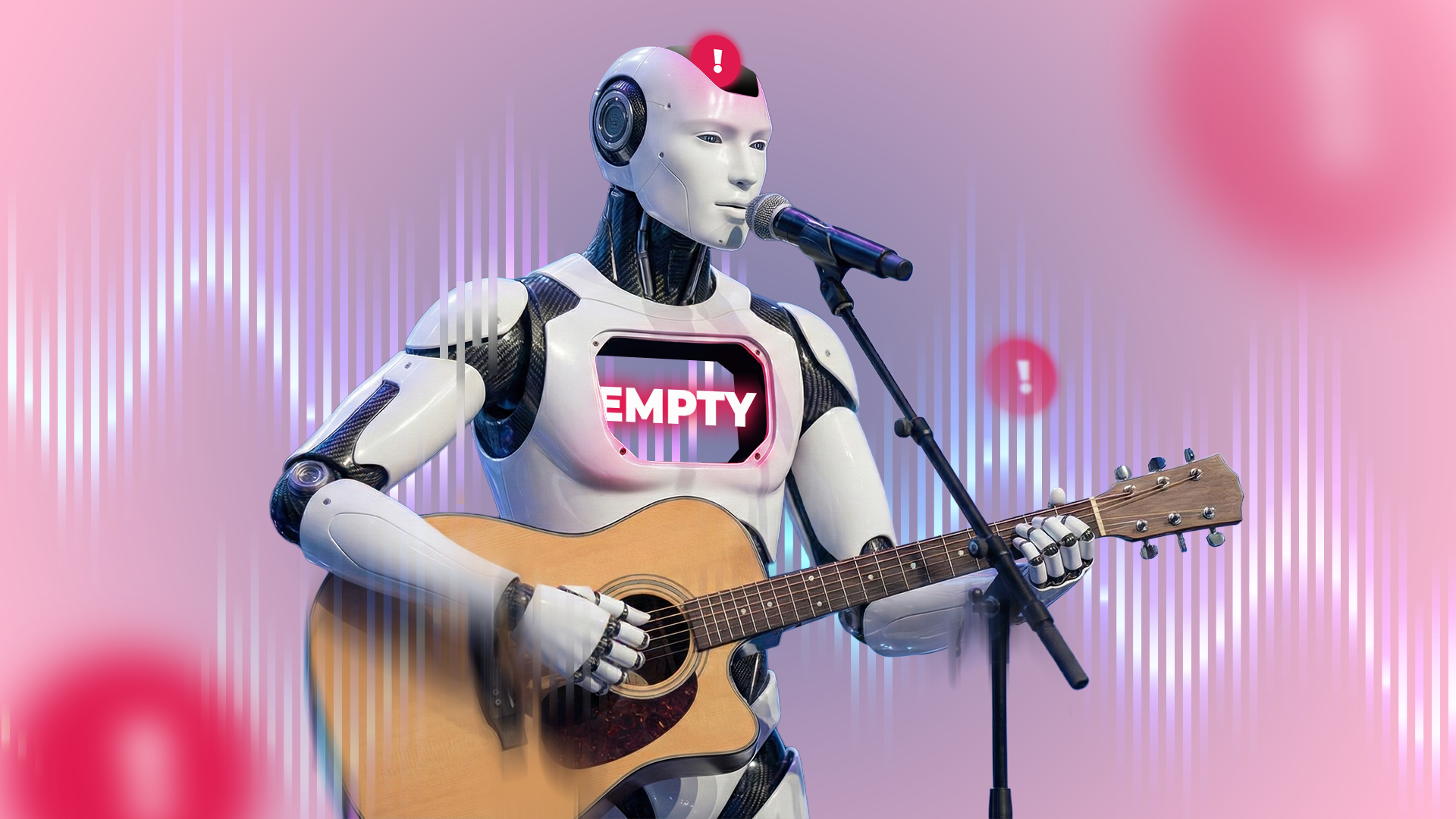
I was pro-AI until it started sounding a lot human — I'm worried about the future Credit: Lucas Gouveia / Android Police By Irene Okpanachi Published 17 minutes ago Irene Okpanachi…
Sources
- I was pro-AI until it started sounding a lot human — I'm worried about the future
- Generative AI is the greatest risk to the human creative …
- Musicians are deeply concerned about AI. So why …
- AI and the Sound of Music
Related posts
- How I Let Gemini Build My Google Slides — A Faster Way to Present
- AI Wingmen Can’t Mimic Flirting — Why In-Person Cruising Persists
- Industrial software: AI is turning software development into mass production