
TL;DR
Warren Buffett has relinquished the CEO role at Berkshire Hathaway after six decades, handing operational control to Greg Abel while staying on as chairman. Abel inherits a $1-trillion conglomerate facing slower growth and investor pressure over a $382 billion cash reserve.
What happened
On Dec. 31, 2025, Warren Buffett stepped down as chief executive of Berkshire Hathaway after roughly 60 years running the company, elevating Greg Abel to CEO. Buffett will remain as chairman and intends to continue coming into the office daily to assist with investment sourcing and to advise Abel as requested. Abel has overseen Berkshire’s noninsurance businesses since 2018 and now takes broader responsibility for the conglomerate’s direction. Company leaders stress that the firm’s decentralized model, which grants autonomy to operating units, will continue. Abel has already made some leadership moves — including the departure of investment manager and Geico CEO Todd Combs and the retirement of CFO Marc Hamburg — and named NetJets CEO Adam Johnson to run consumer, service and retail operations. The transition places Abel in charge of steering a vast enterprise that has ample cash on hand but has encountered slower growth and limited acquisition opportunities.
Why it matters
- Marks the end of a six-decade CEO tenure that defined Berkshire’s investing and acquisition strategy.
- New CEO must decide how to deploy a $382 billion cash balance amid few compelling large acquisition targets.
- Maintaining the conglomerate’s decentralized operating model is central to retaining current subsidiary leadership and performance.
- Leadership shifts could prompt renewed investor debate over dividends, buybacks or other shareholder returns.
Key facts
- Warren Buffett stepped down as Berkshire Hathaway CEO on Dec. 31, 2025 after about 60 years in the role.
- Greg Abel, who ran Berkshire’s noninsurance businesses since 2018, is the new CEO.
- Buffett will stay on as chairman and plans to continue daily office visits to advise on investments.
- Berkshire Hathaway is valued at about $1 trillion and holds approximately $382 billion in cash.
- Buffett’s personal holding of Berkshire stock is estimated at roughly $150 billion; he has given away about $60 billion over the last 20 years.
- Berkshire’s businesses include major insurance operations, utilities, manufacturers and a railroad; insurance premiums exceed $175 billion.
- Recent acquisition: the roughly $9.7 billion purchase of OxyChem, which analysts say is unlikely to meaningfully shift profits.
- Abel has shown a more hands-on management style while still preserving autonomy for acquired companies.
- Leadership changes announced recently include Todd Combs’ departure, CFO Marc Hamburg’s retirement, and Adam Johnson’s appointment to lead consumer, service and retail operations.
- Buffett currently controls nearly 30% of voting power in Berkshire stock; that influence is expected to diminish after his death as shares are distributed to charity according to prior plans.
What to watch next
- Whether Abel will begin returning cash to shareholders via dividends or a formal buyback program if acquisition options remain limited.
- Any further executive turnover or restructuring following recent departures in investment and finance leadership.
- How Abel balances a potentially more traditional managerial approach with Berkshire’s longstanding decentralized culture.
- Investor reaction to Abel’s acquisition strategy and performance versus historical Berkshire returns.
Quick glossary
- Conglomerate: A large corporation composed of diverse business units operating across different industries under a single parent company.
- Dividend: A payment made by a company to its shareholders, typically from profits or retained earnings.
- Share repurchase (buyback): When a company buys back its own shares from the market, reducing outstanding shares and potentially boosting per-share metrics.
- Decentralized management: An organizational approach that grants significant autonomy to subsidiary managers rather than centralizing decision-making at headquarters.
- Insurance premiums: Payments collected by insurers from policyholders in exchange for risk coverage; these funds can be invested until claims are paid.
Reader FAQ
Who is now CEO of Berkshire Hathaway?
Greg Abel has been named CEO; he previously ran Berkshire’s noninsurance businesses since 2018.
Is Warren Buffett leaving Berkshire Hathaway entirely?
No. Buffett stepped down as CEO but remains chairman and plans to continue coming into the office daily to advise and help spot investments.
Will Berkshire start paying regular dividends now?
Not confirmed in the source.
How large is Berkshire’s cash position?
The company holds about $382 billion in cash, creating pressure to find productive uses or consider shareholder returns.
Will Berkshire’s decentralized operating model change under Abel?
Company leaders have said the decentralized culture will endure, though some management practices may evolve under Abel.
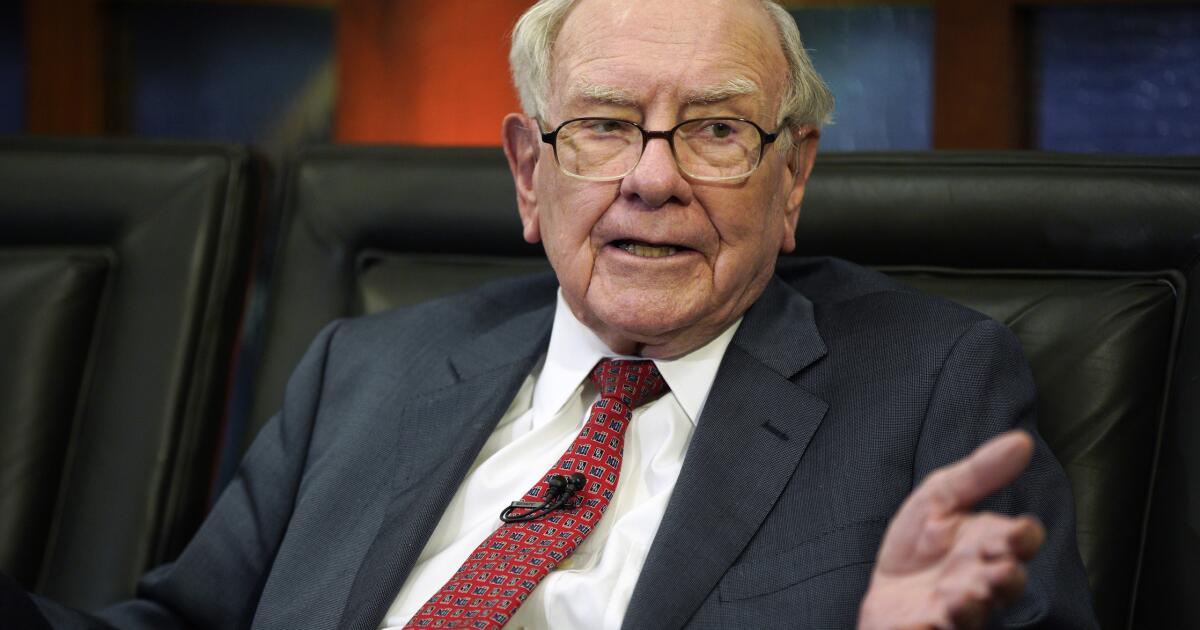
Warren Buffett speaks during an interview in Omaha. (Nati Harnik / Associated Press) By Josh Funk Dec. 31, 2025 6:43 AM PT 1 6 min Click here to listen to…
Sources
- Warren Buffett steps down as Berkshire Hathaway CEO after six decades
- Warren Buffett retires as Berkshire Hathaway CEO
- Warren Buffett's last day as Berkshire CEO puts focus back …
- Warren Buffett's Last Day as CEO of Berkshire Hathaway. …
Related posts
- Stewart Cheifet, creator of Computer Chronicles, dies at 87 in Philadelphia
- Founders Tade Oyerinde and Teddy Solomon on building engaged audiences
- Hacker News thread: users share New Year greetings and a project milestone