
TL;DR
WIRED updated its annual roundup of fitness trackers in January 2026 after testing dozens of devices across activities like running, hiking, and home workouts. Top picks include the Garmin Vivoactive 6, Oura Ring 4, Whoop MG, Dexcom Stelo CGM, and Withings' U-Scan Nutrio.
What happened
WIRED's gear team published an updated buyer's guide to activity trackers, removing older models and adding new devices such as Withings' U-Scan Nutrio and the Dexcom Stelo continuous glucose monitor. Reviewers evaluated trackers across a range of real-world activities — from trail running and climbing to at-home workout videos — and assessed comfort, sensors, software, and ecosystem ties. Garmin's Vivoactive 6 earned the outlet's top overall recommendation for its cross-platform compatibility, onboard satellite connectivity, bright AMOLED display, and suite of health metrics. Oura's Ring 4 scored highly for sleep and daily readiness tracking and has expanded features through Oura Labs and a Quest Diagnostics partnership. Whoop's MG and new membership tiers target users seeking deeper biometrics, including ECG and a blood-pressure algorithm. The guide also notes testing in progress for other contenders, such as the Coros Pace 4.
Why it matters
- Trackers now span multiple form factors (watches, rings, screenless bands, toilet-embedded sensors), so users can pick devices that fit lifestyle and aesthetic preferences.
- More products are integrating medical-style measurements — for example, continuous glucose monitoring and laboratory blood panels — blurring lines between consumer wearables and clinical testing.
- Subscription models increasingly gate advanced features; buyers should weigh recurring fees against included functionality.
- Cross-device compatibility and data integrations (e.g., CGMs linking with rings or watches) affect how useful a tracker will be within a person's existing app ecosystem.
Key facts
- Top overall pick: Garmin Vivoactive 6 (listed price $300, shown discounted to $250 in the feature).
- Garmin Vivoactive 6 supports iOS and Android, includes onboard satellite connectivity, AMOLED display, sleep and SpO2 monitoring, incident detection, and battery life up to 11 days; Garmin offers an optional Connect+ subscription for $70/year.
- Oura Ring 4 scored 9/10 from WIRED reviewers, offers up to eight days of battery life, 10 ATM water resistance, recessed sensors, and experimental Oura Labs features; some capabilities are behind a $6/month membership.
- Whoop MG received an 8/10 recommendation; it is screenless, smaller than previous models, rated IP68, lists battery life up to 14 days, and adds ECG and a blood-pressure algorithm that requires calibration with a cuff; advanced features require the top Whoop Life membership tier.
- Whoop and Oura both sell laboratory blood panels; Whoop's tests cover about 65 biomarkers and are priced higher than Oura's (example pricing: Whoop blood-panel options listed at $199, $349, and $599 for varying frequencies).
- Dexcom Stelo, a continuous glucose monitor, is priced at $99 in the guide; CGMs were originally approved for diabetics and are now sold commercially, with sensors wearing for roughly two weeks before replacement.
- WIRED removed older picks in the update, added the U-Scan Nutrio, and notes active testing of the Coros Pace 4.
What to watch next
- Ongoing testing of the Coros Pace 4 (confirmed in the source).
- Further rollout and adoption of toilet-embedded biomarker scanners like Withings' U-Scan Nutrio (confirmed in the source).
- Not confirmed in the source: long-term clinical validation timelines for consumer blood panels and blood-pressure algorithms.
Quick glossary
- Fitness tracker: A wearable device that records exercise and health metrics such as steps, heart rate, sleep, and activity levels.
- Continuous glucose monitor (CGM): A small sensor worn on the body that measures glucose levels in real time and transmits data to an app or compatible device.
- ECG (electrocardiogram): A recording of the heart's electrical activity, used to detect certain cardiac conditions or irregularities.
- SpO2 (blood oxygen): An estimate of the percentage of oxygen-saturated hemoglobin in the blood, often measured by optical sensors in wearables.
- Incident detection: A feature that detects falls or sudden impacts and can notify emergency contacts or services.
Reader FAQ
Which tracker did the review name best overall?
The Garmin Vivoactive 6 was the guide's top overall pick.
Are advanced features free?
Not always. Examples include Garmin's optional Connect+ at $70/year, Oura's $6/month membership for some features, and Whoop's tiered memberships for advanced capabilities.
Are continuous glucose monitors intended only for people with diabetes?
CGMs were originally approved for people with diabetes but are now available commercially, per the guide.
Did reviewers test other new devices?
Reviewers said they are currently testing the Coros Pace 4 (confirmed in the source).
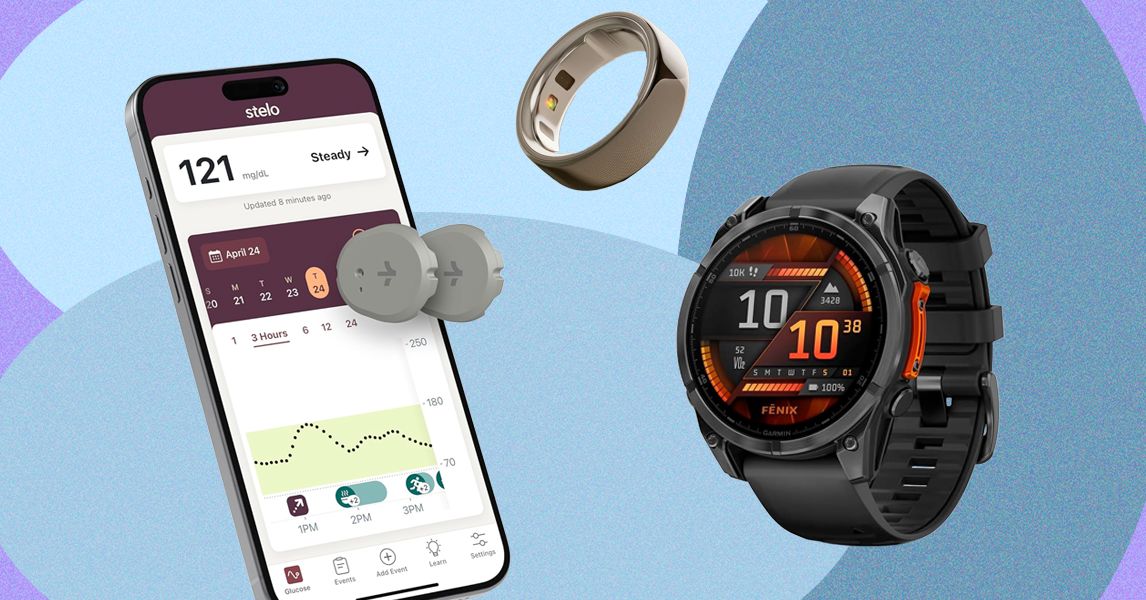
ADRIENNE SO GEAR JAN 1, 2026 7:00 AM The Best Fitness Trackers and Watches for Everyone Whether you’re skiing in the backcountry or trampolining in the backyard, we have an…
Sources
- 14 Best Fitness Trackers (2025), Tested and Reviewed
- The Best Fitness Trackers We've Tested for 2025
- Best fitness tracker 2025: Reviewed, tested, and compared
- The Best Fitness Trackers of 2025 | Tested & Rated
Related posts
- Testing Popular Functional Coffee Add-Ins: Protein, Mushrooms, and Creamer Science
- I Tested Acuity Scheduling for a Side Hustle — Setup, Pricing, UX
- Wear OS 6 display glitch causes afterimages on Pixel and Galaxy Watches