
TL;DR
Since its 1925 publication, F. Scott Fitzgerald's The Great Gatsby has been frequently misread, often reduced to images of parties and glamour. Scholars and recent adaptors argue the novel's narrator, moral ambiguity, and critique of the American Dream are central but routinely overlooked.
What happened
When The Great Gatsby first appeared in 1925, many reviewers missed its deeper concerns, and the book sold modestly; by the time of Fitzgerald's death in 1940 remaining copies from a small second print run had been remaindered. The novel found a new audience after World War II when the US military distributed roughly 155,000 Armed Services Editions. Over subsequent decades it became embedded in popular culture and education, aided by film and stage adaptations and the coining of the term 'Gatsbyesque' in the late 1970s. Since the work entered the public domain in 2021 a surge of new adaptations and reworkings has followed, including recent musicals and novels that reimagine Nick Carraway. Literary scholars and contemporary writers emphasize that Nick's first-person perspective, Fitzgerald's prose, and the book's critique of the American Dream are often sidelined by surface images of decadence.
Why it matters
- Popular images of Gatsby as merely a party host obscure the novel's darker themes, including crime, delusion and a critique of the American Dream.
- How the book is taught and adapted shapes cultural memory; simplified readings risk overlooking the narrator's bias and Fitzgerald's craft.
- The novel's entry into the public domain has expanded opportunities for reinterpretation, which can either deepen or further flatten public understanding.
- Reappraisals that foreground Nick Carraway and the prose itself encourage readers to engage with the novel as a literary experience, not just an emblem of the 1920s.
Key facts
- Initial critical response often misunderstood the novel and its sales were modest; remaining copies of a small second print run were remaindered by 1940.
- Fitzgerald told a friend that contemporary reviewers largely failed to grasp what the book was about, according to the historical record.
- Around 155,000 Armed Services Edition copies were distributed to US troops near the end of World War II, broadening the book's readership.
- The adjective 'Gatsbyesque' entered use in the late 1970s, after the 1974 film adaptation starring Robert Redford.
- The novel has spawned numerous adaptations, including a 2000 television film, a divisive 2013 film by Baz Luhrmann, graphic novels, immersive theatre and multiple stage musicals.
- After the novel entered the public domain in 2021, adaptations and derivative works increased, including a Florence Welch-linked musical and a Tony-winning show still running on Broadway and slated for London transfer.
- Author Michael Farris Smith wrote a novel titled Nick that reconstructs Carraway's backstory; he originally wrote it years earlier but waited for publication until post-2021 due to copyright constraints.
- Scholars like William Cain stress that Gatsby should be read through Nick's first-person narration and for Fitzgerald's page-by-page writing, not only as a symbol of broader American themes.
What to watch next
- The London opening of the Tony-winning Great Gatsby musical that is scheduled to transfer from Broadway (confirmed in the source).
- New adaptations and reinterpretations emerging after the novel entered the public domain in 2021, which may reshape public perception (confirmed in the source).
- Whether high-profile reworkings continue to prioritize surface spectacle over narrative perspective and prose quality (not confirmed in the source).
Quick glossary
- First-person narrator: A storytelling viewpoint in which a character within the story—using 'I'—relates events and offers subjective impressions.
- American Dream: A broad cultural idea that individuals can achieve success and upward mobility through effort; often examined critically in literature.
- Public domain / copyright expiry: When a work's copyright protection ends, it enters the public domain and can be adapted or reproduced without permission from an estate.
- Armed Services Editions: Small-format paperback books distributed to US service members during and after World War II to provide accessible reading material.
- Gatsbyesque: An adjective derived from The Great Gatsby used to describe scenes or styles reminiscent of lavishness, illusion or Jazz Age glamour.
Reader FAQ
Was The Great Gatsby misunderstood when it first appeared?
Yes. Contemporary reviewers frequently failed to grasp the novel's deeper aims, and sales were modest at first, according to historical accounts in the source.
Did the novel become more popular later?
Yes. Distribution to US troops after World War II and growing academic and cultural attention in subsequent decades significantly boosted its readership.
Does the book focus only on parties and glamour?
No. While party imagery is prominent, the novel also addresses criminality, delusion, the narrator's perspective and a critique of the American Dream.
Did the public domain status in 2021 affect new adaptations?
Yes. The source reports that expiration of copyright in 2021 led to an increase in adaptations and derivative works.
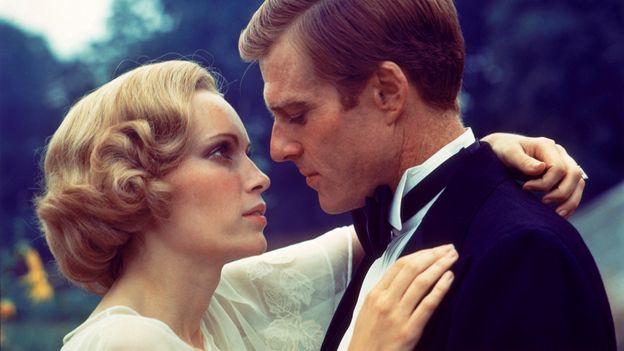
'No one had the slightest idea what the book was about': Why The Great Gatsby is the world's most misunderstood novel 10 April 2025 Share Save Hephzibah Anderson Alamy The…
Sources
- The Great Gatsby is the most misunderstood novel
- Why The Great Gatsby Is the World's Most Misunderstood …
- Why 'The Great Gatsby' is the world's most misunderstood novel
- Why The Great Gatsby is the Most Misunderstood Novel in …
Related posts
- The Vietnam War: The Press on the Front Lines, 1945–1975 Exhibition
- Why Enduring the ‘Suck’ Matters: A Writer’s Case Against AI Shortcuts
- The Riven Diffs: Re-examining Riven (1997) Through Image Differences