
TL;DR
Mira has launched the Ultra4 Hormone Monitor, an egg-shaped analyzer paired with disposable urine wands that test four reproductive hormones at home. The $249 kit and app are designed to build multi-month hormonal baselines and offer users insights on fertility and other hormone-related conditions.
What happened
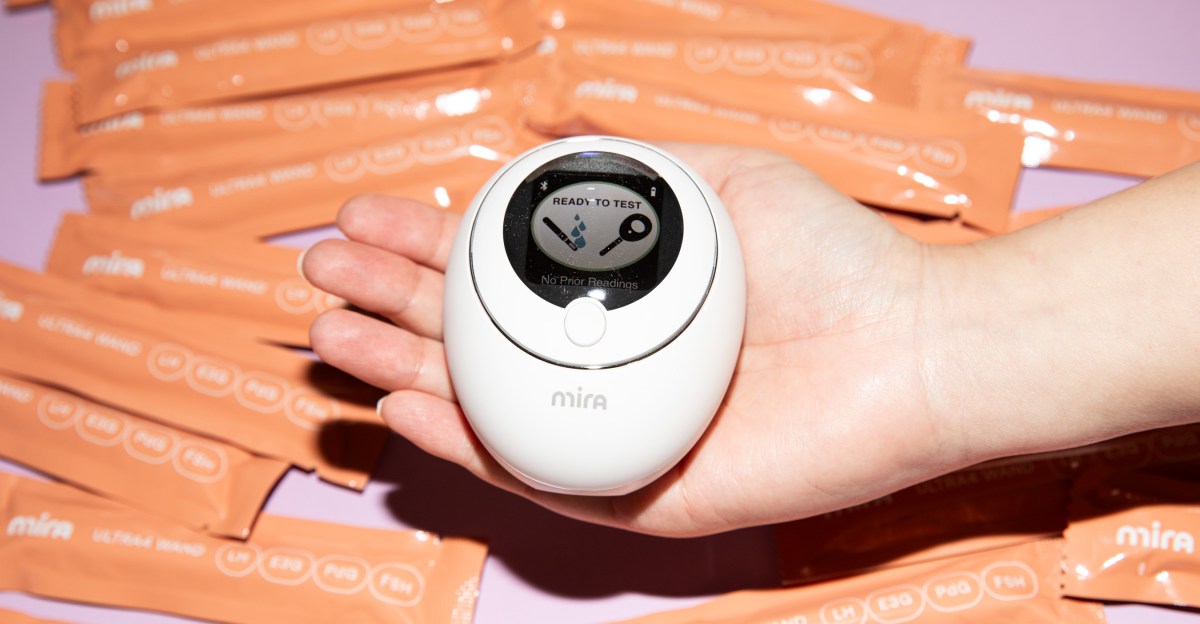
Mira introduced the Ultra4 Hormone Monitor as a two-part at-home testing system: an egg-shaped analyzer and single-use Ultra4 Wands that are dipped in urine. Each wand measures four hormones — FSH, LH, E3G and PdG — and after a 15-second exposure the wand is inserted into the analyzer, which produces results in about 16 minutes. The product connects to a companion app where users complete a survey, receive explainers about each hormone, and get a customized testing schedule intended to build a hormonal baseline over several months. Mira soft-launched the kit in late August and expanded availability at CES 2026; the company says the monitor is FDA-listed as a Class I device. Mira positions the system for fertility tracking and for people monitoring conditions such as PCOS, PMDD, perimenopause and menopause, and says it hopes to expand into other sample types like blood and saliva in the future.
Why it matters
- Brings multi-hormone testing out of labs and into users’ homes, potentially increasing access to longitudinal hormone data.
- Aims to offer more detailed reproductive-health insight than single-hormone ovulation strips or basal body temperature alone.
- Could help users and clinicians spot patterns for conditions such as PCOS or perimenopause when tests are taken repeatedly over time.
- Price and ongoing consumable costs may limit access, highlighting affordability as a barrier to widespread adoption.
Key facts
- Ultra4 tests four reproductive hormones: follicle-stimulating hormone (FSH), luteinizing hormone (LH), estrone-3-glucuronide (E3G), and pregnanediol 3-glucuronide (PdG).
- Testing workflow: pee into a reusable silicone cup, dip the wand for ~15 seconds, insert the wand into the analyzer and get results in about 16 minutes.
- The system pairs with an app that asks users about goals, provides hormone explainers, and generates personalized testing schedules to build baselines over months.
- Mira was founded in 2018; the Ultra4 kit was soft-launched in late August and was presented as more widely available at CES 2026.
- Device regulatory status: FDA-listed as a Class I device (low-risk listing, not the same as FDA clearance or approval).
- Pricing: Ultra4 Hormone Kit starts at $249; replacement wand packs are approximately $99; the analyzer alone is listed at $149.
- Mira CEO Sylvia Kang says around 40% of Mira users are not trying to conceive and are using the product for symptom management related to menopause, PCOS, and other hormone concerns.
- Mira says a primary use case is to collect repeated measurements over several cycles to detect trends or changes in hormone levels.
What to watch next
- Whether peer-reviewed clinical validation and independent accuracy data for the Ultra4 are published — not confirmed in the source.
- Mira's stated plan to expand testing to other sample types such as blood and saliva and to broaden beyond reproductive health into preventive or longevity-related monitoring (company-stated roadmap).
- Adoption and affordability: how pricing, insurance coverage or reimbursement will affect long-term uptake — not confirmed in the source.
Quick glossary
- FSH (follicle-stimulating hormone): A hormone involved in reproductive processes, commonly measured to assess ovarian function and egg reserve in people assigned female at birth.
- LH (luteinizing hormone): A hormone that triggers ovulation and is used in fertility tracking to identify the fertile window.
- E3G (estrone-3-glucuronide): A urinary metabolite of estrogen used in some urine-based tests to infer estrogen activity during the menstrual cycle.
- PdG (pregnanediol 3-glucuronide): A urinary metabolite of progesterone that can indicate luteal-phase progesterone production following ovulation.
- FDA Class I listing: A regulatory designation for low-risk medical devices that subjects them to fewer controls than higher-risk devices; listing is not the same as FDA clearance or approval.
Reader FAQ
Is the Ultra4 FDA-approved?
The device is FDA-listed as a Class I device; it is not described in the source as FDA-cleared or FDA-approved.
How long do tests take?
The wand is exposed to urine for about 15 seconds, and the analyzer returns results in roughly 16 minutes.
Can I use Ultra4 as contraception?
No. The company says the device is intended for wellness and hormone insight and is not meant to be used as contraception.
Will this replace lab-based hormone testing?
Not confirmed in the source.
How much does the system cost?
The Ultra4 Hormone Kit starts at $249; replacement wand packs cost about $99, and the analyzer alone is listed at $149.
TECH GADGETS SCIENCE This egg-shaped gadget aims to demystify hormones… with pee Mira’s Ultra4 Wand kit lets you test four reproductive hormones straight from your own toilet. by Victoria Song…
Sources
- This egg-shaped gadget aims to demystify hormones… with pee
- Mira Hormone Monitor: Ultra4 Kit
- Mira Ultra4 Fertility Monitor & Ovulation Test Kit, Track 4 …
- Mira Fertility Tracker – Accurate Fertility Tracking and …
Related posts
- Amazon adds to the lifestyle TV landscape with the Ember Artline TV
- Amazon opens Alexa Plus web interface to everyone via early access
- Amazon Overhauls Fire TV OS in an Effort to Fix Long-Standing Issues