
TL;DR
Commonwealth Fusion Systems has installed the first of 18 magnets for its SPARC demonstration reactor and expects to fit the remainder by the end of summer. The company is also partnering with Nvidia and Siemens to build a digital twin of the reactor to accelerate commissioning and operations.
What happened
At CES 2026 Commonwealth Fusion Systems announced the installation of the first magnet for its SPARC fusion demo device. The magnet is the first of 18 D-shaped coils that will form a toroidal magnetic cage when mounted on a 24-foot-wide, 75-ton stainless-steel cryostat already set in place. Each magnet weighs about 24 tons and is designed to produce a roughly 20-tesla field; to reach that strength the coils will be cooled to approximately -253°C so they can carry over 30,000 amps. Inside the torus, CFS expects plasma temperatures above 100 million °C. The company said it plans to install all 18 magnets by the end of summer and hopes to turn SPARC on next year. To help tune the machine, CFS is building a digital twin with Siemens’ design and manufacturing software and Nvidia’s Omniverse libraries. CFS has raised nearly $3 billion to date and says its first commercial plant, Arc, will require several more billion dollars.
Why it matters
- Physical progress: installing the first high-field magnet is a concrete step toward operating a fusion demonstration reactor.
- Digital acceleration: a digital twin could shorten troubleshooting and tuning cycles by testing changes virtually before applying them to hardware.
- Energy implications: if SPARC works as intended it would be a milestone on the path toward commercial fusion, which proponents say could provide large-scale low-carbon power.
- Investor confidence: substantial fundraising and participation from major tech companies underline continued private-sector backing for fusion development.
Key facts
- First magnet installed for SPARC; 17 magnets remain to complete the torus.
- SPARC will use 18 D-shaped magnets mounted around a 24-foot-wide, 75-ton stainless-steel cryostat.
- Each magnet weighs about 24 tons and is rated to produce roughly a 20-tesla magnetic field.
- Magnets will be cooled to about -253°C to conduct more than 30,000 amps safely.
- Plasma inside the torus is expected to exceed 100 million °C.
- CFS aims to install all 18 magnets by the end of the summer and hopes to turn SPARC on next year.
- CFS is building a digital twin with Siemens’ design/manufacturing software and Nvidia’s Omniverse libraries.
- The company has raised nearly $3 billion so far, including an $863 million Series B2 round that listed Nvidia and Google among investors.
- CFS’s first commercial-scale design, Arc, will likely cost several billion dollars according to the company.
What to watch next
- Completion of the remaining 17 magnet installations, which CFS expects by the end of summer.
- SPARC commissioning and the company's stated goal to turn the device on next year.
- Progress and integration of the Siemens/Nvidia digital twin and whether it speeds up troubleshooting and tuning.
- Longer-term milestone: efforts across the sector to deliver the first fusion-sourced electrons to the grid in the early 2030s.
Quick glossary
- Magnet (fusion reactor): A large superconducting coil used to produce strong magnetic fields that confine and shape hot plasma in a tokamak or similar device.
- Cryostat: A vacuum-insulated structure that houses and thermally isolates components cooled to cryogenic temperatures.
- Digital twin: A virtual model of a physical system that runs simulations and analytics in parallel with the real asset to support design, testing, and operations.
- Tesla (T): The SI unit of magnetic flux density; higher tesla values indicate stronger magnetic fields.
- Plasma: A state of matter in which gas is ionized and contains free-moving charged particles; in fusion it must be confined and heated to extreme temperatures.
Reader FAQ
Has SPARC been turned on yet?
Not confirmed in the source; CFS said it hopes to turn SPARC on next year.
How many magnets are planned for SPARC and when will they be installed?
SPARC requires 18 magnets in total; CFS expects to install them all by the end of the summer.
Who is building the digital twin for SPARC?
CFS said it is working with Siemens (design and manufacturing software) and Nvidia (Omniverse libraries) to create the digital twin.
How much funding has CFS raised?
The company has raised nearly $3 billion to date, including an $863 million Series B2 round.
When will fusion deliver electricity to the grid?
Not confirmed in the source; the article notes industry efforts aim for first grid-connected fusion electrons sometime in the early 2030s.
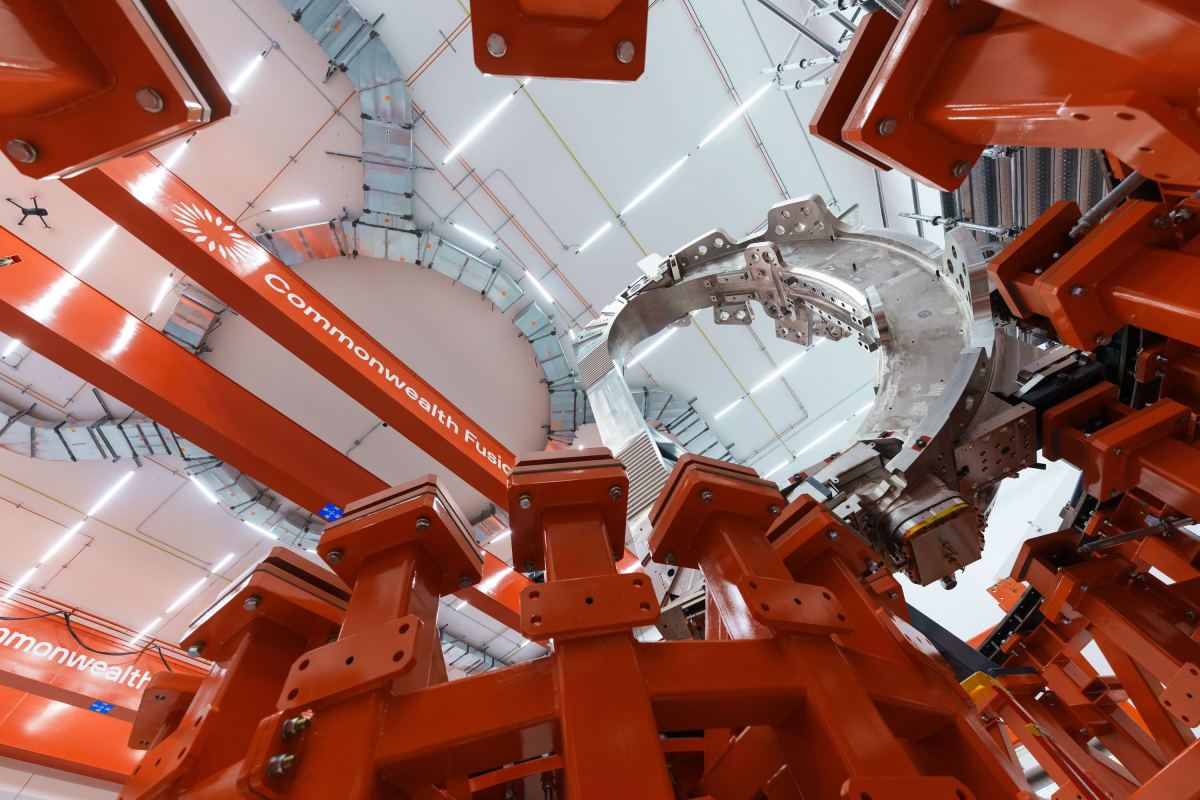
Commonwealth Fusion Systems (CFS) said on Tuesday at CES 2026 that it had installed the first magnet in its Sparc fusion reactor, the demonstration device that it hopes to turn…
Sources
- Commonwealth Fusion Systems installs reactor magnet, lands deal with Nvidia
- Commonwealth Fusion Systems sets up reactor magnet …
- Commonwealth Fusion Systems Raises $863 Million …
- Google and Commonwealth Fusion Systems Sign Strategic …
Related posts
- State of the Fin 2026-01-06 — Jellyfin development and client progress
- LEGO launches SMART Play System: interactive bricks, tags and minifigures
- Klipsch to Relaunch Hi‑Fi Headphones With New Atlas Series at CES 2026