
TL;DR
In a 2017 interview, Tatsuya Takahashi and Richard D. James traded views on how technical and cultural standards shape instruments and music. Topics included tuning (440 Hz), sample rates, cymatics, reversed faders and how conventions can limit creative choices.
What happened
In a wide-ranging conversation, ex-Korg engineer Tatsuya Takahashi and Richard D. James (Aphex Twin) examined the role of conventions in music technology and practice. Takahashi framed 440 Hz as a historical standard intended to make ensembles interoperable, and he flagged cymatics and other resonant phenomena as useful reference points for thinking about pitch. He also recalled reading Philips lab measurements showing orchestras commonly tuned a few hertz below 440 Hz across performances. The pair compared sample-rate norms—48 kHz as a common industry choice versus the Korg volca sample’s unusual 31.25 kHz rate—which they suggested can impart distinct sonic character. They traded anecdotes about reversed fader layouts (Yamaha SK-10, Calrec broadcast mixers) and debated how standardisation can both help coordination and risk stifling creativity, with Takahashi noting cultural examples and wondering how Japanese synth design might have evolved without early emulation of Western designs.
Why it matters
- Standards like 440 Hz and 48 kHz shape how instruments and recordings align across musicians and systems.
- Nonstandard technical choices (e.g., atypical sample rates) can produce distinctive sonic textures that influence artists’ preferences.
- Design conventions—from control layouts to tuning—affect usability and creative behavior in instrument design.
- Awareness of cultural and historical drivers behind standards can inform more intentional, alternative design decisions.
Key facts
- Tatsuya Takahashi said 440 Hz was introduced to standardise pitch so different instruments could play together.
- Takahashi mentioned cymatics and resonances of water and sound as useful starting points for thinking about pitch.
- He referenced Philips laboratory studies reporting that orchestras’ average tuning over many concerts tended to be slightly below 440 Hz.
- Takahashi noted the common sample-rate standard of 48 kHz, while citing the volca sample’s 31.25 kHz as an unusual, constraint-driven choice.
- Richard D. James observed that the volca’s different sample rate was immediately noticeable and suggested sample rate affects perceived character.
- James linked 48 kHz to the Nyquist-related reasoning for sample-rate choice, noting human hearing limits were often discussed around 20 kHz.
- Takahashi recalled encountering instruments with inverted faders (Yamaha SK-10) and said the orientation can reshape how you interact with controls.
- James noted broadcast consoles (Calrec) can have reversed faders and sometimes include dip switches to invert their direction.
What to watch next
- Whether more instrument makers intentionally use nonstandard sample rates to achieve unique sonic signatures — not confirmed in the source.
- If designers revisit physical control conventions (fader orientation, layout) as a deliberate creative choice rather than legacy carryover — not confirmed in the source.
- The extent to which debates about tuning standards (e.g., alternate reference frequencies) influence new instrument offerings — not confirmed in the source.
Quick glossary
- 440 Hz: A common reference pitch for tuning musical instruments; A4 is typically set to 440 cycles per second in many modern ensembles.
- Sample rate: The number of audio samples captured or played per second in digital audio, measured in kilohertz (kHz); it affects the highest reproducible frequency.
- Cymatics: The study of visible sound and vibration patterns, often shown by applying vibrations to a medium like sand, water or metal.
- Nyquist theorem: A principle in signal processing that defines the minimum sampling rate required to accurately represent a given maximum frequency.
- Fader: A sliding control on a mixer or instrument used to adjust levels; orientation and behavior can vary by device.
Reader FAQ
Why was 440 Hz chosen as a standard?
The interview notes 440 Hz was adopted to standardise ensemble tuning, but the deeper historical reasons were described as an 'interesting story' and are not explained in the source.
Does using a different sample rate change how an instrument sounds?
Both interviewees suggested yes: Takahashi and James said the volca sample’s 31.25 kHz rate contributed to its distinctive character compared with the common 48 kHz standard.
Are reversed faders deliberate design choices?
The interview gives examples (Yamaha SK-10, Calrec mixers) and notes reasons such as broadcast safeguards, but whether reversed faders are broadly deliberate or legacy conventions is not confirmed in the source.
Did Japanese synths copy Moog in the 1970s?
Takahashi speculated about the influence of Moog on Japanese synth design, but the interview does not confirm historical facts about the extent of copying.
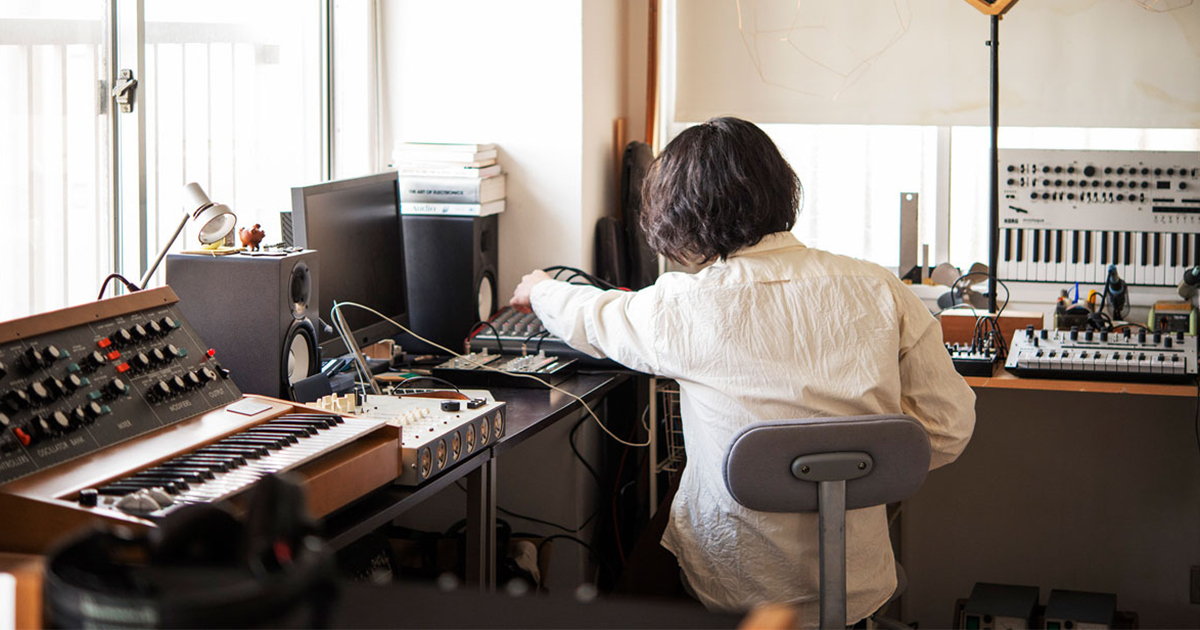
But I’ve also read studies from the old Philips laboratories in the Netherlands that show orchestras average deviation from 440 Hz was measured over many concerts and was seen to…
Sources
- Richard D. James interviews ex Korg engineer Tatsuya Takahashi (2017)
- Richard D. James speaks to Tatsuya Takahashi – Editorial
- Richard D James interviews Tatsuya Takahashi (ex Korg …
- Aphex Twin And Tatsuya Takahashi, Nils Frahm, Bob Marley
Related posts
- WIRED’s Guide: The 70 Best Movies to Stream on Disney+ Right Now
- Why a Chinese Robot Vacuum Firm Launched Two Spin-Off Electric-Car Brands
- Texas court briefly bars Samsung from TV tracking, then vacates TRO