
TL;DR
In a wide-ranging conversation with Tatsuya Takahashi, Richard D. James (Aphex Twin) reflects on how technical and cultural standards shape music and instrument design. They discuss pitch standardisation around 440 Hz, unconventional sample rates, physical perception of sound, and unexpected interface choices like reversed faders.
What happened
Tatsuya Takahashi and Richard D. James spoke about the unseen rules that govern musical practice and gear. They revisited the role of the 440 Hz tuning standard and cited historical measurements from Philips laboratories suggesting orchestras often tune slightly below that reference. The pair touched on cymatics and how different frequencies can affect musical choices, with Takahashi declining to re-litigate the 432 vs 440 Hz argument. They also compared standard digital sampling at 48 kHz to the Korg volca sample’s atypical 31.25 kHz rate, noting the latter’s sound character stems from technical limits. James questioned simplistic limits on human hearing and stressed that perception includes bodily vibrations as well as eardrum input. Both discussed interface conventions: Takahashi recalled upside-down faders on a Yamaha SK-10, while James noted Calrec broadcast mixers use backward faders with an internal switch, a safeguard tied to television workflows. The conversation ranged from cultural norms to design decisions that steer creativity.
Why it matters
- Standards such as A=440 Hz and 48 kHz sampling enable musicians and equipment to work together but also shape aesthetic choices.
- Nonstandard design choices — unusual sample rates or reversed controls — can produce distinct sonic and ergonomic outcomes that artists exploit.
- Perception of sound involves more than audible frequency limits, which has implications for recording and playback decisions.
- Cultural conventions and industrial practices influence instrument design and what becomes accepted as 'normal' in music technology.
Key facts
- The interview is between Tatsuya Takahashi (TT) and Richard D. James (RDJ), aka Aphex Twin.
- Takahashi and James discussed the 440 Hz tuning standard and how orchestras reportedly deviate by a few hertz.
- Takahashi mentioned studies from Philips laboratories measuring orchestras’ average tuning relative to 440 Hz.
- Takahashi said he enjoys cymatics and has run workshops for children introducing the topic.
- They contrasted the common 48 kHz sampling rate with the Korg volca sample’s 31.25 kHz rate, attributed to technical constraints.
- James noted he immediately noticed the volca sample’s odd sample rate and thought it contributed to its character.
- James questioned the common 20 kHz hearing limit and highlighted bodily perception of sound beyond the eardrums.
- Takahashi recalled encountering upside-down faders on a Yamaha SK-10; James said Calrec broadcast mixers also use backward faders with a dip switch to reverse them.
- Takahashi reflected on cultural standardisation in Japan and wondered how different synth design might have evolved without early Moog influence.
What to watch next
- not confirmed in the source: whether more instrument makers will deliberately use nonstandard sample rates or tunings as a design choice.
- not confirmed in the source: whether manufacturers will revisit interface conventions like fader direction to encourage alternative workflows.
- not confirmed in the source: follow-up workshops or projects from Takahashi or James expanding on cymatics with children or audiences.
Quick glossary
- A=440 Hz (440 Hz): A commonly used tuning reference where the musical note A above middle C vibrates at 440 cycles per second, used to standardise pitch across instruments.
- Sample rate: The number of audio samples captured or played back per second in digital audio, typically measured in kilohertz (kHz); it affects frequency range and fidelity.
- Nyquist theorem: A principle in signal processing stating that to accurately capture a waveform you must sample at least twice its highest frequency component.
- Cymatics: The study of visible patterns produced when sound vibrations interact with a medium like sand or liquid, often used to explore the physical effects of frequency.
- Fader: A sliding control on mixers and other audio gear used to adjust levels; some designs place maximum at the top, others at the bottom.
Reader FAQ
Did the interview resolve the 432 Hz vs 440 Hz debate?
Takahashi said he wasn’t going to address that debate in depth; no definitive resolution is provided in the source.
Why does the volca sample use 31.25 kHz?
Takahashi explained that the volca sample’s unusual 31.25 kHz rate resulted from technical constraints, and James noticed its sonic effect.
Do humans hear above 20 kHz?
James questioned the basis for the 20 kHz hearing limit and suggested bodily perception matters, but the source does not settle the scientific question.
Are backward faders common?
The interview cites examples—Yamaha SK-10 and Calrec broadcast mixers—with backward faders; Calrec units reportedly include an internal switch to reverse the control.
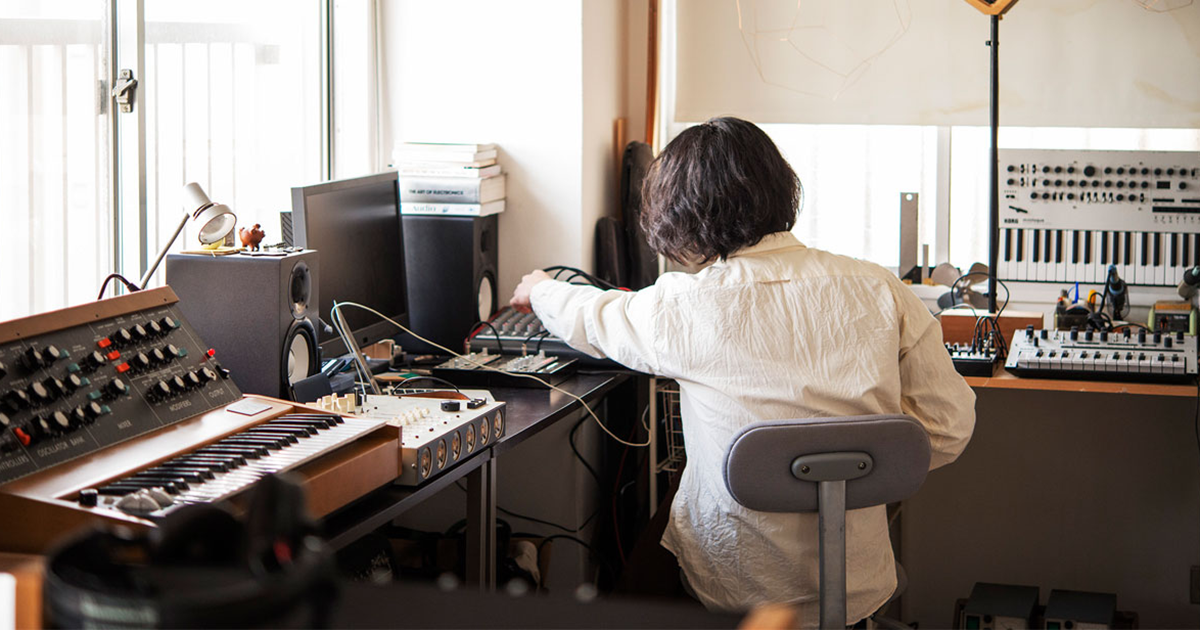
But I’ve also read studies from the old Philips laboratories in the Netherlands that show orchestras average deviation from 440 Hz was measured over many concerts and was seen to…
Sources
- Richard D. James aka Aphex Twin speaks to Tatsuya Takahashi
- Richard D. James speaks to Tatsuya Takahashi – Editorial
- Aphex Twin guide – Zoe Blade's Notebook
- Gear Rundown: Aphex Twin
Related posts
- The best wireless earbuds we’ve tested for 2026 — updated picks
- Are AI coding assistants actually getting worse? A look at emerging concerns
- Controversy over adding TSO memory-model controls for Arm CPUs in Linux