
TL;DR
Flint, a Singapore-based startup, has moved its cellulose-based, PFAS-free paper batteries into production and is supplying cells to select strategic partners. The company will reveal two commercial products and live demonstrations at CES 2026 as it expands pilot programs and manufacturing capacity.
What happened
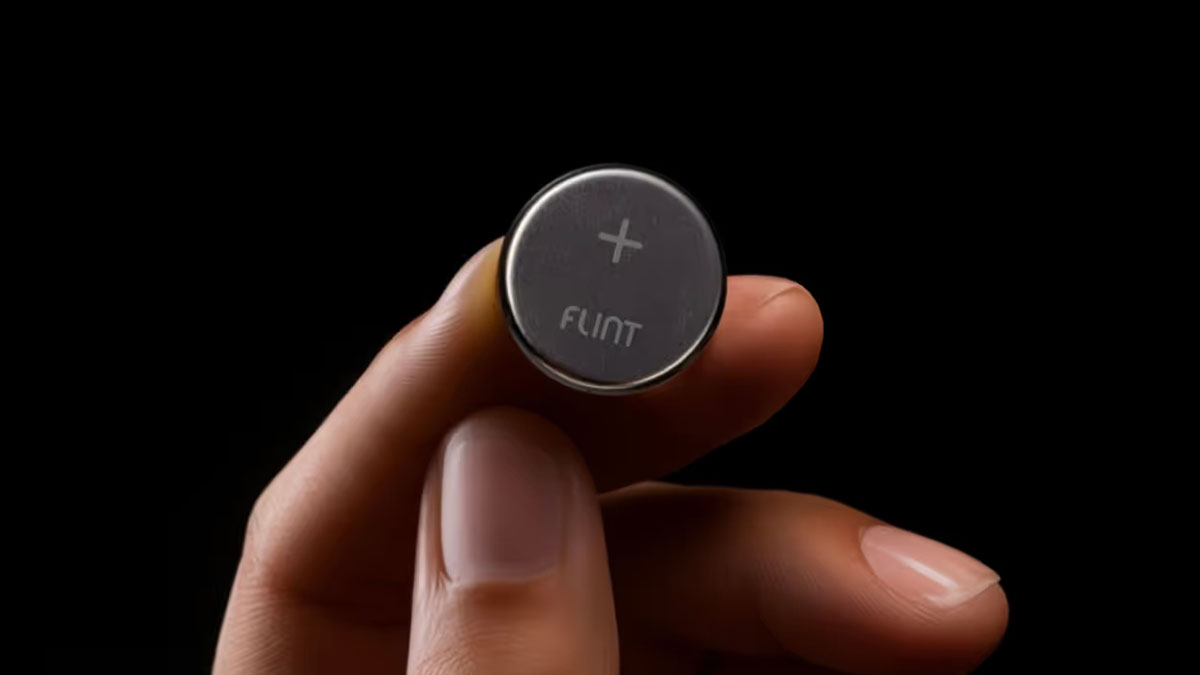
Flint announced that its cellulose-centred paper battery technology has graduated from lab prototypes to active production in Singapore, with initial supplies reserved for strategic partners and pilot programs. The company says its architecture covers the anode, cathode, separator and electrolyte around a paper core; cells are described as rechargeable, PFAS-free, biodegradable and engineered to be non-flammable and non-explosive. Flint has established an 8,000+ sq ft facility using water-based manufacturing processes and a purpose-built production line intended to simplify integration with existing device manufacturing. The move follows a year of recognition and trials in 2025 — including awards and selection into accelerator and industry programs — and the startup reports a pre-Series A funding round of US$2 million that helped support the transition. Flint plans to publicly unveil two commercial battery products with demonstrations at CES 2026 while pursuing further scaling and European manufacturing partnerships.
Why it matters
- Offers a lower-carbon alternative to conventional battery chemistries, potentially reducing manufacturing emissions.
- Aims to cut reliance on traditional battery materials and centralized lithium supply chains, which could diversify supply lines.
- Designed for safer device integration (rechargeable, non-flammable, non-explosive), which may ease regulatory and product-safety concerns.
- Biodegradability and PFAS-free design could simplify end-of-life handling compared with some existing chemistries.
Key facts
- Company: Flint, headquartered in Singapore.
- Production: Paper battery manufacturing now active in Singapore; initial allocations go to select strategic partners and pilots.
- Chemistry/structure: Proprietary architecture includes anode, cathode, separator and electrolyte built around a cellulose paper core.
- Safety and materials: Cells are described as rechargeable, PFAS-free, non-toxic, non-flammable and non-explosive.
- Facility: Expanded into an 8,000+ square-foot site with water-based manufacturing methods and a purpose-built production line.
- Commercial traction: Won Best of CES Sustainability Award in 2025 and entered multiple innovation and accelerator programs.
- Partnerships and pilots: Engaged in pilots with companies including Logitech and selected for an MIT Climate Tech Accelerator initiative.
- Funding: Raised US$2 million in a 2025 pre-Series A round from angel investors, with some debt financing.
- Product roadmap: Two commercial paper battery products will be revealed at CES 2026; a solid-state derivative is under development for higher-density applications.
- Scale plans: In discussions with a major contract manufacturer to expand capacity in Europe and diversify the supply chain.
What to watch next
- CES 2026 presentations and live demonstrations of Flint's first two commercial paper battery products.
- Progression of pilot deployments and early integrations with device makers (Logitech noted as an active pilot partner).
- Outcomes of discussions with a large contract manufacturer and any announced plans for European production expansion.
- Development timeline and specs for the solid-state derivative targeting higher-density, rechargeable markets.
Quick glossary
- Cellulose: A plant-derived polymer used as a structural material; in this context it serves as the base substrate for the battery architecture.
- PFAS: Per- and polyfluoroalkyl substances, a family of persistent chemicals often phased out of products for environmental and health reasons.
- Solid-state battery: A battery design that uses a solid electrolyte instead of a liquid one, typically pursued for higher energy density and safety.
- Anode / Cathode: The negative (anode) and positive (cathode) electrodes in a battery where oxidation and reduction reactions occur, respectively.
- Biodegradable: Capable of being broken down by biological processes under appropriate conditions, potentially easing end-of-life disposal.
Reader FAQ
Are Flint's paper batteries already in production?
Yes — Flint reports production is underway in Singapore and cells are being allocated to select partners and pilots.
Are these batteries rechargeable and safe?
The company describes the cells as rechargeable and engineered to be non-flammable and non-explosive.
Will Flint's batteries replace lithium-ion in consumer devices?
Not confirmed in the source.
When will consumers be able to buy products with these batteries?
Not confirmed in the source; Flint says initial allocations prioritize pilots and early commercial rollouts ahead of broader scaling.
Do Flint's batteries use lithium, cobalt or nickel?
The facility and processes are described as designed to reduce reliance on lithium, nickel, cobalt and lead, but specific material content is not confirmed in the source.
« BACK SHARE battery Logitech biodegradable sustainability rechargeable Singapore cellulose Massachusetts Institute of Technology batteries CES 2026 Flint paper batteries PFAS-free Show more (13) by Joao Martins on Industry News…
Sources
- Flint Confirms Biodegradable Paper Batteries Are Now in Production
- Flint announces production of biodegradable "paper battery"
- Flint's Paper Batteries Are Here: Now in Production …
- Singapore's Flint starts pilot production of paper batteries
Related posts
- Snowflake to acquire Observe to reduce customer downtime amid outages
- Towerborne will launch as a paid, offline Xbox-published action RPG
- Cyera raises $400M Series F, now valued at $9B after six months