
TL;DR
Multiple bystander videos document a Minneapolis shooting during an ICE operation in which a legal observer was killed. The incident and competing clips have become focal points in a larger debate about truth, social media narratives, and the role of generative AI under the Trump administration.
What happened
Sarah Jeong’s column recounts footage from a Minneapolis incident where ICE agents fired on a vehicle and a person later identified as 37-year-old Renee Nicole Good died. Initial short clips circulated quickly, but longer recordings—more than four minutes—captured additional angles and scenes: people tending to the crash, blood on the ice, and numerous neighbors pulling out phones to film. The wider set of videos shows activists and legal observers using whistles and phones to document the ICE operation. Within hours, a single grainy 13-second clip was amplified by President Donald Trump on social platforms, while other footage and eyewitness accounts contradicted that narrow framing. The piece situates the episode in a broader argument: political messaging and emerging AI-driven disinformation are fraying shared facts, and ordinary people recording events are asserting the continued importance of observable reality.
Why it matters
- Multiple, independently captured videos challenge single-angle narratives and highlight the role of civilian documentation in holding power to account.
- Political amplification of a single clip underscores how social media can simplify or distort complex events.
- The column links the spread of generative AI and weakened platform safeguards to a broader erosion of public consensus about facts.
- Bystanders who record are taking personal risks to preserve evidence and collective memory, reflecting civic resistance to narratives that deny observable events.
Key facts
- The full available footage runs for more than four minutes and includes multiple bystander perspectives.
- A short, roughly 13-second clip was promoted by President Donald Trump on social platforms as the primary record.
- The deceased has been identified in reporting as 37-year-old Renee Nicole Good, described in the source as a legal observer.
- Videos show ICE agents leaning over a vehicle, shots being fired, the car accelerating and colliding with parked cars, and deployed airbags with visible blood.
- Whistles and crowd noise in some recordings indicate activists and legal observers were present to alert and document an ICE raid.
- Observers and neighborhood residents remained at the scene, filming despite visible injury and blood, according to the described footage.
- The column notes that some third-party groups, including Bellingcat, produced a top-down reconstruction of the event.
- Local political responses cited in the piece include sharp criticism of ICE from Minneapolis officials and questions from U.S. Senator Tina Smith about the targeting of Minnesota.
What to watch next
- Whether a formal federal or local investigation is opened and its findings: not confirmed in the source
- Any disciplinary or criminal actions involving the ICE agents seen in the videos: not confirmed in the source
- Policy responses or operational changes for ICE in Minneapolis after the shooting: not confirmed in the source
Quick glossary
- Legal observer: A person who monitors law enforcement activity at protests or operations to document events and protect legal rights, often affiliated with advocacy groups.
- ICE: U.S. Immigration and Customs Enforcement, a federal agency responsible for enforcing immigration laws and conducting removals and related operations.
- Generative AI: Machine learning systems that create new content—like text, images, or video—based on learned patterns from training data.
- Filter bubble: An environment, often created by social platforms, where a user mainly encounters information and opinions that reinforce their existing views.
Reader FAQ
Who was the person killed in the shooting?
The source identifies the deceased as 37-year-old Renee Nicole Good, described as a legal observer.
How many videos of the incident exist?
The column notes multiple recordings surfaced, including a short 13-second clip and longer videos exceeding four minutes.
Did the Trump administration respond to the incident?
According to the source, the administration promoted a short clip and labeled the victim a domestic terrorist; further official actions are not detailed.
Are there official investigations or charges reported?
not confirmed in the source
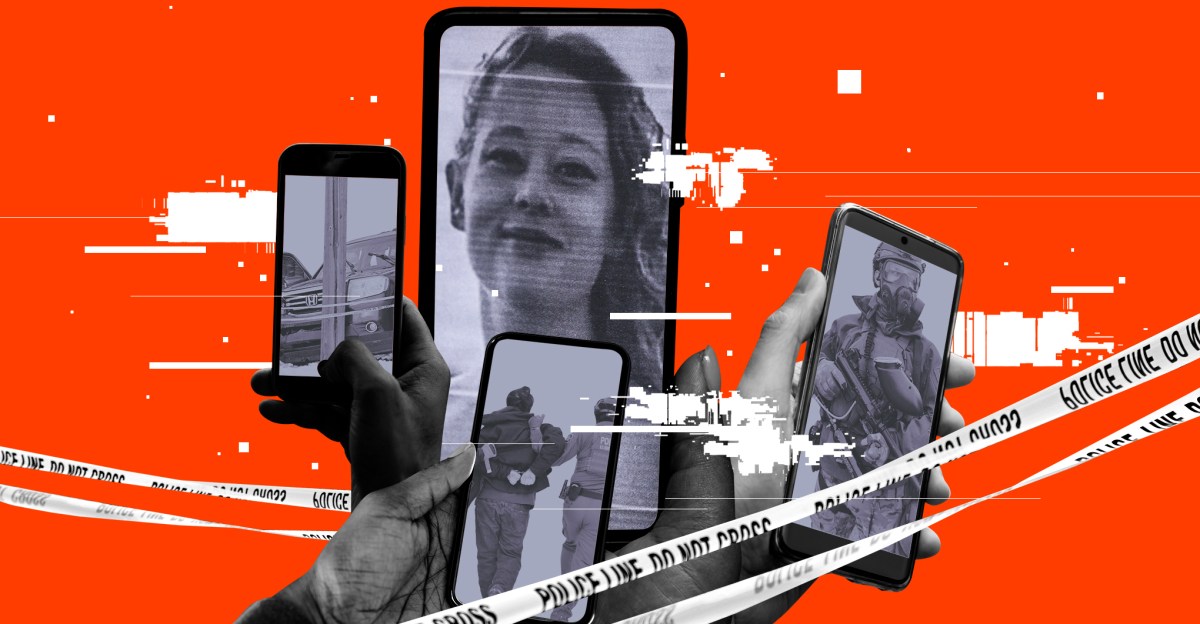
POLICY COLUMN Reality still matters As Trumpism and technology erode our shared understanding of the world, ordinary people in Minneapolis put their lives on their line to record the truth….
Sources
Related posts
- Grok’s image tool limited after UK warns over AI ‘nudification’ abuse
- Grok limits image-generation to paying users after sexualised AI imagery outcry
- No Fakes Act’s ‘fingerprinting’ clause risks crippling open-source projects