
TL;DR
Shokz’s OpenFit Pro bring a first-for-the-category noise-reduction system to open-ear earbuds, improving mid-frequency suppression while retaining an open listening experience. Sound, call performance, comfort, and battery are strong overall, but noise reduction is weaker than closed-ear ANC and can cause an uncomfortable pressure sensation for some users.
What happened
Shokz introduced the OpenFit Pro, a $250 open-ear earbud that pairs improved audio hardware with a novel noise-reduction feature aimed at reducing mid-frequency distractions without sealing the ear canal. The reviewer found the system effective at softening steady noises like fans and some gym sounds, but not nearly as isolating as traditional closed-ear active noise cancellation. The feature can induce a sensation of inward pressure for some listeners; reducing the noise-reduction strength in the companion app lessens that feeling but also reduces effectiveness. The OpenFit Pro improves bass and clarity versus earlier Shokz open-ear models, adds Dolby-sourced spatial processing for a wider soundstage, and delivers strong call performance. The design uses silicone-wrapped ear hooks, physical buttons, wear sensors, and a wireless-charging aluminum case; battery life is longest with noise reduction off and roughly halves when it’s enabled.
Why it matters
- If open-ear ANC matures it could let users enjoy audio while retaining situational awareness in noisier environments.
- Shokz’s approach shows some real-world noise reduction is possible without closing the ear, offering an alternative for users who prefer awareness over full isolation.
- Side effects like pressure sensations could limit adoption unless manufacturers refine algorithms or hardware to reduce discomfort.
- Absence of features like Auracast may limit the earbuds’ appeal for users interested in shared or public Bluetooth audio experiences.
Key facts
- Price: $250, available in black or white.
- Reviewer score reported as 6 out of 10 by WIRED.
- Shokz’s noise reduction lowers mid-frequency noise but does not match closed-ear ANC performance.
- Noise-reduction can create an inward pressure or 'sucking' sensation for some users; lowering the setting can reduce the feeling but also reduces effectiveness.
- Battery life at 50% volume: about 12 hours per charge and 50 hours with the case with noise reduction off; drops to about 6 hours per charge and 24 hours with the case when noise reduction is on.
- Improved audio: larger dual-diaphragm driver yields stronger bass and reduced sibilance compared with prior Shokz open-ear models.
- Includes Dolby-based spatial processing (labeled 'Optimized for Dolby Atmos') and optional head tracking to widen perceived soundstage.
- Call quality is strong; microphones suppress background noise effectively for the person on the other end.
- Design changes: physical buttons replace hybrid touch/button controls; ear hooks with soft silicone wrap; wear sensors for auto-pause; optional silicone support loops included.
- Charging case has an aluminum frame, supports wireless charging, and is larger than many closed-ear cases.
What to watch next
- Whether Shokz will address the pressure sensation via firmware or hardware revisions — not confirmed in the source.
- If Shokz adds Bluetooth Auracast support in future updates or models — not confirmed in the source.
- How open-ear noise-reduction algorithms evolve to approach the effectiveness of closed-ear ANC without causing discomfort — not confirmed in the source.
Quick glossary
- Open-ear earbuds: Earbuds designed to sit near the ear without sealing the ear canal, allowing ambient sounds to remain audible while audio plays.
- Active noise cancellation (ANC): Technology that uses microphones and inverse sound waves to reduce unwanted ambient noise; typically most effective with sealed, in-ear or over-ear designs.
- Dolby Atmos / spatial audio: Audio processing techniques that create a wider, more immersive soundstage using object-based mixing and head-tracking in some implementations.
- Auracast: A Bluetooth-based system for broadcasting audio to multiple listeners or allowing private audio sharing; adoption is still emerging.
- Wear sensors: Sensors in earbuds that detect when they are worn, commonly used to auto-pause or resume playback.
Reader FAQ
Do the OpenFit Pro deliver true ANC like closed-ear earbuds?
They offer a noise-reduction system that cuts mid-frequency noise but do not match the isolation or overall cancellation of closed-ear ANC.
Are they comfortable for long listening sessions?
They are generally comfortable and stable thanks to silicone-wrapped ear hooks, though the reviewer noted contact inside the ear that made them more noticeable over time compared with earlier OpenFit models.
How long does the battery last?
At 50% volume, battery life is around 12 hours per charge and 50 hours with the case when noise reduction is off; with noise reduction on, expect about 6 hours per charge and 24 hours total.
Do the OpenFit Pro support Auracast?
No — they lack Auracast support according to the review.
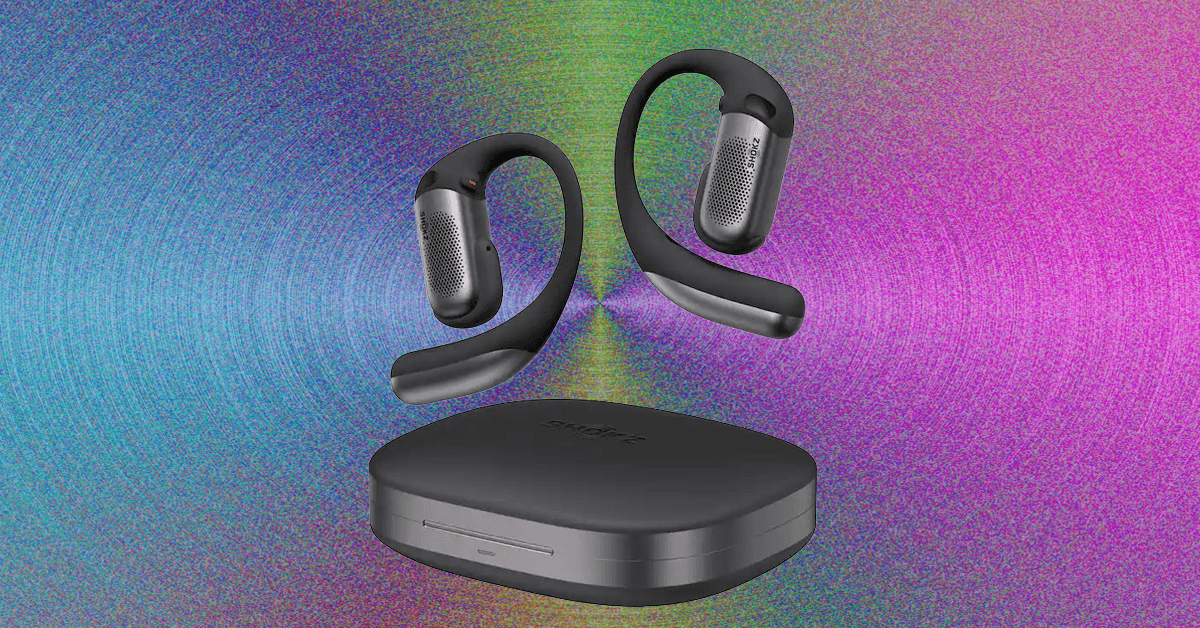
SIMON COHEN GEAR JAN 10, 2026 6:30 AM Review: Shokz OpenFit Pro Wireless Earbuds True ANC on a set of open-ear earbuds would be a game changer. Shokz’s OpenFit Pro…
Sources
- Shokz OpenFit Pro Review: ANC on Open Earbuds?
- Shokz OpenFit Pro hands-on: Open-earbuds finally get …
- The New Shokz OpenFit Pro Buds Have Noise Reduction …
- Shokz just gave my favorite open-ear workout earbuds a …
Related posts
- KitchenAid Promo Codes: Save Up to 50% on Mixers, Attachments, and More
- Why QD-OLED Desktop Monitors Didn’t Work for This User: A Hands-On Report
- Why I Returned a Dell QD‑OLED 32-inch Monitor: Fringing and Text Issues