
TL;DR
Wired's review rates the Sony A7V highly as a hybrid stills-and-video camera, praising its 33MP partially stacked sensor, advanced autofocus and fast burst capabilities. The camera is limited to 4K video but adds features like pre-burst capture, AI Smart Reframe and improved low-light performance.
What happened
Wired published a review of Sony's A7V, describing it as the strongest all-purpose model in the A7 line to date. The A7V pairs a 33-megapixel backside-illuminated, partially stacked CMOS sensor with Sony's Bionz XR2 processor, which the reviewer says delivers faster readouts, higher burst rates and reduced rolling-shutter artifacts. Autofocus has been upgraded with multi-subject recognition—covering people, animals, birds, insects, cars, trains and planes—and improved face and eye detection. Video remains capped at 4K, but that 4K is downsampled from a 7K capture path and offers 60 fps at full sensor readout and 4K 120 fps with a 1.5x crop. Other highlighted features include a pre-burst capture mode inherited from the A9 III, blackout-free 30 fps electronic-shutter shooting, a bright, fully articulating rear screen, strong high-ISO performance up to about ISO 32,000 and noticeably improved color rendering. The reviewer also criticizes Sony's menu system as confusing and difficult to navigate.
Why it matters
- Hybrid users gain a single camera that handles fast-action stills and high-quality 4K video with advanced subject tracking.
- Partially stacked sensor and faster processing enable higher burst rates and lower rolling shutter, useful for sports and wildlife shooting.
- Pre-burst capture and high frame-rate RAW capture can increase keeper rates for fleeting moments like bird takeoffs.
- Improved high-ISO handling and color rendering make the camera more usable in low light and for skin-tone accuracy, reducing postproduction fixes.
- The 4K-only video ceiling may limit professionals who need higher-resolution capture for certain workflows.
Key facts
- Sensor: 33-megapixel backside-illuminated, partially stacked CMOS.
- Processor: Bionz XR2, enabling faster readouts and advanced AF features.
- Autofocus: Subject recognition for human, animal, bird, insect, car, train and plane, plus configurable auto mode.
- Video: Limited to 4K; 4K is downsampled from a 7K capture path with up to 60 fps full-sensor and 4K 120 fps at 1.5x APS-C crop.
- Pre-burst mode: Captures images in the interval before a full shutter press (feature from A9 III).
- Burst and shutter: Blackout-free electronic shooting up to 30 fps and high-speed RAW capture (reviewer cites 33 images-per-second RAW).
- Rear screen: Bright, sharp and highly articulated for varied shooting angles.
- High-ISO performance: Reviewer felt comfortable pushing to around ISO 32,000.
- Color and AWB: Noted improvements in color rendering and auto white balance, especially for skin tones.
- Price and rating: Wired lists a body-only price of $2,898 and gave the camera a 9/10 rating; reviewer cautioned that menus remain cumbersome.
What to watch next
- not confirmed in the source: whether Sony will address the menu navigation with a firmware update or redesign.
- not confirmed in the source: how many A7IV owners will choose to upgrade versus keeping their existing bodies.
- not confirmed in the source: how competitive responses from rivals offering higher-than-4K video capture will affect the A7V's market position.
Quick glossary
- Backside-illuminated (BSI) sensor: A sensor design that places photodiodes closer to incoming light to improve low-light sensitivity and reduce noise.
- Partially stacked sensor: A sensor architecture that integrates some circuitry beneath the pixel layer to enable faster readout speeds and reduced rolling shutter.
- Pre-burst capture: A mode that records images in the moment before the shutter is fully pressed, increasing the chance of capturing split-second action.
- Downsampling: The process of recording at a higher resolution and reducing it to a lower-resolution file, often improving perceived sharpness and detail.
- Subject recognition autofocus: Autofocus that uses machine learning to detect and prioritize different types of subjects, such as people or animals, for reliable tracking.
Reader FAQ
Is the A7V worth upgrading from an A7IV?
According to the review, it is worth upgrading if you own a camera below the A7IV; owners of the A7IV may find the changes less compelling.
Can the A7V record 6K or higher video?
No — the camera is limited to 4K video, though that 4K is downsampled from a 7K capture path.
Does the camera offer blackout-free shooting?
Yes, Wired highlights blackout-free electronic-shutter shooting up to 30 fps.
Are there improvements to color and skin tones?
The reviewer reports noticeably improved color rendering and better auto white balance, particularly for skin tones.
What about battery life and weather sealing?
not confirmed in the source
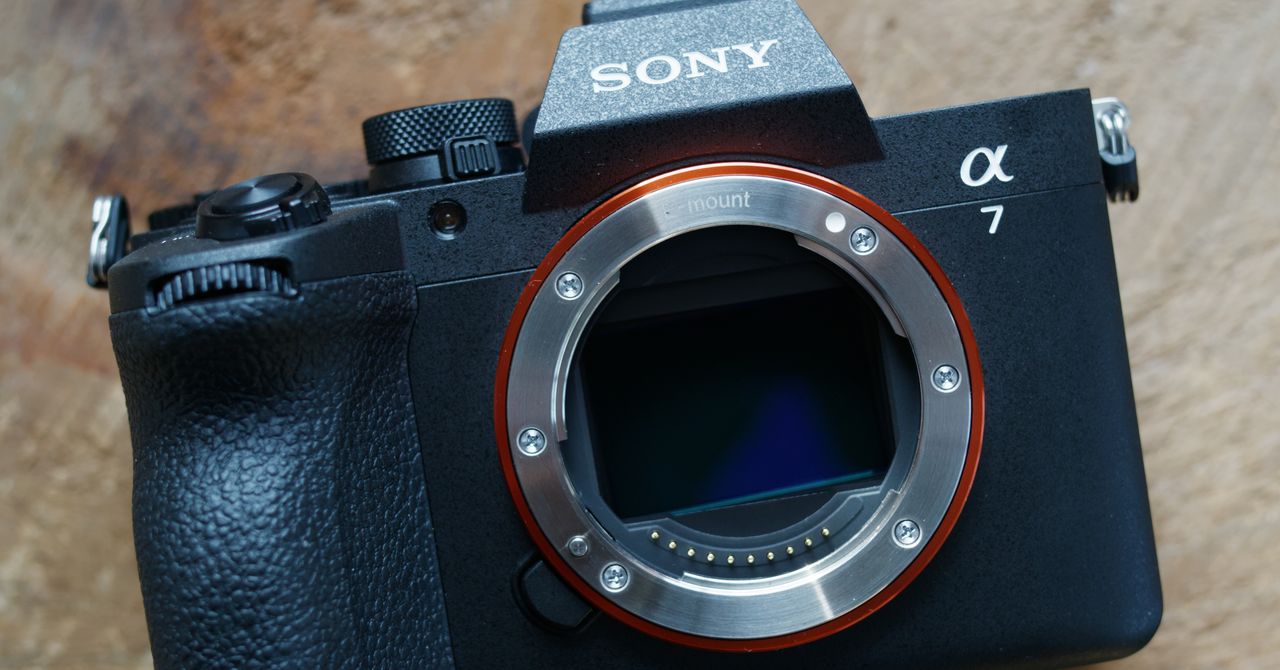
SCOTT GILBERTSON GEAR JAN 11, 2026 6:30 AM Review: Sony A7V Mirrorless Camera Sony’s latest full-frame mirrorless is a hybrid powerhouse with features to impress both video and still photographers….
Sources
- Sony A7V Review: The Best Overall Mirrorless Camera
- Sony a7 V review: E-mount users get their own do-it-all …
- Sony A7 V review – Cameras – TechRadar
- Meet the Sony Alpha 7V — The New “Do-It-All” Full-Frame …
Related posts
- Best Side-Sleeper Mattresses 2026: Tested and Picked by WIRED Reviewers
- My Home Fibre Network Disintegrated, Literally — Armoured Cable Failure
- These standout smart-home gadgets from CES 2026 that impressed me