
TL;DR
The author replaced Windows 11 on a desktop and work laptop with Linux after recurring crashes and concerns about telemetry. After testing several distributions, they settled on Artix, accepting extra setup work and occasional compatibility issues in exchange for greater control.
What happened
The writer began by dual-booting Linux alongside Windows but moved to a full migration after a Windows update wiped the Linux partition. Frustrated by frequent system freezes and what they describe as pervasive telemetry, they wiped Windows 11 from both their primary desktop (AMD Ryzen 7 6800H, 32 GB RAM, 1 TB NVMe) and a 2014 MacBook Air, installing Linux instead. They evaluated multiple distributions—Mint, Debian, Fedora, Void and others—before choosing Artix, an Arch derivative that does not use systemd and boots quickly. The desktop largely functioned without extra work, including support for an unusual 1680×1050 vertical monitor. The MacBook Air required manual installation of Broadcom Wi‑Fi drivers via a USB‑to‑Ethernet connection. The author also encountered desktop environment bugs (KDE artifacts) and noted that some Steam games marketed as Linux‑compatible did not run as expected.
Why it matters
- Privacy: the author cites extensive data collection in Windows 11 and concerns around Microsoft’s Copilot features.
- Control and stability: Linux offers more user control and, in this case, fewer unexpected system crashes once set up.
- Compatibility trade-offs: hardware and software may require additional configuration or not work perfectly out of the box.
- Maintenance burden: selecting and configuring a distro can demand time and technical effort compared with a preinstalled OS.
Key facts
- The writer initially dual‑booted Linux but switched to a full installation after Windows removed the Linux partition during an update.
- Primary desktop hardware: AMD Ryzen 7 6800H, 32 GB RAM, 1 TB PCIe NVMe drive.
- Distros tried include Linux Mint, Debian, Fedora, Void, Bazzite and Artix; Artix was the final choice.
- Artix is an Arch‑based distribution that avoids systemd and reportedly boots in under 10 seconds on the author’s machine.
- The 2014 MacBook Air required Broadcom Wi‑Fi drivers to enable wireless; the author used a USB‑to‑Ethernet adapter to install them.
- Installing the KDE desktop caused visual artifacts; reverting to XFCE4 resolved the issue after additional configuration.
- The author reports frequent Windows 11 crashes prior to switching—about 2–3 full system crashes per week.
- Some Steam titles labelled as Linux compatible can still fail to run; Civilization III Complete is cited as an example.
What to watch next
- Microsoft’s telemetry and Copilot developments and any changes to data‑collection controls in Windows (confirmed in the source).
- How Linux distributions and repositories evolve in supporting Apple hardware drivers, especially Broadcom wireless (confirmed in the source).
- Steam/Proton compatibility and which commercial games advertised for Linux actually run without issues (confirmed in the source).
- The broader desktop market shift from Windows to Linux and whether large numbers of users replicate this migration (not confirmed in the source).
Quick glossary
- Distro: A distribution, or "distro," is a packaged version of the Linux operating system that includes a kernel, software, and configuration chosen by its maintainers.
- Init system: An init system is software that initializes user space and manages system services after the kernel boots; examples include systemd and alternatives used by some distributions.
- Arch User Repository (AUR): A community‑maintained collection of user‑submitted package build scripts for Arch Linux and derivative distributions, providing access to additional software.
- Dual‑boot: A setup where two operating systems are installed on the same machine and the user selects which to start at boot time.
Reader FAQ
Did the author completely remove Windows 11 from their machines?
Yes. The author deleted Windows from both a desktop and a work laptop and now runs Linux exclusively.
Which Linux distribution did they choose?
They settled on Artix Linux, an Arch‑based distro that does not use systemd.
Were there major hardware issues after switching?
The desktop worked largely out of the box; the MacBook Air needed Broadcom Wi‑Fi drivers installed via a USB‑to‑Ethernet connection.
Is gaming fully supported on Linux according to the author?
Not entirely—some games labeled as Linux‑compatible on Steam did not run correctly; Civilization III Complete is given as an example.
Did the author back up data before the migration?
not confirmed in the source
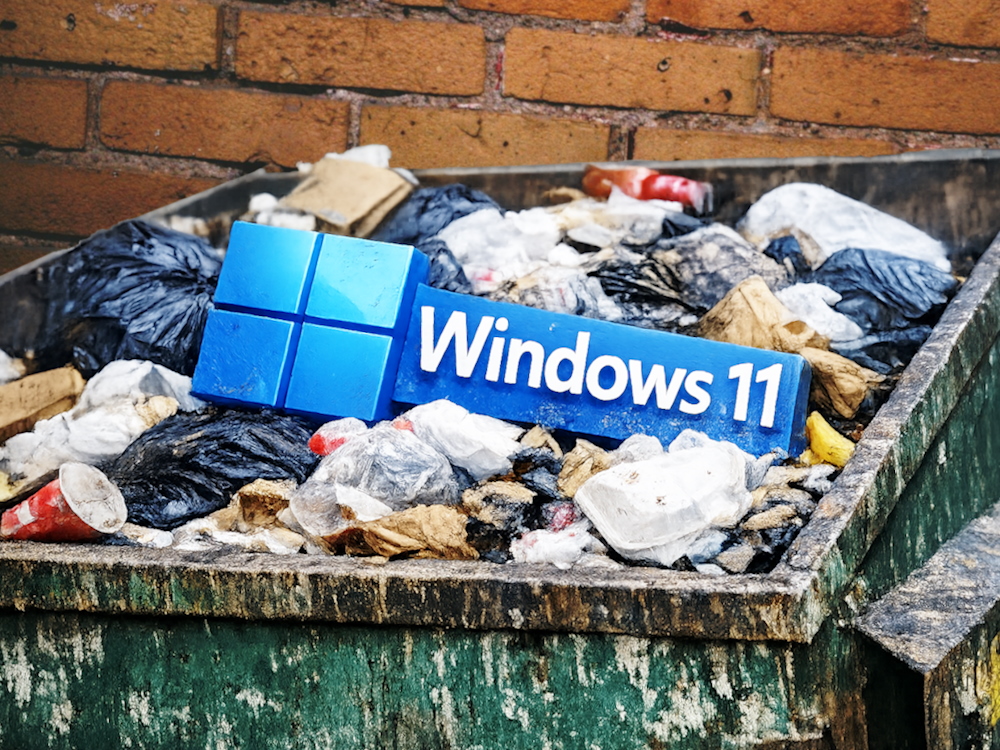
I dumped Windows 11 for Linux, and you should too CheckMag With the growing number of users jumping from Windows to Linux, I decided to fully take the plunge and…
Sources
Related posts
- Sony A7V review: Sony’s best all-around full-frame mirrorless yet
- Best Side-Sleeper Mattresses 2026: Tested and Picked by WIRED Reviewers
- More than One Hundred Years of Film Sizes: A Century of Gauge Choices