
TL;DR
Multiple datasets and meteorologists report substantially less winter snow across large parts of the Himalayas in recent years, with several winters in the last five falling below the 1980–2020 average. Experts warn the trend, combined with faster melting, threatens water supplies, mountain stability and ecosystems that depend on seasonal snowmelt.
What happened
Scientists and meteorological agencies say winter precipitation across the Himalayas has declined in recent years, leaving many peaks unusually bare during a season that historically saw persistent snow cover. Analyses spanning 1980–2021 and reanalysis products show decreases concentrated in the western and parts of the central Himalaya; one analysis using ERA-5 found about a 25% drop in snowfall in the northwestern sector over the past five years compared with the 1980–2020 average. Monitoring groups report a record-low winter snow persistence in 2024–25—roughly 24% below normal—and four of the last five winters in the Hindu Kush Himalaya have registered below-normal persistence. Meteorologists point to weaker or northward-shifting westerly disturbances as a likely contributor to reduced winter precipitation, while rising temperatures are causing any snow that does fall to melt faster, shifting some lower-elevation precipitation from snow to rain.
Why it matters
- Seasonal snowmelt supplies rivers used for drinking water, irrigation and hydropower; reductions threaten near-term water availability for millions.
- Less winter precipitation and drier conditions raise the risk of forest fires in mountain and adjacent lowland areas.
- Loss of ice and persistent snow removes stabilizing material from slopes, increasing hazards such as landslides, rockfalls and glacial lake outburst floods.
- Changes in snow distribution and timing can disrupt ecosystems and agricultural cycles that rely on predictable meltwater.
Key facts
- Most winters in the past five years have shown reduced snowfall relative to the 1980–2020 average, according to meteorologists.
- ERA-5-based analysis reported a roughly 25% fall in snowfall in the northwestern Himalayas in the past five years versus the 1980–2020 long-term average.
- The Indian Meteorological Department recorded almost no precipitation across much of northern India in December of the current season.
- IMD warned parts of northwest India and the union territories of Jammu & Kashmir and Ladakh could receive about 86% less precipitation than the long-period average between January and March.
- North India's long-period average (1971–2020) rainfall value cited by the weather department is 184.3 millimetres.
- ICIMOD reported the 2024–25 winter had a 23-year record low in snow persistence, nearly 24% below normal, and that four of the last five winters in the Hindu Kush Himalaya were below normal.
- Studies indicate rising incidence of 'snow drought'—significant scarcity of seasonal snow—particularly between 3,000 and 6,000 metres elevation.
- On average, seasonal snowmelt contributes about one quarter of annual runoff across 12 major river basins in the region, with anomalies affecting nearly two billion people, ICIMOD warned.
What to watch next
- Indian Meteorological Department precipitation forecasts for January–March for northwest India and adjoining Himalayan regions.
- Further peer-reviewed analyses of westerly disturbances to confirm whether they are weakening or shifting and how that affects Himalayan winter precipitation.
- ICIMOD and regional monitoring updates on snow persistence and glacier mass balance through the coming seasons.
Quick glossary
- Long-period average (LPA): A multi-decade average (commonly 30 to 50 years) of precipitation or temperature used to classify current weather as normal, deficient, or excess.
- Snow persistence: A measure of how much seasonal snow accumulates on the ground and remains there over a period without melting.
- Westerly disturbances: Low-pressure weather systems typically originating near the Mediterranean that travel eastward and bring winter rain and snow to the Himalayas.
- Snow drought: A condition in which seasonal snowfall becomes anomalously scarce despite normal or near-normal temperatures, reducing snowpack and meltwater.
- Glacial lake outburst flood (GLOF): A sudden release of water from a glacially dammed lake that can cause catastrophic downstream flooding and debris flows.
Reader FAQ
Is winter snowfall decreasing across the Himalayas?
Multiple datasets and meteorologists cited in the source indicate a decrease in winter precipitation in substantial parts of the western and central Himalaya.
How much has snow cover fallen recently?
ICIMOD reported the 2024–25 winter had nearly 24% below-normal snow persistence; other analyses report a roughly 25% drop in snowfall in parts of the northwest compared with 1980–2020 averages.
Will less snow cause water shortages?
The source warns reduced winter snowfall and faster melting threaten near-term water supplies because seasonal snowmelt supplies about a quarter of annual runoff in 12 major basins, affecting nearly two billion people.
Are changes in westerly disturbances definitely the cause?
Not confirmed in the source; scientists say weakening or shifts of westerly disturbances are a likely factor but studies are mixed and further research is needed.
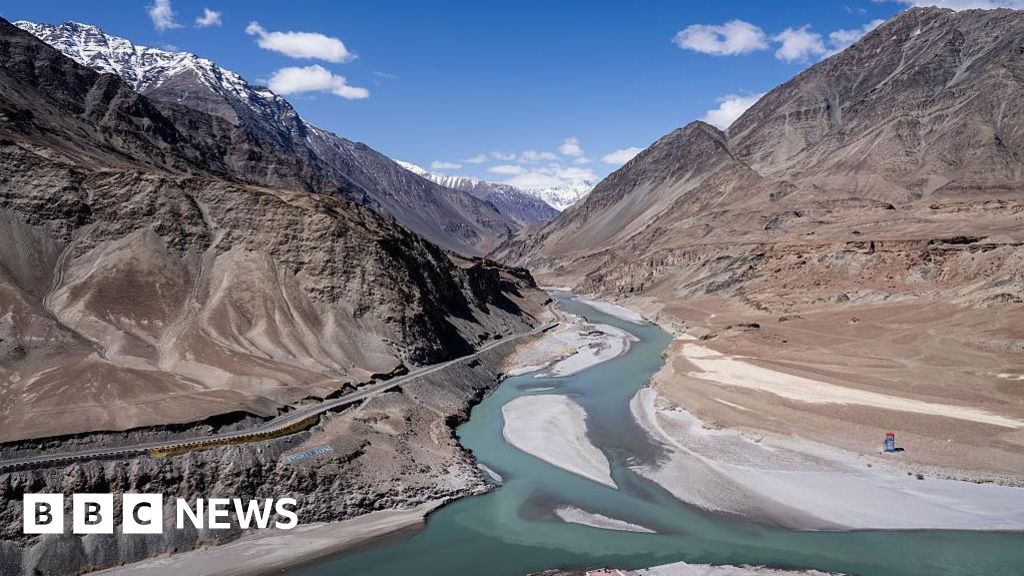
Himalayas bare and rocky after reduced winter snowfall, scientists warn 4 hours ago Share Save Navin Singh Khadka Environment correspondent Getty Images Much less winter snow is falling on the…
Sources
- Himalayas bare and rocky after reduced winter snowfall, scientists warn
- Researchers uncover startling phenomenon striking iconic …
- Himalayas bare and rocky after reduced winter snowfall …
Related posts
- Exploring LLM-Optimized Programming Languages: B-IR and TBIR Experiments
- Why garbage collection is contrarian in Rust-based JavaScript engines
- Show HN: Engineering Schizophrenia — Debugging the Mind Through Byzantine Faults