
TL;DR
A longtime user and writer Ruben Schade revisits Xfce, arguing its enduring balance of lightness and usability remains its strength. He praises recent stability and conservative changes like the move to Thunar, and notes his continued use of Xfce on laptops despite running KDE on his main desktop.
What happened
Ruben Schade published a personal reflection praising Xfce on January 12, 2026. He traces his appreciation back to using Xfce on legacy setups such as the Cobind Desktop and a FreeBSD install, and highlights the desktop environment’s longevity and conservative development approach. Schade cites a 2012 post by David Gerard that praised Xfce for striking the right balance between minimalism and usability, and relays Gerard’s hope that the project would keep evolving version 4 rather than pushing to a disruptive version 5. Schade notes one visible user-facing change in recent years was the adoption of the Thunar file manager, which he approves of. He also admits to running KDE on his primary desktop while continuing to use Xfce on his laptops, and he includes a disclaimer about moderating critical comments on his blog. The post is tagged with software, FreeBSD and Xfce and the site runs on FreeBSD and OpenZFS.
Why it matters
- Xfce’s combination of light resource use and a functional UI makes it relevant for older hardware and users who prefer minimalism without losing core desktop features.
- A conservative development approach can preserve familiarity and stability for long-term users, reducing the disruption from radical UX overhauls.
- Choices like adopting Thunar show the project can evolve in ways that improve usability without abandoning its principles.
- The contrast with heavier DEs (like KDE or GNOME) highlights different user priorities across the Linux/Unix desktop ecosystem.
Key facts
- Post published by Ruben Schade on January 12, 2026.
- Schade describes longstanding personal use of Xfce, dating back to Cobind Desktop and a 2008 FreeBSD setup.
- He references a 2012 post by David Gerard praising Xfce’s restraint and balance between minimalism and usability.
- Schade says the switch to the Thunar file manager was the last major user-facing change he recalls and calls it a positive change.
- He currently runs KDE on his primary desktop but uses Xfce on his laptops and is tempted to return to Xfce on the desktop.
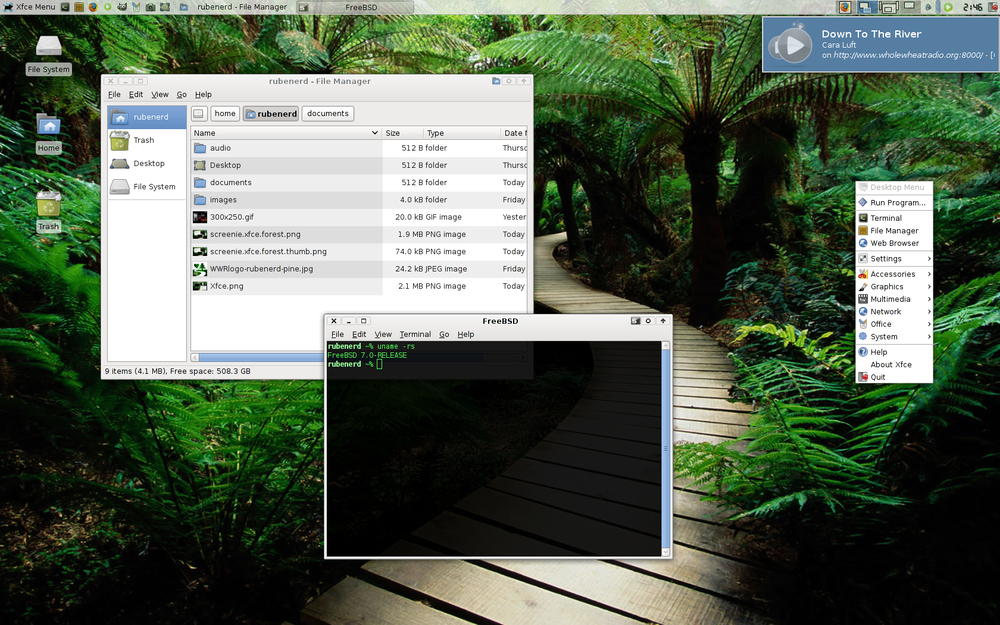
- A screenshot in the post is actually of the author’s FreeBSD desktop from 2008, using the Tango iconset.
- The blog is tagged with software, FreeBSD and Xfce and is powered by FreeBSD and OpenZFS.
- The author includes a disclaimer that he will delete and block angry comments.
What to watch next
- Whether the Xfce project will ever move to a major new version like '5' or continue evolving the 4.x line — not confirmed in the source
- How Xfce’s development choices balance new features against maintaining the existing, familiar experience — not confirmed in the source
- Whether Schade actually switches his primary desktop back to Xfce (he says he’s 'half-tempted')
Quick glossary
- Xfce: A lightweight desktop environment for Unix-like operating systems focused on speed, low resource use and a traditional desktop metaphor.
- Thunar: The default file manager for Xfce, designed to be fast and easy to use.
- KDE: A full-featured desktop environment for Unix-like systems known for configurability and a richer feature set than many lightweight DEs.
- FreeBSD: A free and open-source Unix-like operating system descended from BSD (Berkeley Software Distribution).
- Tango iconset: A visual style and icon set that aimed to provide a consistent, easily recognizable set of icons for desktop applications.
Reader FAQ
Who wrote the piece?
Ruben Schade, a technical writer and infrastructure architect based in Sydney, Australia.
Does the author use Xfce exclusively?
No. He runs KDE on his primary desktop but uses Xfce on his laptops and is considering moving back to Xfce on his desktop.
Is Xfce moving to a version 5?
Not confirmed in the source.
Was the screenshot in the post taken recently?
No — the screenshot is from the author’s FreeBSD desktop in 2008, using the Tango iconset.
Xfce is great Monday 12 January 2026 I have not been shy talking about my love of Xfce over the years here. The desktop environment has been a trusted friend…
Sources
- XFCE Is Great
- Why choose Xfce for your lightweight Linux desktop
- Why XFCE is the Best Linux Desktop – Datamation
- Improving the adoption of XFCE toward developers
Related posts
- Reduced winter snowfall leaves Himalayas bare and raises water risks
- Exploring LLM-Optimized Programming Languages: B-IR and TBIR Experiments
- Why garbage collection is contrarian in Rust-based JavaScript engines