
TL;DR
A longtime user, Ruben Schade, argues Xfce remains a dependable, lightweight desktop environment that balances minimalism with usability. He praises its consistency and longevity, contrasts it with other desktops he uses (KDE), and urges the project not to chase disruptive UX changes.
What happened
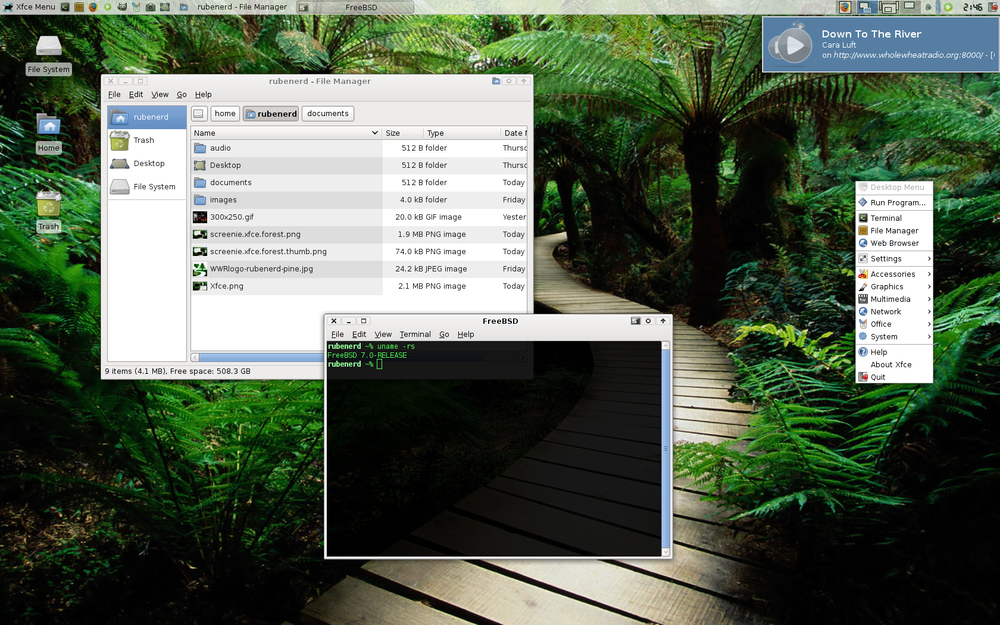
Ruben Schade published an opinion piece on January 12, 2026, reaffirming his long-running preference for the Xfce desktop environment. He traces his use back to earlier systems such as the Cobind Desktop and FreeBSD, and cites longevity and restraint in changes as key strengths. Schade references a 2012 post by David Gerard that praised Xfce's incremental improvements around versions 4.8 and 4.10, and says the project has avoided unnecessary overhauls. He notes a published screenshot in the post is actually of a FreeBSD desktop from 2008 using the Tango icon set, a nod to earlier icon design clarity. Though he runs KDE on his main desktop and acknowledges improvements there, Schade keeps Xfce on his laptops and says he’s tempted to switch his desktop back. He highlights Thunar as the last major user-facing change he remembers and expresses hope the project will continue to evolve conservatively rather than pursuing radical UX shifts.
Why it matters
- Xfce's steady, conservative development model highlights a different path for desktop environments compared with frequent disruptive redesigns.
- For users seeking a lightweight but feature-complete desktop, Xfce presents a viable alternative to minimal window managers and heavier DEs.
- Long-term maintenance and backward compatibility matter to users who value predictable workflows across years and platforms.
- The discussion reflects a wider community debate about balancing innovation with stability in open-source desktop projects.
Key facts
- The post was published on Monday, January 12, 2026.
- Author: Ruben Schade, a technical writer and infrastructure architect based in Sydney, Australia.
- Schade says he has used Xfce since early experiences on Cobind Desktop and in FreeBSD.
- He references a 2012 post by David Gerard praising Xfce versions around 4.8 and 4.10 for getting the balance right.
- A screenshot included in the post is identified as a FreeBSD desktop from 2008 using the Tango icon set.
- Schade runs KDE on his primary desktop but keeps Xfce on his laptops and is considering moving back.
- He identifies the switch to the Thunar file manager as the last major user-facing change he recalls and describes it positively.
- The blog runs on FreeBSD and OpenZFS, and the post is tagged with software, freebsd, and xfce.
What to watch next
- Whether the Xfce project plans a major new release (for example, a move to version 5) — not confirmed in the source.
- Any announced user-interface overhauls or shifts away from Xfce's conservative development approach — not confirmed in the source.
- Broader desktop adoption trends influenced by devices like the Steam Deck or new hardware — not confirmed in the source.
Quick glossary
- Xfce: A lightweight, modular desktop environment for Unix-like systems that aims to be fast and user-friendly while remaining relatively simple.
- Thunar: A file manager commonly used with Xfce, designed to be fast and easy to use.
- FreeBSD: A free and open-source Unix-like operating system derived from BSD (Berkeley Software Distribution).
- KDE: A feature-rich desktop environment for Linux and other Unix-like systems, known for configurability and a comprehensive suite of applications.
- Icon set (e.g., Tango): A collection of graphical icons used to represent applications, files, and system elements in a desktop environment.
Reader FAQ
Who wrote the post?
Ruben Schade, a technical writer and infrastructure architect in Sydney, Australia.
Does the author still use Xfce?
Yes — he runs Xfce on his laptops and is considering moving his primary desktop back to it, while currently using KDE on his main machine.
Is the desktop screenshot in the post recent?
No. The screenshot is identified as a FreeBSD desktop from 2008 using the Tango icon set.
Will Xfce move to a major new version or radically change its UX?
Not confirmed in the source.
Xfce is great Monday 12 January 2026 I have not been shy talking about my love of Xfce over the years here. The desktop environment has been a trusted friend…
Sources
- Xfce is great
- 8 reasons to use the Xfce Linux desktop environment
- 5 Reasons Xfce Is My Favorite Linux Desktop
- No simplicity / General discussion / Xfce Forums
Related posts
- Why Xfce Still Matters: A Longtime User’s Case for the Lightweight Desktop
- Samsung Galaxy S26 may add iPhone-style 24MP camera mode in stock app
- Project Farm Tests Hidden Camera Detectors That Claimed to Expose Spy Cameras