
TL;DR
A Danish computer scientist built a tactile media controller for his three-year-old by repurposing a 3.5-inch floppy drive. Each disk triggers a script on a Raspberry Pi that starts or pauses streaming to a Chromecast, and the project’s code is available on GitHub.
What happened
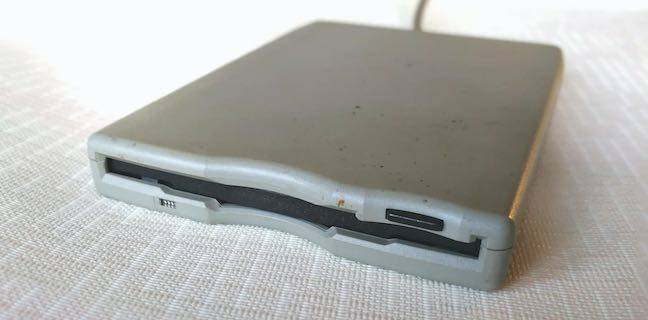
Mads Olesen, a Danish computer scientist, created a child-friendly TV controller using an old 3.5-inch floppy drive after his three-year-old struggled with a standard remote. Each floppy contains a small file (autoexec.sh) with a short string naming a bash script on a Raspberry Pi server. When a disk is inserted the Pi runs the corresponding script and uses pychromecast to command a Chromecast to start streaming the designated playlist or show; removing the disk pauses playback and reinserting resumes it. To detect insertion reliably Olesen modified the drive with a rolling switch because his drives lacked a disk-change signal on the legacy 34-pin header. An Arduino transmits the insertion signal wirelessly to the Pi, powered by batteries. Olesen says he has about eight or nine disks, finds labeling the main practical hurdle, and has published the project files and code on GitHub.
Why it matters
- Demonstrates a low-tech, tactile interface that can simplify media access for very young children.
- Reuses obsolete hardware in a practical, modern context rather than discarding it.
- Illustrates how small-scale maker projects can bridge physical interaction and streaming services.
- Shares implementation details and code publicly, enabling others to replicate or adapt the idea.
Key facts
- Creator: Mads Olesen, Danish computer scientist.
- User: designed for his three-year-old child who had difficulty using a conventional remote.
- Control mechanism: each floppy disk holds a short string in a file (autoexec.sh) pointing to a bash script on the server.
- Server: a Raspberry Pi runs scripts and uses pychromecast to control a Chromecast device.
- Physical detection: Olesen added a rolling switch to the floppy drive because his drives lacked a disk-change pin on the 34-pin header.
- Wireless signaling: an Arduino sends the insertion event wirelessly to the Raspberry Pi; batteries supply power for wireless components.
- Behavior: inserting a disk starts streaming the linked content, ejecting pauses it, reinserting resumes playback.
- Scale: Olesen reports about eight or nine different disks in use, including disks for playlists of family-friendly music videos.
- Improvements considered: he would remove the Chromecast to reduce latency and connect a computer directly to the TV; he also considered adding unique melodies per disk.
- Availability: the project's codebase and relevant files are published on GitHub.
What to watch next
- Updates on the GitHub repository for the project (new disks, code refinements, or build notes).
- Whether Olesen pursues a redesign that removes the Chromecast in favor of a direct computer-to-TV connection to cut latency.
- Potential addition of per-disk melodies on the drive itself to provide audible feedback when disks are inserted.
Quick glossary
- Floppy disk (3.5-inch): A magnetic storage medium used primarily in the 1980s and 1990s, typically holding 1.44 MB of data.
- Raspberry Pi: A small, low-cost single-board computer commonly used in hobbyist and maker projects to run scripts and control peripherals.
- pychromecast: A Python library that lets a computer program discover and control Chromecast devices on a local network.
- Arduino: An open-source microcontroller platform used for sensing, control and communication in electronics projects.
- Chromecast: A consumer streaming device from Google that accepts instructions from other devices to start playback of online media on a television.
Reader FAQ
Who made this floppy-disk TV controller?
Mads Olesen, a Danish computer scientist.
How does inserting a disk start video playback?
Each floppy contains a short file name (autoexec.sh) that tells a Raspberry Pi which bash script to run; the Pi then uses pychromecast to start the associated stream on a Chromecast.
Is the project code available for others?
Yes — Olesen has published the codebase and project files on GitHub.
Will the system remain based on Chromecast?
Olesen said he would prefer to remove the Chromecast and connect a computer directly to the TV to reduce latency, but specific follow-up changes are not confirmed in the source.
Can each disk play a different melody when inserted?
Olesen said adding distinct melodies per disk should be doable, but implementation of that feature is not confirmed in the source.
OFFBEAT Danish dev delights kid by turning floppy drive into easy TV remote Just insert a disk and the TV starts playing three-year-old’s favorite shows Brandon Vigliarolo Mon 12 Jan 2026 // 21:43 UTC…
Sources
- Danish dev delights kid by turning floppy drive into easy TV remote
- Developer turns old floppy drive into media remote for son
- Floppy disks turn out to be the greatest TV remote for kids
- What is the earliest prototype of a remote control television?
Related posts
- Inside watching an NBA game courtside with Apple Vision Pro firsthand
- I Took on Delta Air Lines’ In-Flight Chess Bot — It Crushed Me Badly
- Your next trip to a T-Mobile store might look a little different