
TL;DR
A Cornell-led analysis linking survey responses to detailed purchase records finds households cut grocery spending by an average of 5.3% within six months of starting GLP-1 medications; higher-income households saw drops above 8%. Spending at limited-service restaurants fell by about 8%, and reductions were largest for ultra-processed, calorie-dense items.
What happened
Researchers published a study in the Journal of Marketing Research that matched repeated surveys on GLP-1 receptor agonist use with transaction records from a nationally representative panel tracked by Numerator. Comparing households that began taking GLP-1 drugs (used for diabetes and widely prescribed for weight loss) with similar nonusers, the team found measurable declines in food spending after adoption. Within six months, grocery expenditures fell on average 5.3%, with steeper declines among higher-income households; limited-service restaurant spending dropped roughly 8%. Declines concentrated in ultra-processed, calorie-dense categories — savory snacks, sweets, baked goods and cookies — while a small set of categories (yogurt, fresh fruit, nutrition bars, meat snacks) showed modest increases. About one-third of users discontinued during the study; their spending tended to return toward pre-adoption levels after stopping.
Why it matters
- Shifts in household demand could affect manufacturers, retailers and restaurants, especially those selling snack foods and fast-food items.
- Aggregate implications may be meaningful even if individual household changes are modest, given rising GLP-1 adoption.
- Policy discussions about diet and public health may need to account for medical treatments that alter appetite and consumption patterns.
- Changes in demand could prompt firms to reconsider product sizes, formulations and marketing strategies.
Key facts
- Study published Dec. 18 in the Journal of Marketing Research.
- Researchers combined survey data on GLP-1 use with transaction records from Numerator’s panel of about 150,000 U.S. households.
- Average grocery spending fell 5.3% within six months of GLP-1 adoption.
- Higher-income households experienced grocery spending declines of more than 8%.
- Spending at limited-service restaurants (fast-food, coffee shops) fell by about 8%.
- Spending on savory snacks declined roughly 10%; similar large drops occurred for sweets, baked goods and cookies.
- A few categories increased modestly, led by yogurt, fresh fruit, nutrition bars and meat snacks.
- Reported household share with at least one GLP-1 user rose from about 11% in late 2023 to over 16% by mid-2024.
- About one-third of users stopped the medication during the study; discontinuation was followed by spending reverting toward pre-adoption levels.
- Authors note the study cannot fully isolate biological drug effects from concurrent lifestyle changes, though trial evidence and spending reversion point to appetite suppression as a likely mechanism.
What to watch next
- Whether food manufacturers and retailers adjust package sizes, formulations or marketing to respond to sustained demand shifts noted in the study.
- How continued increases in GLP-1 adoption alter aggregate food market demand over time.
- Regulatory or fiscal policy responses tied to changing consumption patterns (not confirmed in the source).
Quick glossary
- GLP-1 receptor agonists: A class of medications developed for diabetes that can suppress appetite and are increasingly prescribed for weight loss.
- Numerator: A market research firm that tracks grocery and restaurant transactions for a nationally representative household panel.
- Limited-service restaurants: Eateries such as fast-food chains and coffee shops where customers order at a counter or drive-through rather than full table service.
- Ultra-processed foods: Products typically high in added sugars, fats and salt and low in whole ingredients; often calorie-dense and associated with cravings.
Reader FAQ
Do GLP-1 drugs reduce household food spending?
Yes; the study found an average 5.3% drop in grocery spending within six months of starting, and about an 8% drop at limited-service restaurants.
Are all food categories affected equally?
No; ultra-processed, calorie-dense categories (savory snacks, sweets, baked goods, cookies) showed the largest declines, while yogurt, fresh fruit, nutrition bars and meat snacks increased modestly.
Who is taking GLP-1 medications?
The share of households reporting a user rose from ~11% in late 2023 to over 16% by mid-2024; weight-loss users skew younger and wealthier, while diabetes users are older and more evenly distributed across incomes.
Do spending changes last?
Among households that continued the medication, lower spending persisted for at least a year though the effect diminished; when users stopped, spending tended to return toward pre-adoption levels.
Do these findings prove the drugs directly cause the changes?
Not fully; the authors caution the study cannot completely separate biological effects from other simultaneous lifestyle changes, though evidence suggests appetite suppression is likely a key factor.
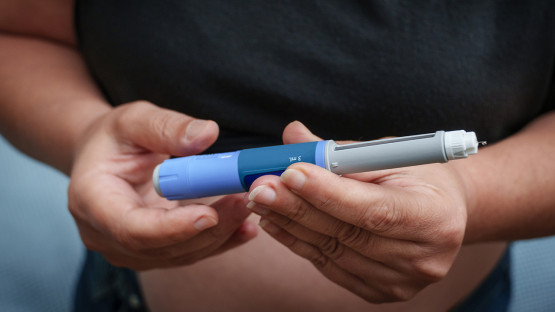
Ozempic is changing the foods Americans buy By Laura Reiley, Cornell Chronicle December 19, 2025 LinkedIn Facebook Twitter Email Share When Americans begin taking appetite-suppressing drugs like Ozempic and Wegovy,…
Sources
- Ozempic is changing the foods Americans buy
- How Ozempic and Wegovy are quietly cutting America's …
- The GLP-1 Boom Is Rewriting the Future of Packaged Food
- How Ozempic is Shaping New Shopping Habits
Related posts
- Danish developer converts floppy drive into a simple TV remote for child
- Message Queues: A Simple Guide with Analogies — Post Offices, Warehouses, DBs (2024)
- Presidential Immunity in U.S. Law: Civil, Criminal and the Court Limits