
TL;DR
Ring founder Jamie Siminoff says AI is driving the company’s evolution from video doorbells toward an 'intelligent assistant' for the home. New AI-powered features — including fire detection partnerships, pet-search tools, conversational AI and facial recognition — have sparked both interest and privacy concerns.
What happened
Jamie Siminoff, Ring’s founder, described at CES how recent advances in artificial intelligence are reshaping the company’s mission from selling video doorbells to building an AI-driven “intelligent assistant” for homes and other spaces. Ring introduced features such as Fire Watch (a partnership with nonprofit Watch Duty that uses footage to map large fires), Search Party (an AI tool that matches images of lost pets to Ring footage), conversational AI, alerts for “unusual events,” and Familiar Faces (a facial-recognition option for regular visitors). Some moves have prompted criticism over privacy and policing: Ring ended an earlier police-request program in 2024 but later struck new partnerships with firms like Flock Safety and Axon that reintroduce tools for law-enforcement requests. Siminoff says most data-sharing is opt-in and defended the company’s choices by citing public-safety use cases, while civil-liberties groups and at least one U.S. senator have raised objections.
Why it matters
- Ring’s pivot signals how consumer security devices are being repurposed into broader AI assistants, extending beyond doorbell video to home automation and public safety.
- New features rely on large volumes of customer footage and opt-in sharing, raising questions about consent, data use and long-term privacy trade-offs.
- Renewed ties with law-enforcement tech firms could revive debates about corporate roles in policing and the balance between community safety and surveillance.
- Expansion into commercial camera systems means these AI tools could move from residential settings into businesses, campuses, events and work sites.
Key facts
- Founder Jamie Siminoff returned to focus on Ring’s AI potential after leaving Amazon; the Palisades fires that damaged his home helped inspire Fire Watch.
- Fire Watch was developed with nonprofit Watch Duty and uses AI to analyze shared footage for smoke, fire, embers and related indicators.
- Search Party uses AI to match posted images of lost pets with Ring footage; Ring says it is reuniting roughly one family per day with their dogs.
- Familiar Faces is a new facial-recognition option that can identify and store frequent visitors’ faces and names if provided by users.
- Ring ended an earlier set of police partnerships in 2024 but later formed new agreements with companies including Flock Safety and Axon to enable law-enforcement requests for footage.
- Ring asserts customers can opt in or decline sharing footage when requests are made, and that requests are anonymized from the agency until the owner responds.
- Civil-rights advocates such as the EFF and at least one U.S. senator have criticized some of Ring’s facial-recognition features and policing ties.
- Ahead of CES, Ring also introduced commercial-focused hardware including mounted cameras, a line of sensors and a solar-powered trailer.
What to watch next
- Regulatory and legislative scrutiny of Ring’s facial-recognition features and law-enforcement partnerships — not confirmed in the source
- Adoption rates and user opt-in levels for Fire Watch and Search Party, and measurable impact on emergency response and pet recovery — not confirmed in the source
- How Ring’s commercial camera deployments affect privacy expectations in public and semi-public venues, and whether new limits or standards emerge — not confirmed in the source
Quick glossary
- Artificial intelligence (AI): Computer systems that perform tasks usually requiring human intelligence, such as pattern recognition, language processing, and decision-making.
- Facial recognition: A technology that analyzes facial features in images or video to identify or verify an individual’s identity.
- Opt-in: A system in which users actively agree to participate or share data, rather than being automatically enrolled.
- Intelligent assistant: An AI-driven system designed to help users by automating tasks, providing alerts, answering queries, or making contextual recommendations.
- Commercial camera systems: Surveillance and monitoring hardware intended for businesses, campuses, events and other non-residential deployments.
Reader FAQ
Is Ring adding AI features to its products?
Yes. Ring has launched several AI-driven features including Fire Watch, Search Party, conversational AI, and Familiar Faces.
Does Ring automatically share footage with police?
According to the company, customers receive requests and can choose whether to share footage; Ring says requests are anonymized to the agency until a customer responds.
Is Fire Watch mandatory for Ring users?
No. The Fire Watch program depends on customers opting in to share footage during major fire events, per the reporting.
Have privacy groups objected to Ring’s new tools?
Yes. Organizations like the EFF and at least one U.S. senator have raised concerns about facial-recognition features and data-sharing practices.
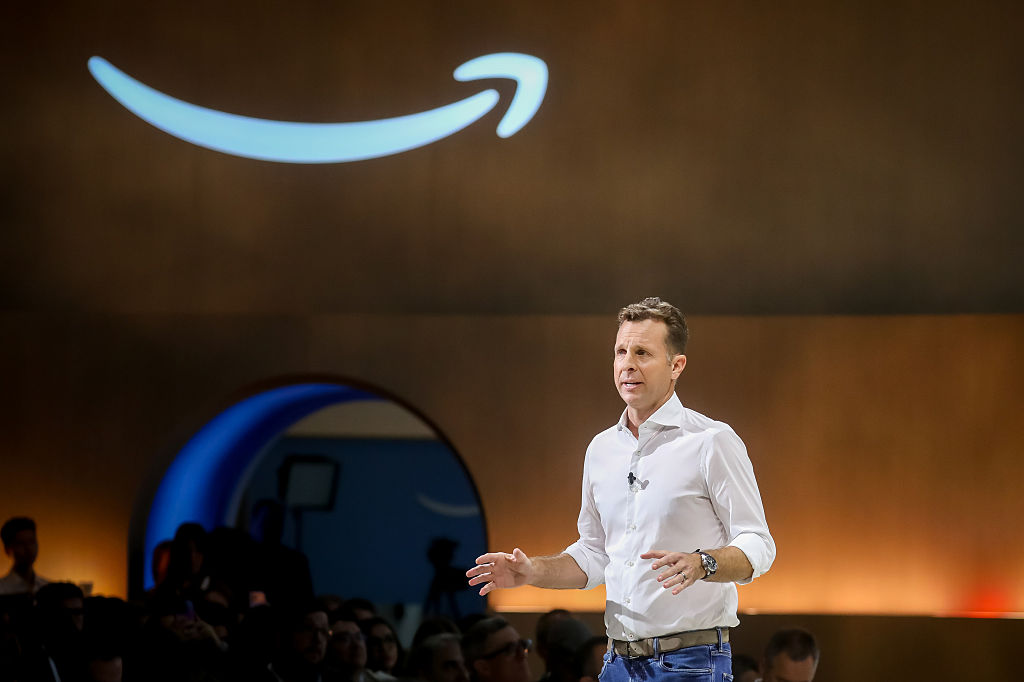
What does it take to bring a burned-out founder back to the company he sold to Amazon? For Jamie Siminoff of the video doorbell maker Ring, it was the potential…
Sources
- Ring founder details the camera company’s ‘intelligent assistant’ era
- Ring founder talks AI, privacy & success
- Ring's Jamie Siminoff thinks AI can reduce crime
- Ring CEO Claims AI-Powered Cameras Can Eliminate …
Related posts
- Bandcamp Bans AI-Generated and Heavily AI-Produced Music from Platform
- Signal leaders warn agentic AI is insecure, unreliable surveillance risk
- House backs law to block China from remote access to US export GPUs