
TL;DR
The US Commerce Department released conditions allowing Nvidia and AMD to apply to export certain data-center GPUs to China, subject to supply, foundry, security and testing requirements. Shipments to Chinese end users will be capped relative to US deliveries and reviewed case-by-case by the Bureau of Industry and Security.
What happened
The Department of Commerce’s Bureau of Industry and Security (BIS) published conditions under which Nvidia and AMD may request permission to export specific accelerators — the H200 and MI325X — to Chinese customers. The policy requires that the US have adequate domestic supply, that exports not divert global foundry capacity away from US end users, that recipients satisfy security and know-your-customer checks, and that units undergo independent third-party testing in the United States to verify performance. BIS also limits shipments to China to at most 50% of the number of the same product shipped to US end users and requires vendors to list remote users in several named jurisdictions. Each export application will be reviewed individually. The move follows earlier US restrictions that blocked the H200 and a previously created H20 variant, actions which Nvidia said cost it more than $10 billion in sales.
Why it matters
- Targets national-security concerns by restricting advanced compute that could aid military or strategic AI development.
- Seeks to preserve US access to leading accelerators and foundry capacity for domestic companies and institutions.
- Places operational and compliance burdens on chipmakers, which must satisfy supply, testing and customer-vetting conditions.
- Even if approvals are granted, Chinese buyers would receive models that the source says use less advanced architectures than US-available chips.
Key facts
- BIS is allowing Nvidia and AMD to apply to export H200 and MI325X models under new conditions.
- Four explicit criteria: sufficient US supply; no diversion of global foundry capacity away from US end users; recipient security and KYC checks; independent third-party testing in the US.
- Shipments to China are capped at no more than 50% of total units shipped to US end users for that product.
- Vendors must produce a list of remote users located in or controlled by entities in Belarus, China, Cuba, Iran, Macau, North Korea, Russia, and Venezuela.
- Each export application will be evaluated on a case-by-case basis by BIS.
- Earlier US restrictions had blocked Nvidia’s H200; Nvidia produced a limited H20 that was also later banned, and the company said those moves cost it over $10 billion in sales.
- The H200 and MI325X were launched in 2024 and, according to the source, do not use the most advanced architectures.
- Market reaction: AMD and Nvidia shares were reported to have remained flat on the day the rules were revealed.
What to watch next
- Whether BIS grants approvals for specific export applications and on what timetables — not confirmed in the source.
- How foundry capacity and supply-chain decisions by US and global manufacturers respond to the new export conditions — not confirmed in the source.
- How Chinese hyperscalers and AI firms adjust workloads or pursue domestic alternatives if access is limited — not confirmed in the source.
Quick glossary
- GPU: Graphics Processing Unit: a processor optimized for parallel workloads, commonly used for graphics and for accelerating AI and high-performance computing tasks.
- BIS: Bureau of Industry and Security: a US Commerce Department agency that administers export controls and regulates certain international trade to protect national security and foreign policy interests.
- Foundry capacity: Manufacturing capability at semiconductor fabrication plants; limited capacity can constrain how many chips of a given design are produced.
- Know-your-customer (KYC): Procedures used by vendors and financial institutions to verify the identity and assess the risk profile of customers to prevent illicit use.
- Independent third-party testing: Verification by an external organization that a product meets stated performance or technical specifications, performed outside the vendor and the recipient.
Reader FAQ
Can Nvidia and AMD export H200 and MI325X GPUs to China?
They can apply for permission, but exports are allowed only if the product and recipient meet BIS’s four conditions and each application passes case-by-case review.
Are shipments to China unrestricted?
No. The rules limit shipments to China to no more than 50% of the total number of that product shipped to US end users.
Will Chinese buyers get the same chips as US buyers?
The source states the H200 and MI325X do not use the most advanced architectures, so Chinese acquisitions would be less advanced than the highest-end models available to US buyers.
Did previous US export decisions affect vendor sales?
Yes. According to the source, Nvidia said earlier export restrictions cost it over $10 billion in sales.
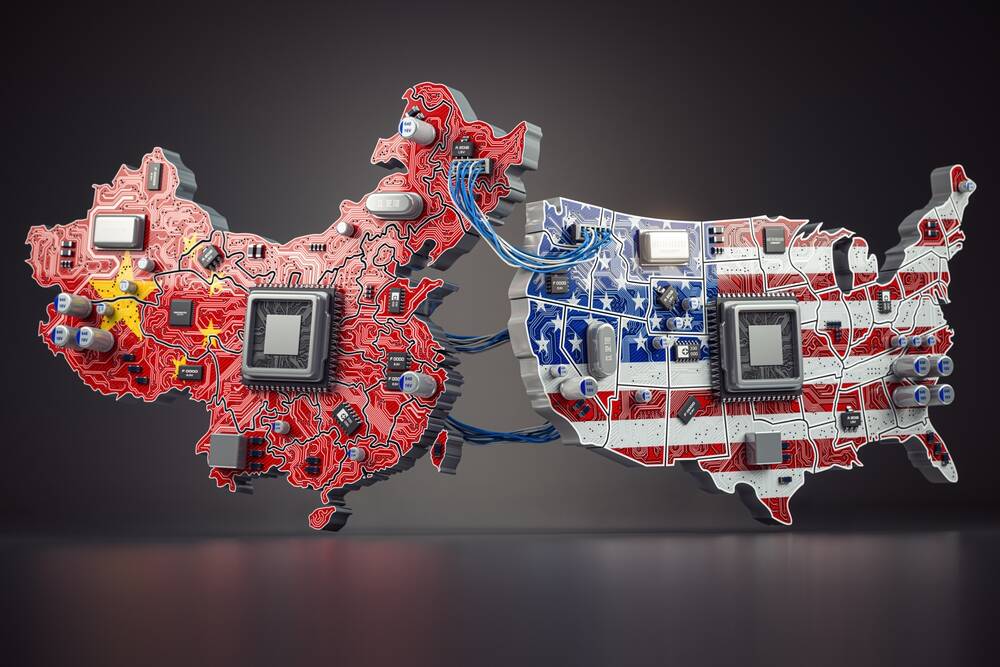
PUBLIC SECTOR Trump administration sets GPU export rules that put Chinese buyers at the back of the queue America first, for sales and access to foundries Simon Sharwood Wed 14 Jan 2026 //…
Sources
- Trump administration sets GPU export rules that put Chinese buyers at the back of the queue
- Commerce Department tweaks export rules, paving the …
- The Consequences of Exporting Nvidia's H200 Chips to …
- U.S. Export Controls and China: Advanced Semiconductors
Related posts
- DOJ publishes partially redacted documents related to Operation Absolute Resolve
- Apple Scrambles as Glass-Cloth Shortage Threatens Chip Supply Through 2027
- ProPublica finds 40+ cases of immigration agents using banned chokeholds