
TL;DR
After months of daily use, a writer who carries both an iPhone 16 Pro and a Pixel 10 Pro says the AirPods Pro 3 deliver several practical features missing from many Android earbuds. Key differentiators include built-in heart-rate tracking, magnetic wireless charging alignment, precision Find My tracking, Adaptive EQ, and FDA-cleared hearing-aid functionality.
What happened
A reviewer who regularly uses both Apple and Android devices tested the AirPods Pro 3 for several months after previously avoiding AirPods due to cost and fit preferences. Although the writer favored the Pixel Buds Pro 2 for comfort, extended use of the AirPods Pro 3 revealed multiple areas where Apple’s buds outpaced comparable Android options. The AirPods Pro 3 include an in-ear heart-rate sensor that feeds workout metrics to Apple’s Fitness app, magnetic MagSafe-style alignment for more reliable wireless charging, and ultra-wideband (UWB) precision in Find My that can guide a user to an exact location. The earbuds also use an inward-facing mic for Adaptive EQ to tune lows and mids based on fit, and they retain FDA clearance and a personalized audiogram workflow that lets them be used for mild-to-moderate hearing loss. The reviewer suggests Samsung and Google could close feature gaps in future flagship earbuds.
Why it matters
- Built-in sensors and UWB tracking push earbuds beyond audio into health and locational utility, expanding use cases for consumers.
- Magnetic alignment improves day-to-day reliability of wireless charging, reducing failed charges caused by misplacement.
- Adaptive EQ and inward-facing mics can materially affect perceived sound quality by compensating for fit and seal.
- FDA-cleared hearing-aid capability adds an accessibility and medical-adjacent use case not common in Android earbuds.
- If Samsung and Google adopt these features, cross-platform parity on key convenience and safety functions would improve.
Key facts
- The reviewer carries an iPhone 16 Pro and a Google Pixel 10 Pro daily and tested the AirPods Pro 3 for months.
- AirPods Pro 3 include a built-in heart-rate sensor that measures blood flow through the ear and shares data with the iPhone Fitness app; it also estimates calories and tracks steps and distance.
- AirPods Pro 3 support magnetic MagSafe-style alignment for wireless charging, which the reviewer found more reliable than standard wireless pads.
- Pixel Buds Pro 2 can be located via the Find Hub app on Android and Galaxy Buds Pro 3 work with SmartThings Find, but neither provides the same UWB precision guidance Apple’s Find My offers for AirPods Pro 3.
- Adaptive EQ on the AirPods Pro 3 uses an inward-facing microphone to adjust low and mid frequencies based on fit; Samsung’s Galaxy Buds 3 Pro offers a similar capability, while Pixel Buds lack a true Adaptive EQ equivalent.
- The AirPods Pro 3 are FDA-cleared for use as hearing aids for users with mild-to-moderate hearing loss and rely on a personalized audiogram created via an iPhone hearing test.
- AirPods Pro 3 technical highlights listed in the source include an H2 chip, custom high-excursion drivers, IP57 rating, USB-C charging, and up to eight hours of battery life with ANC enabled.
What to watch next
- Whether Samsung and Google add built-in heart-rate sensors to future flagship earbuds — not confirmed in the source.
- If Google or Samsung adopt magnetic (MagSafe/Qi2-style) alignment for earbuds to reduce mischarging — not confirmed in the source.
- Moves by Samsung or Google to include UWB hardware in earbuds for precision location tracking similar to AirPods — not confirmed in the source.
- Any announcements that Samsung or Google will pursue FDA clearance or hearing-aid workflows for their earbuds — not confirmed in the source.
Quick glossary
- Ultra-wideband (UWB): A short-range wireless protocol that allows highly accurate spatial and directional positioning between compatible devices.
- MagSafe / magnetic alignment: A magnetic system used in wireless charging that helps devices snap into a precise alignment with a charging puck or pad for reliable power transfer.
- Adaptive EQ: An audio processing approach that measures sound inside the ear and automatically adjusts frequency response to compensate for fit and seal.
- FDA clearance: A regulatory acknowledgment that a device meets specific safety and effectiveness standards for certain medical uses in the United States.
- Active Noise Cancellation (ANC): A technology that reduces ambient noise by using microphones and anti-phase audio signals to cancel external sounds.
Reader FAQ
Did the reviewer previously prefer other earbuds?
Yes. The reviewer preferred the fit and form factor of the Pixel Buds Pro 2 before testing the AirPods Pro 3.
Do AirPods Pro 3 track heart rate?
Yes. The AirPods Pro 3 include a built-in heart-rate sensor that can send data to the iPhone Fitness app.
Can Pixel or Samsung earbuds do UWB precision finding today?
Not confirmed in the source for precision UWB on the earbuds themselves; the source says Pixel Buds Pro 2 are locatable via Find Hub and Galaxy Buds Pro 3 via SmartThings Find, but neither offers the same directional UWB guidance as AirPods Pro 3.
Are AirPods Pro 3 cleared for hearing-aid use?
Yes. The AirPods Pro 3 are described in the source as FDA-cleared for use by people with mild-to-moderate hearing loss using a personalized audiogram.
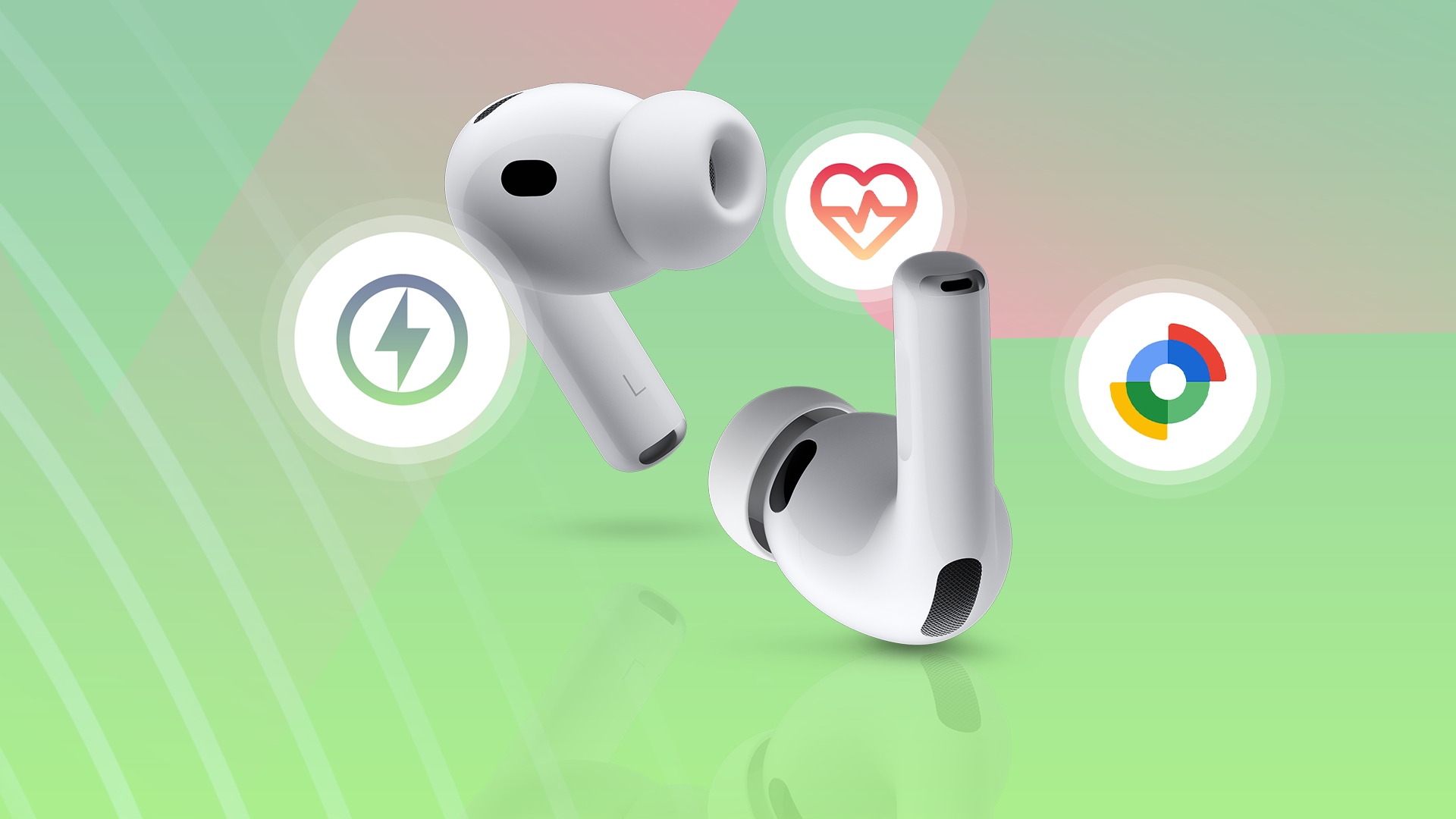
I've used the AirPods Pro 3 for months — here are 5 features Samsung and Google should steal Credit: Lucas Gouveia / Android Police | Apple By Sanuj Bhatia Published 17…
Sources
- I've used the AirPods Pro 3 for months — here are 5 features Samsung and Google should steal
- Five Features Coming to AirPods Pro 3
- 5 features the AirPods Pro 3 should steal from Sony, Bose …
- 5 things the AirPods Pro 3 can learn from the AirPods 4
Related posts
- Asus ROG Falcata review: split gaming keyboard that blends ergonomics
- The Samsung Galaxy S26 Ultra Needs One Key Improvement to Succeed
- Lizn Hearpieces review: Earbud-style hearables are affordable but painful