
TL;DR
VO2 max measures the maximum oxygen your body can use during intense exercise and is a strong predictor of cardiorespiratory health and premature mortality. It’s most accurate when measured in a lab, but field tests and wearable estimates can track trends over time.
What happened
VO2 max, short for maximal oxygen uptake, quantifies how effectively the heart, lungs, and muscles deliver and use oxygen during peak exercise. Historically confined to research and elite sports, the metric has become widely available through performance labs, clinics, and consumer wearables. In a supervised lab test you wear a mask that measures inhaled and exhaled gases while workload increases until oxygen consumption plateaus — that plateau defines VO2 max. Labs typically use additional markers (near-maximal heart rate, respiratory exchange ratio, perceived exertion) to validate the result. When lab testing isn’t practical, validated field protocols such as the Rockport one-mile walk and Cooper 12-minute run offer estimates, and many fitness devices provide algorithmic approximations using heart rate and movement data. VO2 max relates to lower risk of several chronic diseases and to longevity, but it varies with genetics, sex, body composition, age, daily condition, and how the test is run, so it’s best interpreted as a context-dependent snapshot rather than an absolute, one-time score.
Why it matters
- VO2 max is currently one of the strongest single predictors researchers use for premature mortality and cardiorespiratory health.
- Higher VO2 max levels are associated with lower risks of cardiovascular disease, type 2 diabetes, stroke, and some cancers, and link to better sleep, mood, and quality of life.
- It guides training decisions for endurance athletes, including interval pacing and effort targets.
- Because measurements depend on testing conditions and individual factors, tracking changes over time is more informative than a single value.
Key facts
- VO2 max is expressed in milliliters of oxygen per kilogram of body weight per minute (mL/kg/min).
- The most accurate measurement requires lab testing with gas analysis while workload increases to a physiological plateau.
- Lab testing commonly costs a few hundred dollars, though some university or research programs may offer reduced or free testing.
- Field tests that provide valid estimates include the Rockport one-mile walk and the Cooper 12-minute run.
- Consumer wearables (brands such as Garmin and Whoop are cited) estimate VO2 max from heart-rate and movement data; these estimates can be imprecise but useful for tracking trends.
- VO2 max typically declines with age—commonly cited at about 2% per year after age 30—and is influenced by genetics, sex, and body composition.
- Endurance training and high-intensity interval work are effective at raising VO2 max and slowing age-related decline.
- Reaching a true VO2 max in testing is harder for nonathletes; researchers sometimes report VO2 peak instead when maximal criteria are not met.
What to watch next
- Whether consumer wearables will reach the same accuracy as lab-based gas-analysis tests: not confirmed in the source.
- How future research might refine VO2 max thresholds tied to specific longevity outcomes: not confirmed in the source.
Quick glossary
- VO2 max: The maximal rate at which the body can take up and use oxygen during intense exercise, indicating aerobic capacity.
- mL/kg/min: A unit expressing oxygen consumption relative to body weight: milliliters of oxygen per kilogram of body mass per minute.
- VO2 peak: The highest measured oxygen uptake during a test when a true physiological plateau (VO2 max) may not be reached.
- Respiratory exchange ratio (RER): The ratio of carbon dioxide produced to oxygen consumed; used as one indicator of exertion level during metabolic testing.
- High-intensity interval training (HIIT): Exercise that alternates short bursts of very hard effort with periods of lower-intensity recovery; effective for improving aerobic capacity.
Reader FAQ
Can consumer wearables accurately measure VO2 max?
Wearables provide estimates based on heart rate and movement; they can be less accurate than lab tests but are useful for tracking changes over time.
Do you need a lab test to know your VO2 max?
Lab tests are the most accurate method, but validated field tests and wearables can give reasonable estimates for most people.
Can training raise my VO2 max?
Yes. Regular endurance exercise and interval training can increase VO2 max and slow its age-related decline.
Is VO2 max the only thing that determines longevity?
Not confirmed in the source.
How often should I test my VO2 max?
not confirmed in the source
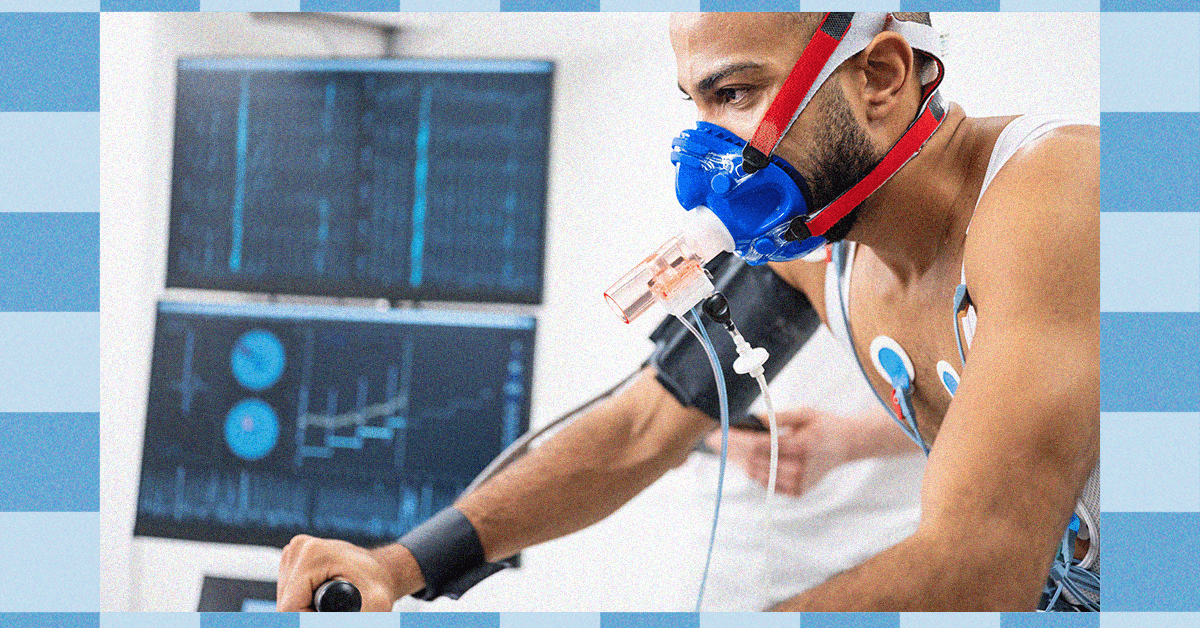
BOUTAYNA CHOKRANE GEAR JAN 15, 2026 7:30 AM What Is VO2 Max and Should You Care About Yours? VO2 max can predict cardiorespiratory health and longevity, but only if you…
Sources
- What Is VO2 Max? Here’s What You Need to Know About the Longevity Metric (2026)
- Survival of the fittest: VO2max, a key predictor of longevity?
- VO2 max: What is it and how can you improve it?
- VO2 max and other fitness metrics
Related posts
- Five AirPods Pro 3 features Samsung and Google should adopt for flagship earbuds
- Documented NYC’s use of WeChat, WhatsApp and Nextdoor to reach immigrants
- Aerial Photos Reveal the Vast Scale of China’s Wind and Solar Buildout