
TL;DR
Apple is finding it harder to secure fab time at TSMC as demand from AI-focused customers such as Nvidia swells. TSMC’s recent results show steep revenue and margin gains driven by high-performance computing, prompting a large capex plan and shifts in client revenue rankings.
What happened
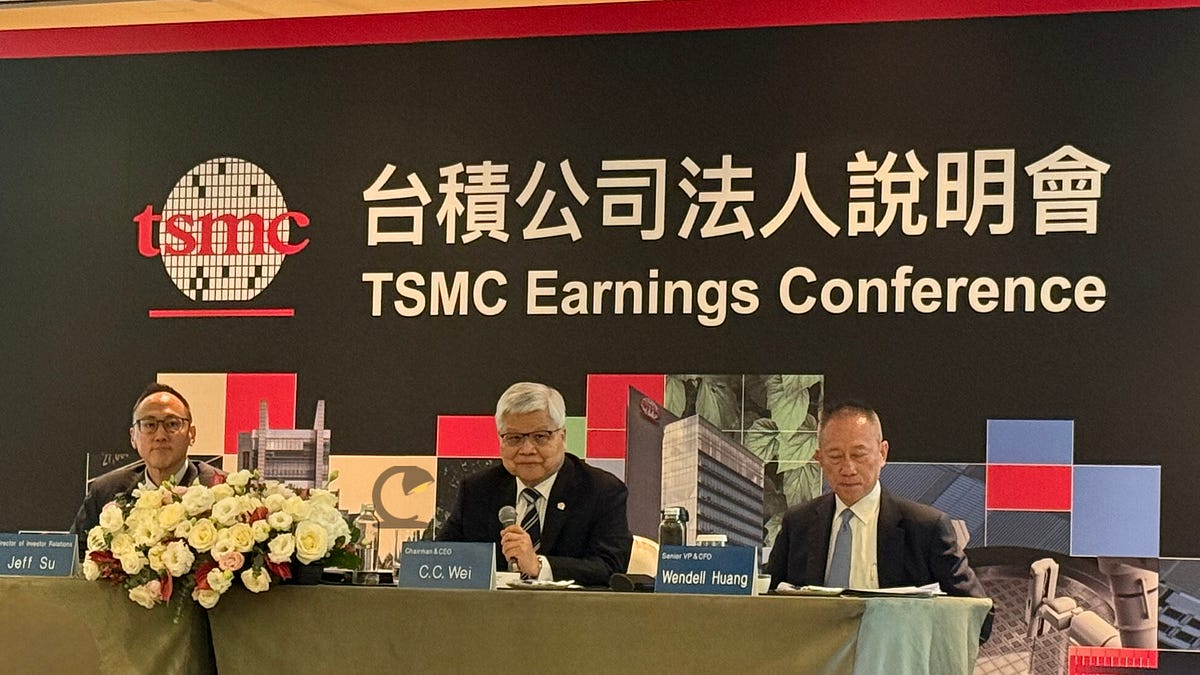
TSMC’s latest financials and industry sourcing indicate a shift in the foundry’s customer mix. The company reported a 36% rise in revenue to $122 billion and a December-quarter gross margin near 62%. High-performance-computing (HPC) sales, which include AI chips, expanded sharply and now account for a rising share of capacity demand. That trend has increased competition for leading-edge wafer slots, with Nvidia and other GPU buyers consuming large wafer footprints. Sources cited by Culpium say Nvidia likely supplanted Apple as TSMC’s top purchaser in one or two quarters last year, and could do so for the full year in 2026. Apple still buys across many fabs and remains a major client, but its product revenue growth slowed to low single digits, leaving it to compete more directly for scarce capacity as TSMC ramps new process variants and nodes.
Why it matters
- Shift in TSMC demand from smartphones to AI-driven HPC changes allocation of limited leading-edge capacity.
- Rising prices and strong margins at TSMC reflect new pricing power that affects clients’ costs and supply planning.
- Large, persistent capex plans mean TSMC will prioritize customers and nodes tied to the fastest-growing AI segment.
- Apple’s broad manufacturing footprint offers stability but does not guarantee priority for the most advanced wafer slots.
Key facts
- TSMC reported revenue up 36% to $122 billion for the year.
- Nvidia’s sales were set to rise roughly 62% for its fiscal year through January 2026.
- Culpium estimates Apple’s product revenue grew about 3.6% for the 12 months to December 2025.
- TSMC’s sales from high-performance computing rose 48% last year; smartphone-related revenue grew 11%.
- TSMC’s December-quarter gross margin was reported at 62.3%, up about 280 basis points year over year.
- TSMC expects 2026 capital expenditure of roughly $52–$56 billion, an increase near 32% from the prior year.
- The foundry is producing at 2 nm (N2) in volume and plans to ramp N2P and an A16 node in the second half of 2026.
- TSMC typically builds new fabs for new process nodes rather than repurposing older factories.
- Sources indicate Nvidia likely overtook Apple as TSMC’s largest client in at least one or two quarters of 2025; final rankings will appear in TSMC’s annual report.
What to watch next
- TSMC’s upcoming annual report, which will disclose revenue contributions from top clients.
- Progress and ramp timing for N2P and A16 in the second half of 2026 and their capacity allocations.
- How TSMC’s 2026 capex spending ($52–56B) translates into new wafer capacity versus near-term equipment lead times.
- not confirmed in the source: whether AI-driven demand will meaningfully decline or plateau in the next few years.
Quick glossary
- Foundry: A company that manufactures semiconductor wafers for other firms that design chips (fabless companies).
- Wafer: A thin slice of semiconductor material on which integrated circuits are fabricated before being cut into individual chips.
- Node: A generation of semiconductor manufacturing technology, often described by a numeric value (e.g., 2 nm) indicating process advancements.
- Capex: Capital expenditure — money spent by a company to acquire, upgrade, or maintain physical assets like fabs and equipment.
- Gross margin: Revenue minus cost of goods sold, expressed as a percentage of revenue; a measure of a company’s profitability on its products or services.
Reader FAQ
Has Nvidia overtaken Apple as TSMC’s largest client?
Culpium’s analysis and supply-chain sources indicate Nvidia likely topped Apple in one or two quarters of 2025; final confirmation awaits TSMC’s annual report.
Why is Apple facing tighter access to TSMC capacity?
The AI-driven demand for large GPU wafers consumes more leading-edge capacity, while Apple’s product revenue growth has been modest, increasing competition for scarce slots.
Is TSMC increasing investment to meet AI demand?
Yes. TSMC expects 2026 capital expenditure of about $52–$56 billion, a roughly 32% increase, and projects continued strong growth in its AI-related segment.
Will TSMC simply build faster to satisfy Nvidia and others?
TSMC is expanding capacity but executives caution against overbuilding; the company typically takes multiple years to bring new fabs online, making rapid scaling complex.
Discover more from Culpium, by Tim Culpan Culpium: noun [U] — a cure for lack of knowledge, understanding or clarity. *taken by those seeking to improve comprehension of technology, semiconductors,…
Sources
- Apple Is Fighting for TSMC Capacity as Nvidia Takes Center Stage
- Apple-TSMC: The Partnership That Built Modern …
- Apple And NVIDIA To Turn Into Rivals Over TSMC …
- Apple and Nvidia Battle for A14 and A16 Nodes in TSMC …
Related posts
- Nvidia Reportedly Halts RTX 5070 Ti Production; RTX 5060 Ti 16GB Next
- Setapp Mobile shutters iPhone app store, cites Apple business terms
- RAM price hikes: Latest developments in the global memory shortage