
TL;DR
A Pew Research Center survey of more than 5,000 U.S. adults in October 2025 found broad public support for science and federal science investments, but sharp partisan differences over whether the country is keeping pace internationally. Democrats have grown markedly more likely to say the U.S. is losing ground in science, while Republicans are more upbeat.
What happened
Pew Research Center surveyed over 5,000 Americans in October 2025 and found that a clear majority say it is important for the United States to be a world leader in science. That view increased modestly since 2023. However, opinions diverged sharply by 2024 presidential vote: the share of Democrats who believe the U.S. is losing scientific ground to other countries rose by 28 percentage points between 2023 and 2025, reaching roughly two-thirds. By contrast, Republican respondents are more positive about the nation’s scientific standing, reversing earlier sentiment. The report also notes that last year the Trump administration reduced federal science funding—cutting millions in grants and rolling back certain research and regulations, especially on climate and health—and that experts have warned of a potential “brain drain” linked in part to stricter immigration policies. Despite budget cuts and partisan divides, 84 percent of respondents said federal investments in science aimed at advancing knowledge are worthwhile.
Why it matters
- Widespread public support for science funding could influence congressional and executive decisions on research budgets and policy priorities.
- Growing partisan divergence about the U.S. role in global science may affect cooperation on science-related legislation and international research partnerships.
- Cuts to federal grants and concerns about a brain drain could weaken U.S. research capacity if not addressed.
- A long-term decline from pre-pandemic levels of public trust in science may complicate public health and policy communication in future crises.
Key facts
- Pew Research Center surveyed more than 5,000 people in October 2025.
- A majority of Americans say it is important for the U.S. to be a world leader in science; that share rose five percentage points from 2023.
- Between 2023 and 2025, the share of Democrats who say the U.S. is losing ground in science rose by 28 percentage points to about two-thirds.
- Republican respondents are now more positive than they were in prior years about the U.S.’s scientific standing.
- Last year the Trump administration cut federal funding for science, reducing millions in grants and rescinding some research-related regulations, particularly on climate and health.
- Experts have warned of a possible brain drain, in part attributed to stricter immigration policies.
- Eighty-four percent of survey respondents said federal investments in science aimed at advancing knowledge are worthwhile.
- Lawmakers from both parties have proposed measures to restore some targeted federal funding for science agencies.
- Public trust in science and scientists has recovered somewhat since the pandemic-era decline but remains below pre-COVID levels.
- Survey respondents have consistently ranked scientists among the most trustworthy groups, while elected officials rank near the bottom.
What to watch next
- Progress and outcomes of bipartisan legislative efforts to restore or increase federal science funding.
- Trends in where researchers choose to work or study—monitor for signs the reported brain drain continues or reverses.
- Future Pew surveys and other public-opinion research to see whether partisan divides and overall trust in science narrow or widen.
Quick glossary
- Pew Research Center: A nonpartisan organization that conducts public-opinion polling, demographic research and analysis on social and policy issues.
- Federal science funding: Government financial support provided to research agencies, universities, and laboratories to advance scientific knowledge and innovation.
- Brain drain: The emigration of trained or talented individuals—such as researchers and scientists—from one country to another, which can reduce domestic research capacity.
- Trust in science: Public confidence in scientific methods, findings, and scientists as reliable sources of knowledge and guidance.
Reader FAQ
How many people were surveyed for the report?
More than 5,000 people were surveyed in October 2025.
Do Americans support federal funding for scientific research?
Yes — 84 percent of respondents said federal investments in science aimed at advancing knowledge are worthwhile.
Are Democrats more concerned than Republicans about the U.S. falling behind in science?
Yes — between 2023 and 2025 the share of Democrats saying the U.S. is losing ground rose by 28 percentage points, to roughly two-thirds; Republicans are more positive.
Did the federal government cut science funding recently?
The report states that last year the Trump administration cut federal funding for science, slashing millions in grants and rescinding some research-related regulations, particularly in climate and health.
Has public trust in science recovered since the COVID-19 pandemic?
Trust has recovered somewhat but remains lower than before the pandemic, according to the report.
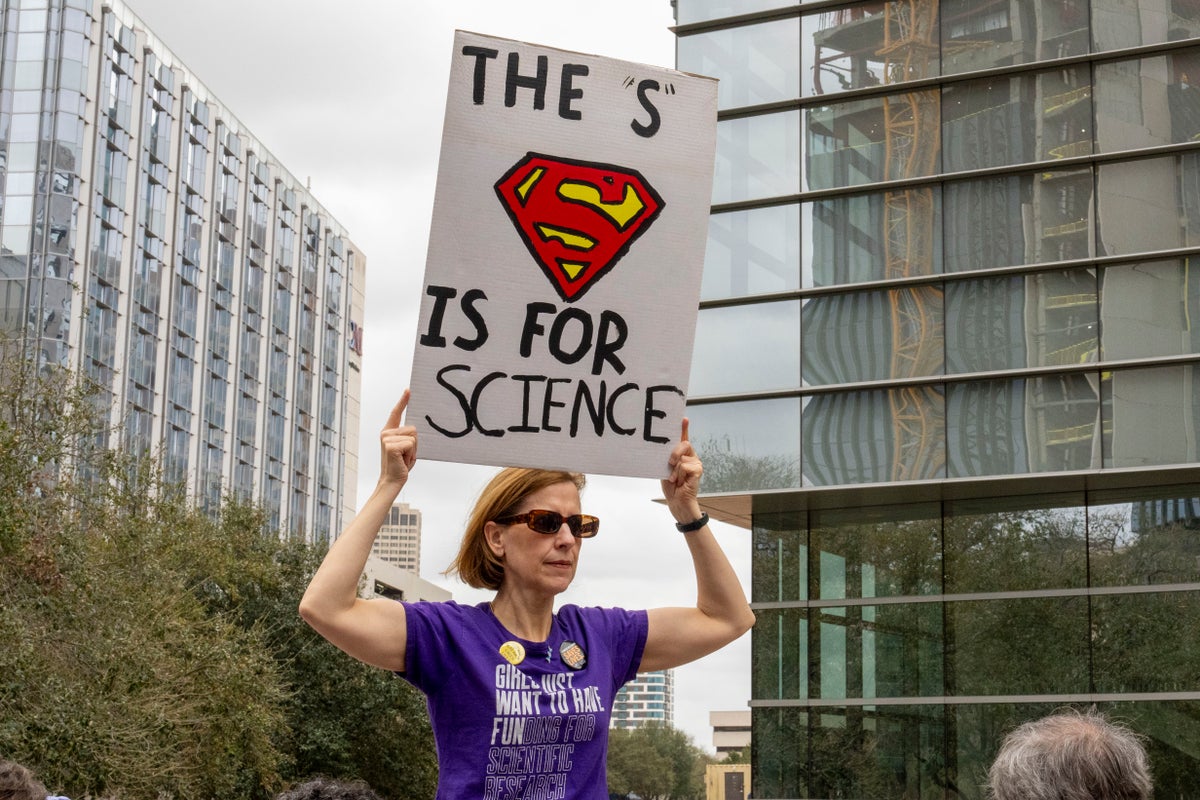
January 15, 2026 3 min read Add Us On Google Americans Overwhelmingly Support Science, but Some Think the U.S. Is Lagging Behind A new report finds that a majority of…
Sources
- Americans Overwhelmingly Support Science, but Some Think the U.S. Is Lagging
- How Do Americans Feel About the State of Science in …
- American Science is in Dangerous Decline while Chinese …
- More than 75% of STEM workers say China and others …
Related posts
- U.S. Announces 25% Tariff on Nvidia H200 and Other AI Chips Bound for China
- Verizon to Issue $20 Account Credit After Widespread Outage — How to Redeem
- Campaigners Urge Apple and Google to Remove X and Grok from App Stores