
TL;DR
Marine archaeologists from Denmark's Viking Ship Museum have uncovered a 600-year-old cog, named Svaelget 2, in the Oresund strait. At about 92 feet long and estimated to carry 300 tons, researchers say it is the largest medieval cog yet documented and is unusually well preserved.
What happened
While surveying the seabed of the Oresund strait, divers and maritime archaeologists from the Viking Ship Museum located the wreck of a medieval cargo vessel they have named Svaelget 2. The timber hull lies roughly 40 feet below the water and measures about 92 feet in length, 30 feet in beam and about 20 feet tall, with an estimated carrying capacity near 300 tons. Dendrochronological study dates the timbers to around 1410; planks came from Pomeranian oak (modern Poland) while framing timbers originated in the Netherlands. The wreck is unusually intact because the starboard side remained buried in sand, protecting rigging and other fittings. Excavators recovered personal and onboard items — shoes, combs, rosary beads — and structural features rarely preserved in cogs, including a stern castle and a brick-lined galley built from roughly 200 bricks and 15 tiles, along with cooking pots and food remains.
Why it matters
- The size and preservation of Svaelget 2 confirm that cogs could be built at much larger scales than previously evidenced, offering new physical proof of shipbuilding limits in northern Europe around 1410.
- Well-preserved onboard structures such as a stern castle and a brick galley provide rare archaeological evidence about crew living conditions and shipboard cooking practices.
- Rigging and fittings preserved on the buried side create an opportunity to reassess how large cogs were equipped and handled at sea, which has implications for understanding medieval trade logistics.
- The find connects material evidence of ship construction and trade capacity to broader economic growth in premodern Europe, when population increases expanded long-distance commerce.
Key facts
- Vessel name given by excavators: Svaelget 2.
- Location: Oresund strait, between Denmark and Sweden, about 40 feet underwater.
- Dimensions: ~92 feet long, ~30 feet wide, ~20 feet tall; estimated cargo capacity ~300 tons.
- Dendrochronology dates construction to around 1410.
- Planks made from Pomeranian oak (from present-day Poland); frame timber sourced from the Netherlands.
- The entire starboard side was buried in sand, preserving rigging and fittings.
- Recovered artifacts include shoes, combs, rosary beads, bronze cooking pots, wooden dishes, ceramic bowls, and food remains.
- Structural finds include a stern "castle" (covered deck) and a brick galley composed of about 200 bricks and 15 tiles.
- No intact commercial cargo was found with the wreck.
What to watch next
- Further analysis and publication of the ship's construction details and rigging arrangements as conservators document the find.
- Archaeological reports clarifying whether the vessel's size changes current models of medieval shipbuilding and trade capacity.
- not confirmed in the source
Quick glossary
- Cog: A medieval northern European cargo ship with a single mast and a broad, capacious hull designed for transporting heavy goods.
- Dendrochronology: A scientific method for dating wooden objects by analyzing the growth ring patterns of timber.
- Galley (shipboard): The area on a vessel used for preparing food; on some medieval ships this was a fireproof, brick-lined structure.
- Stern castle: A raised or covered deck structure toward the rear of medieval ships where crew could find shelter and perform certain tasks.
Reader FAQ
How old is the ship?
Dendrochronological analysis indicates the vessel was built around 1410.
Who discovered the wreck?
Maritime archaeologists and divers from Denmark's Viking Ship Museum located and excavated the wreck, led by archaeologist Otto Uldum.
Was any commercial cargo recovered?
No traces of commercial cargo were found with the wreck, according to the museum statement.
Will the ship be raised and conserved?
not confirmed in the source
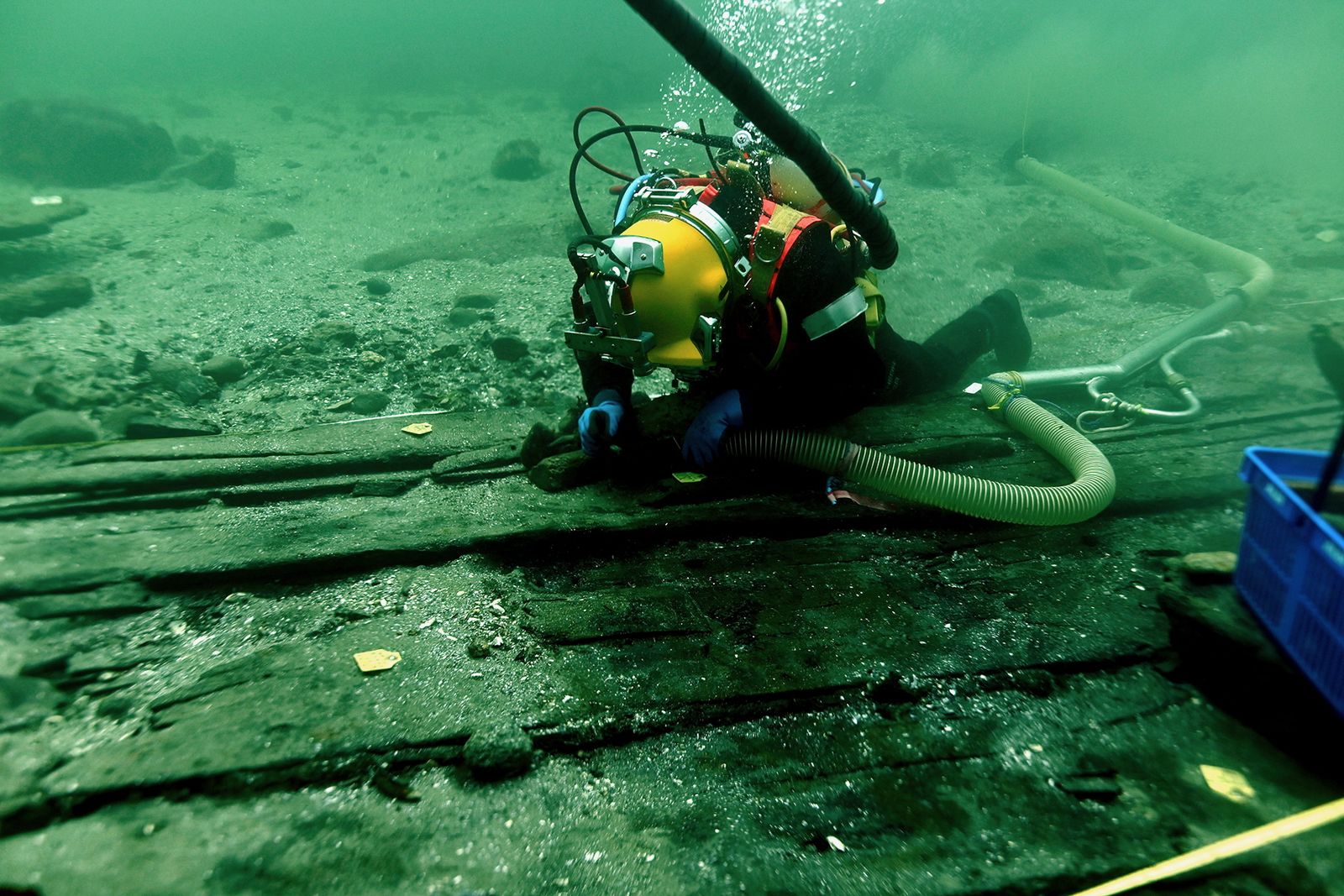
Cool Finds Archaeologists Say They’ve Unearthed a Massive Medieval Cargo Ship That’s the Largest Vessel of Its Kind Ever Found Spotted off the coast of Denmark, the “Svaelget 2” is…
Sources
- Found: Medieval Cargo Ship – Largest Vessel of Its Kind Ever
- Archaeologists Just Discovered a 9-Story-Long Viking …
- Archaeologists reveal a medieval super ship: "It's the World's …
- Archaeologists Uncover Gigantic Medieval Ship With …
Related posts
- Most Americans Back Science, Yet Many Believe the U.S. Is Falling Behind
- Verizon to Issue $20 Account Credit After Widespread Outage — How to Redeem
- 25 Years of Wikipedia: Tracing a Quarter-Century of Online Knowledge