
TL;DR
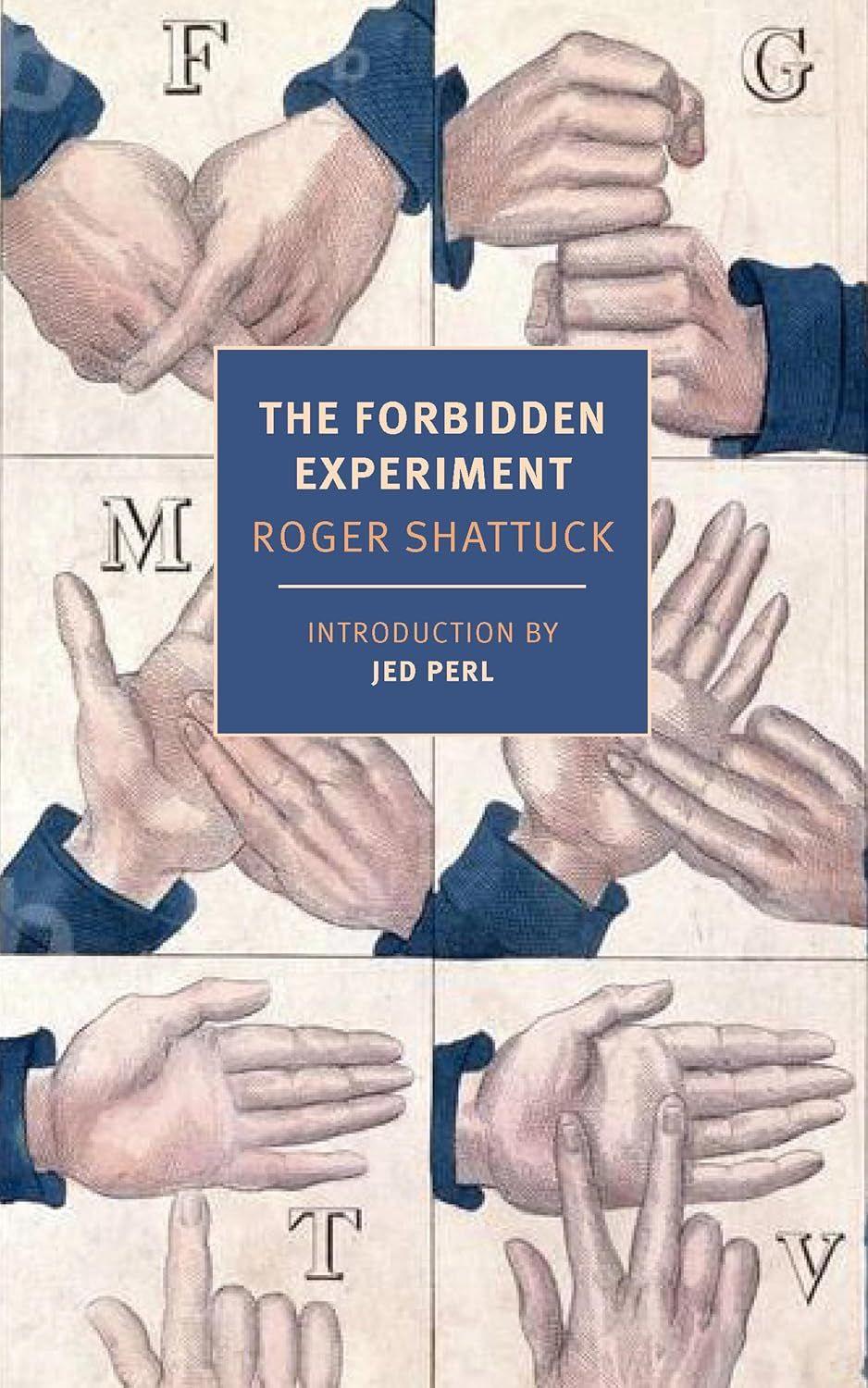
Roger Shattuck’s 1980 book The Forbidden Experiment has been reissued by NYRB Classics in 2025, revisiting the case of the Wild Boy of Aveyron. The account follows how a mute, feral youth—later called Victor—became the focus of Jean-Marc Gaspard Itard’s multi-year effort to test whether human capacities are innate or learned.
What happened
In January 1800 a feral boy appeared in Saint-Sernin, Aveyron and was taken into local care after villagers found him digging in a garden. Early observers described him as mute and at first possibly deaf; a detailed local report by Pierre-Joseph Bonnaterre recorded the child’s aversion to clothing and his limited diet, and estimated his age and years spent living outdoors. The case reached the attention of Abbé Sicard, director of Paris’s Institute for Deaf-Mutes, and the boy was transferred to Paris in August 1800. There he was placed under the daily instruction of the young surgeon Jean-Marc Gaspard Itard, who spent more than five years attempting to teach the child speech and social skills. Itard named him “Victor” and devised exercises—linking words to objects, using repeated sounds and demonstrations—but progress proved uneven: some imitations and isolated word-uses occurred (notably a milk-related instance), then long plateaus of little apparent comprehension. Itard ultimately abandoned full remediation; Victor later lived with the housekeeper Madame Guérin and remained limited in spoken language.
Why it matters
- The case became a central historical test of debates about innate faculties versus sensory experience in human development.
- Itard’s methods and the institute’s involvement mark an early, influential episode in pedagogy for deaf and mute education.
- The episode raises longstanding ethical questions about experimenting on isolated or vulnerable children.
- Shattuck’s reissue prompts renewed consideration of how 19th-century scientific and philosophical assumptions shaped research into human nature.
Key facts
- Roger Shattuck’s The Forbidden Experiment: The Story of the Wild Boy of Aveyron was first published in 1980 and reissued by NYRB Classics in 2025.
- A feral boy arrived in Saint-Sernin on January 9, 1800 (Republican date: 19 Nivôse, year eight).
- Pierre-Joseph Bonnaterre recorded early observations about the child’s behavior, diet, and apparent muteness.
- Abbé Sicard arranged for the boy’s transfer to the Institut national des sourds-muets in Paris on August 8, 1800.
- Jean-Marc Gaspard Itard took charge of the boy and worked with him daily for more than five years.
- Itard gave the child the name Victor based on his reaction to certain vowel sounds.
- Itard’s interventions included pairing words with objects and encouraging imitation; Victor displayed limited mimicry (including a noted response linking the word for milk to milk itself) but did not generalize meaning consistently.
- Progress included intermittent gains followed by developmental plateaus; Itard eventually ceased the experiment and Victor lived with Madame Guérin.
- Scholars from different fields, including Bruno Bettelheim and Claude Lévi-Strauss, have later debated Victor’s diagnosis and significance.
What to watch next
- The reception and scholarly discussion prompted by NYRB Classics’ 2025 reissue of Shattuck’s book.
- Not confirmed in the source: whether new archival discoveries or medical reassessments will produce a consensus diagnosis for Victor.
- Not confirmed in the source: any contemporary institutional responses or formal ethical reassessments of the historical 'forbidden experiment'.
Quick glossary
- Feral child: A child who has lived isolated from human contact from a very young age and has limited exposure to language and social norms.
- Tabula rasa: A philosophical idea, notably associated with empiricist thinkers, that the mind begins as a blank slate shaped by experience.
- Institut national des sourds-muets: A Parisian institution established to educate deaf and mute people; in the early 19th century it was a leading center for pedagogy in this field.
- Nature vs. nurture: A long-standing debate over the relative contributions of inherited traits versus environmental influences to human development.
Reader FAQ
Who was the 'Wild Boy of Aveyron'?
A feral youth who appeared in Saint-Sernin, France, in 1800 and was later taken to Paris for study; Jean-Marc Gaspard Itard eventually called him 'Victor.'
What did Itard try to teach Victor?
Itard focused primarily on speech and linking words to objects, using repeated demonstrations and exercises documented in his reports.
Did Victor ever learn to speak normally?
No. He produced some imitations and isolated utterances and could sometimes match words to items, but he did not develop consistent, generalized spoken language.
Was Victor deaf?
Early observers suspected deafness, but Itard’s work showed he could hear and imitate sounds; complete deafness was not supported by subsequent observations.
Are there modern medical diagnoses for Victor?
Not confirmed in the source.
A Child in the State of Nature Mitchell Abidor reviews the reprint edition of Roger Shattuck’s “The Forbidden Experiment: The Story of the Wild Boy of Aveyron.” By Mitchell AbidorAugust…
Sources
Related posts
- The most damaging taboo about sexual violence: understanding intrusive fantasies
- ACME Python Labs: Applied Mathematics Hands-On Exercises for Theory and Practice
- New CSRF approach uses Sec-Fetch-Site header instead of tokens