
TL;DR
Global deployment of wind, solar and electric vehicles accelerated sharply in 2025, with wind and solar generating more electricity than coal worldwide and plug-in cars making up over a quarter of new vehicle sales. Despite these gains, U.S. federal support for renewables has been reduced and international forecasts foresee slower U.S. renewables growth this decade.
What happened
In 2025 the expansion of wind, solar and battery storage reached several notable benchmarks. Worldwide, wind and solar produced more power than coal, and newly commissioned wind and solar capacity met all incremental electricity demand last year. Batteries, which have fallen in price dramatically over the past decade, helped shift solar toward around-the-clock dispatchability. Electric vehicles also surged: plug-in models represented more than a quarter of new car sales in the first ten months of 2025, and in China EVs accounted for over half of new vehicle registrations. China’s rapid renewable buildout contributed to a leveling and recent decline in its emissions over the past 18 months. At the same time, the U.S. federal government reduced support for clean energy, and the International Energy Agency expects U.S. renewables growth through 2030 to be roughly half the rate projected in 2024.
Why it matters
- Wind and solar surpassing coal globally signals a structural shift in the power mix and economics of electricity generation.
- Steep battery cost declines are changing how intermittent renewables can provide reliable electricity across more hours.
- Rapid EV adoption is reshaping the automotive market and could reduce future global oil demand from transport.
- Divergent national policies — strong deployment globally versus reduced U.S. federal support — will shape where and how fast decarbonization proceeds.
Key facts
- In 2025, wind and solar generated more electricity than coal on a global basis.
- New wind and solar capacity met all of last year’s additional electricity demand.
- Battery costs have fallen about 90% over the last decade, improving storage economics.
- Plug-in vehicles accounted for over 25% of new car sales in the first ten months of 2025.
- In China, electric vehicles comprised more than half of new-car sales in 2025.
- China’s emissions have been flat or declining for roughly the past 18 months.
- The Trump administration reduced federal support for renewable energy in the U.S.
- The International Energy Agency projects U.S. renewables will grow about half as fast through the end of the decade as predicted in 2024.
- The journal Science named rapid growth of clean energy its 2025 Breakthrough of the Year.
- A recent assessment cited in the piece puts the world’s likely end-of-century warming near 2.8°C—lower than earlier estimates before the Paris Agreement.
What to watch next
- Whether U.S. federal policy shifts reverse the recent slowdown in American renewables deployment or investment.
- How quickly battery prices and deployment continue to fall and enable longer-duration renewable-driven electricity.
- The pace of EV adoption outside China and whether global new-car market share for plug-ins keeps rising; not confirmed in the source if specific future rates will be reached.
Quick glossary
- Renewables: Energy sources that are replenished naturally over short timescales, commonly including wind, solar, hydroelectric and geothermal power.
- Plug-in vehicle (EV): A vehicle that can be recharged from an external electricity source; includes battery-electric and plug-in hybrid models.
- Battery storage: Systems that store electrical energy for later use, helping balance supply and demand and supporting integration of variable renewables.
- Dispatchability: The ability of an electricity source to be turned on or adjusted to meet demand when needed.
Reader FAQ
Did wind and solar really generate more electricity than coal in 2025?
Yes; the source reports that wind and solar supplied more power than coal worldwide in 2025.
Are electric vehicles becoming a significant share of new car sales?
Yes; plug-in vehicles made up over a quarter of new car sales in the first ten months of 2025, and in China they exceeded 50% of new sales.
Is U.S. clean-energy deployment growing as fast as the rest of the world?
No; the piece says U.S. federal support has been cut and the IEA projects U.S. renewables will grow about half as fast through 2030 as in 2024 forecasts.
Has global climate risk improved because of these trends?
The source notes the climate outlook has improved relative to earlier projections, with a recent report pointing to about 2.8°C of warming by century’s end, but emissions still continue to rise overall.
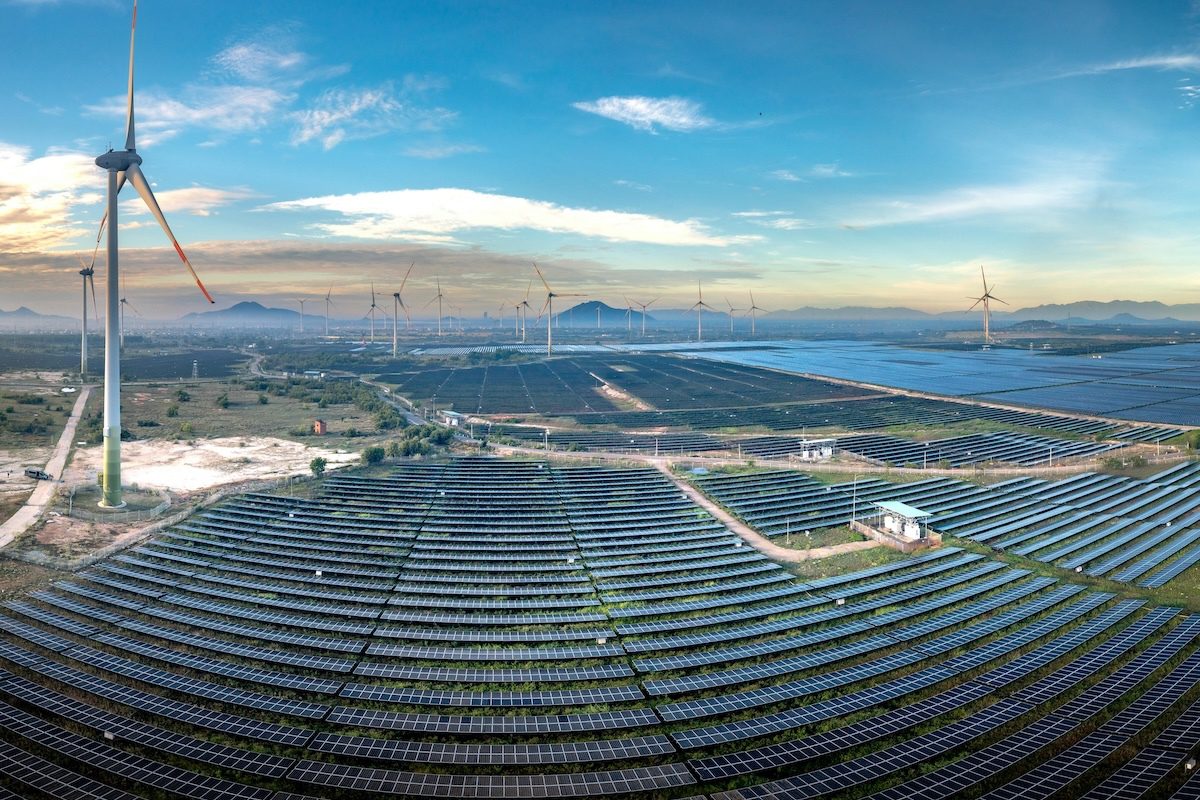
E360 DIGEST JANUARY 5, 2026 A Year of Clean Energy Milestones A solar and wind farm in Phan Rang-Tháp Chàm, Vietnam. PEXELS Even as the Trump administration rolled back support…
Sources
- A Year of Clean Energy Milestones
- Science's 2025 Breakthrough of the Year
- The 2025 energy transition in eight charts: clean wins, dirty …
- Highlights of the global energy transition in 2025 | Ember
Related posts
- Why Refactoring Should Be Done In-Flow, Not As Backlog Stories
- O-Ring Automation: How Task Complementarity Shapes Machine Adoption
- Pentagon Seeks to Demote Senator Mark Kelly Over Video Labeled ‘Seditious’