
TL;DR
A seasoned reviewer tested over 30 smart locks across multiple exterior doors and identified top models for different needs, from best overall to budget and fingerprint options. The guide explains testing methods, what to look for in a smart lock, and trade-offs between connectivity, battery life, and platform compatibility.
What happened
Jennifer Pattison Tuohy, a senior reviewer with years of experience testing smart-home hardware, installed and used more than 30 smart locks to produce a buyer’s guide. She evaluates each lock for at least a week on one of four exterior doors, checking installation, code and biometric setup, integrations with smart-home platforms, and the reliability of control methods such as physical keys, keypads, fingerprints, phone apps, and auto-unlock. From that testing she named category winners: the Kwikset Halo Select as best overall, Wyze Lock Bolt for budget shoppers, Yale’s Approach Lock for renters, Nuki as a retrofit pick, and Yale Assure Lock 2 Touch for fingerprint access. Her testing emphasizes multi-method access, dependable remote control, and realistic battery-life expectations across Wi‑Fi, Bluetooth, and Thread connectivity approaches.
Why it matters
- Smart locks remove the need for physical spare keys and let you control access remotely, useful for guests, service workers, and emergencies.
- They integrate with home automation to create routines (for example, locking doors or dimming lights at night) that save time and reduce missed tasks.
- Connectivity and authentication options affect battery life, reliability, and what smart-home ecosystems you can use, so choosing the right balance matters.
- Security ratings for many smart locks match traditional locks, and smart features provide access logs and time-limited guest access to improve oversight.
Key facts
- The reviewer has been testing smart locks for six years and installed over 30 locks for this guide.
- Top overall pick: Kwikset Halo Select (retail price listed at $233 in the guide).
- Budget pick: Wyze Lock Bolt (listed at $66).
- Other category picks: Yale Approach Lock with Wi‑Fi (renter pick, listed at $80), Nuki Smart Lock (retrofit pick, listed at $199), Yale Assure Lock 2 Touch (fingerprint pick, listed at $159 for Bluetooth, $243 for Wi‑Fi).
- Good smart locks should offer at least three ways to unlock (examples: fingerprint, keypad, app, key, auto-unlock).
- Connectivity options discussed include built-in Wi‑Fi, Bluetooth (often with a bridge), and Thread; each affects battery life and remote control.
- Most Wi‑Fi smart locks have battery life under six months in typical use; Thread can extend battery life while often requiring a border router.
- The Kwikset Halo Select includes both Wi‑Fi and a Thread radio but requires picking one mode; it uses four AA batteries and reports an estimated six to 12 months of battery life.
- Kwikset Halo Select earned an ANSI Grade AAA security rating and works with Amazon Alexa, Google Assistant, and Matter (including Apple Home via Matter).
What to watch next
- Broader Matter and Thread adoption and how ecosystems resolve feature trade-offs between cloud-based vendor apps and local Matter control.
- Battery-life improvements in locks that use Thread versus those relying on built-in Wi‑Fi or bridges.
- not confirmed in the source
Quick glossary
- Matter: A smart-home connectivity standard designed to improve compatibility across devices and ecosystems such as Apple Home, Google Home, and Amazon Alexa.
- Thread: A low-power mesh networking protocol for smart-home devices that can extend battery life and enable local device communication via a border router.
- Auto-unlock: A feature that automatically unlocks a door when the user approaches, typically using a combination of Bluetooth, GPS, and Wi‑Fi signals.
- Virtual key: A temporary or permanent digital credential — often a code or app-based permission — that grants someone access to a smart lock.
- ANSI security rating: A grading system from the American National Standards Institute that evaluates the physical security and durability of door locks.
Reader FAQ
Are smart locks as secure as standard locks?
According to the guide, many smart locks have the same security ratings as comparable non-smart locks and can be harder to pick than traditional keyways; they also provide logs and remote controls not available with a basic lock.
Do smart locks need Wi‑Fi to work?
Not necessarily. Smart locks use Wi‑Fi, Bluetooth, and/or Thread; Bluetooth models can work locally but often need a bridge for remote access, while Thread and Wi‑Fi offer different trade-offs in battery use and remote control.
How long do smart-lock batteries last?
Battery life varies: many Wi‑Fi locks run under six months between battery changes, Bluetooth locks tend to last longer, and Thread-based locks promise improved longevity, though exact durations depend on use.
Can smart locks be rekeyed?
Some models can be rekeyed; for example, the Kwikset Halo Select in the guide includes a rekeyable keyway.
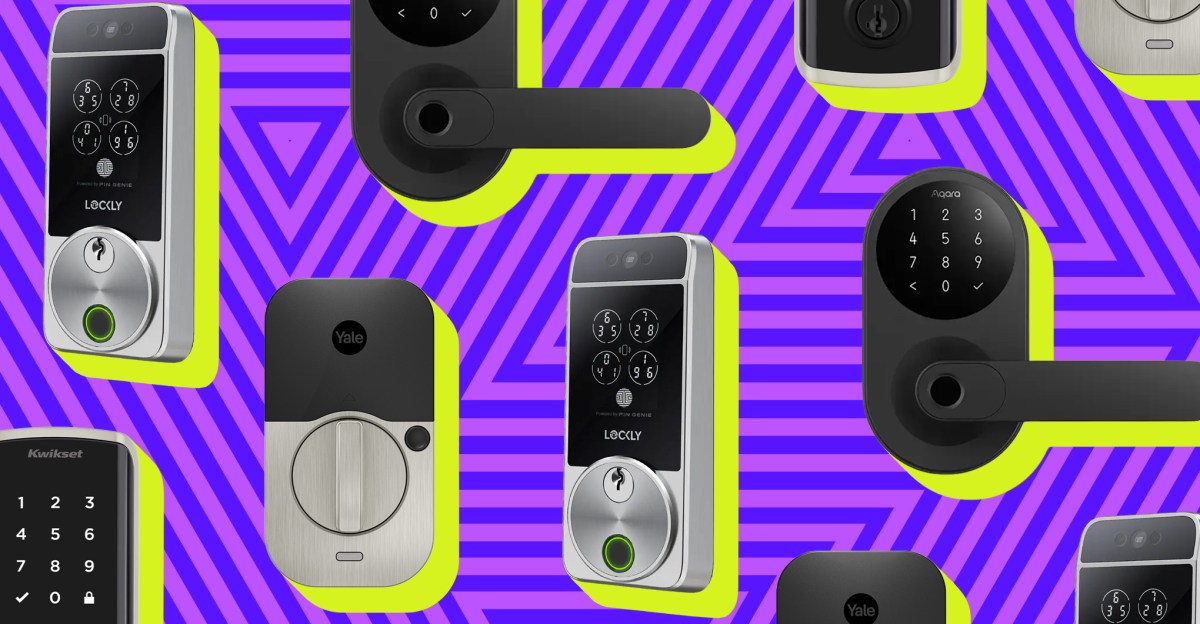
BUYING GUIDES GADGETS TECH I’ve tested 30 smart locks, and these are the best Never get locked out again with a smart lock you can control from your phone, with…
Sources
- I’ve tested 30 smart locks, and these are the best
- I tested 30 smart locks, and these are the best
- Best Smart Locks of 2026: High-Tech Door Defenses
- The Best Smart Locks of 2026 Put to the Test
Related posts
- Ford F-150 Lightning outsold Tesla Cybertruck, then Ford ended Lightning
- Samsung Galaxy S25 Ultra gains value with updates and a major discount
- Starlink doubles Roam high-speed allowance to 100GB, then throttles