
TL;DR
Rapid growth in AI datacenter demand has outpaced transmission upgrades, prompting major labs and hyperscalers to deploy onsite gas generation so they can start operations faster. Firms from xAI to OpenAI and Oracle are ordering gigawatts of mobile and modular gas equipment, but higher costs, permitting hurdles and operational trade-offs remain.
What happened
As AI training and inference demand surged, developers increasingly bypassed multi‑year grid interconnection waits by deploying onsite gas generation. Analysts say U.S. AI datacenter power requests jumped from roughly 3 GW in 2023 toward a projected 28 GW by 2026, creating queue congestion in regions such as Texas where only about 1 GW of new approvals cleared in a recent 12‑month span. xAI demonstrated the approach by assembling a 100,000‑GPU cluster in four months, powering it with truck‑mounted turbines and engines and deploying over 500 MW of onsite turbines. OpenAI and Oracle placed a combined order for a 2.3 GW onsite plant in Texas in October 2025, and suppliers from Doosan to Wärtsilä and even Boom Supersonic have landed large datacenter generation contracts. The shift—termed Bring Your Own Generation (BYOG)—uses modular turbines, reciprocating engines and fuel cells to accelerate go‑live dates, but operators face higher operating costs, lengthy permitting and integration challenges.
Why it matters
- Delays in grid interconnection can cost developers billions: analysts estimate an AI cloud can generate $10–12 billion in revenue per GW annually, making speed a competitive advantage.
- BYOG lets datacenters start operations months or years earlier than waiting for transmission upgrades, reshaping site selection and construction timelines.
- A new market for modular onsite generation is forming, pulling in legacy turbine makers and unexpected entrants, which could reallocate manufacturing and supply‑chain capacity.
- Regulatory and permitting friction — and higher onsite power costs — create local and operational trade‑offs that could slow or complicate deployments.
Key facts
- Analysts forecast U.S. AI datacenter power demand rising from ~3 GW in 2023 to more than 28 GW by 2026.
- In Texas, tens of gigawatts of datacenter load requests arrive monthly, but only slightly more than 1 GW was approved in a recent 12‑month period, per ERCOT data.
- xAI built a 100,000‑GPU cluster in four months using onsite, truck‑mounted gas turbines and engines and has deployed over 500 MW of turbines near its datacenters.
- OpenAI and Oracle placed a joint order in October 2025 for a 2.3 GW onsite gas generation plant in Texas.
- Doosan Enerbility booked a 1.9 GW order to serve xAI; Wärtsilä has signed roughly 800 MW of U.S. datacenter contracts; Boom Supersonic announced a 1.2 GW turbine deal with Crusoe.
- SemiAnalysis’ tracker shows at least 12 different suppliers have secured more than 400 MW of datacenter onsite generation orders each in the U.S.
- Grid interconnection timelines can stretch to about five years for many generation types, creating a throughput problem for rapid datacenter builds.
- FERC reforms from 2023 pushed operators toward cluster studies, with those reforms consolidated in 2025 to help address the interconnection backlog.
- Bring Your Own Generation (BYOG) strategies often plan to operate indefinitely onsite and later convert generation equipment to backup power once grid service arrives.
What to watch next
- Permitting timelines and state‑by‑state regulatory responses (examples in Mississippi and Tennessee altered siting outcomes for at least one large project).
- How quickly supplier lead times and manufacturing capacity adjust to triple‑digit annual demand growth for modular onsite equipment.
- not confirmed in the source
Quick glossary
- Bring Your Own Generation (BYOG): A strategy where a datacenter deploys local power generation (e.g., turbines, engines, fuel cells) to operate independently of the electric grid until grid service is available.
- Combined‑Cycle Gas Turbine (CCGT): A power plant configuration that captures waste heat from a gas turbine to run a steam turbine, increasing thermal efficiency above simple‑cycle units.
- Aeroderivative turbine: A lightweight turbine design derived from aircraft engines; used in power generation for rapid start and modular deployment.
- Interconnection request / cluster study: A utility or grid operator process for evaluating how a proposed new load or generator will affect the transmission network; cluster studies group multiple requests to speed analysis.
- Reciprocating engine: A piston‑driven internal combustion engine often used in modular power plants for fast deployment and flexible operation.
Reader FAQ
Why are AI labs building onsite generation?
Because grid interconnection and transmission upgrades can take years, BYOG lets datacenters start operations much faster and capture large revenue opportunities tied to early availability.
Is onsite gas generation cheaper than grid power?
Not usually; the source states onsite power costs are often considerably higher than grid delivery, though speed and revenue considerations can justify the expense.
Will these onsite plants remain primary power sources long term?
The reported BYOG model generally plans to convert onsite generation into backup power once grid service arrives.
Are the environmental impacts of widespread onsite gas deployment discussed here?
not confirmed in the source
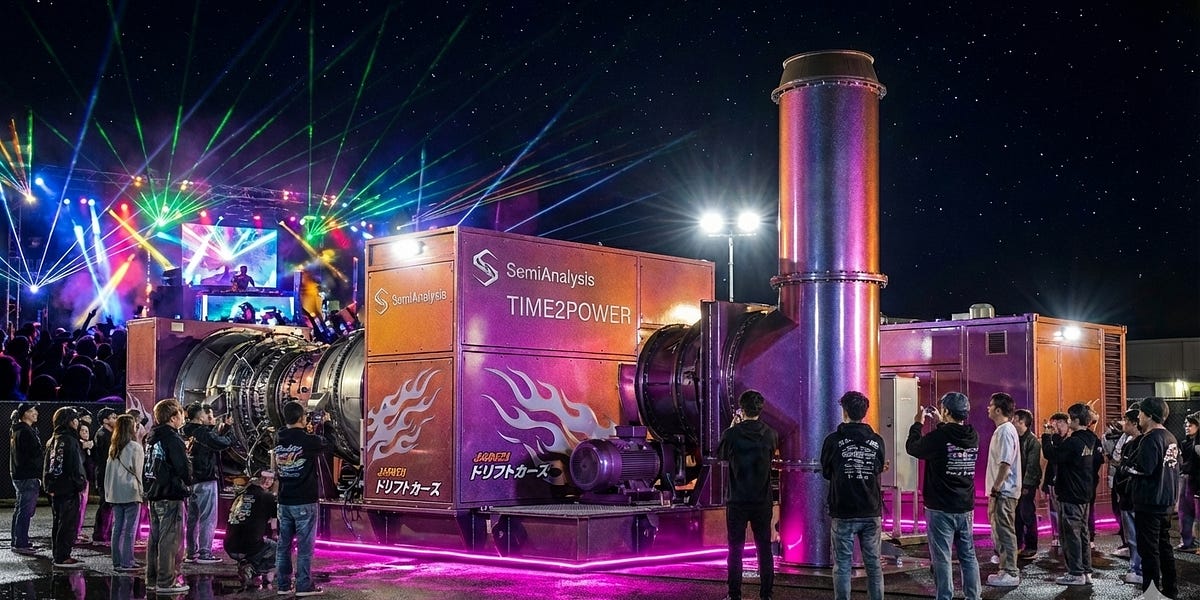
How AI Labs Are Solving the Power Crisis: The Onsite Gas Deep Dive Bring Your Own Generation, Sayonara Electric Grid, Turbines vs. Recips. vs. Fuel Cells, Why Not Build More…
Sources
- How AI labs are solving the power problem
- AI Labs Are Solving the Power Problem
- The Rise of AI: A Reality Check on Energy and Economic …
- The Electricity Supply Bottleneck on U.S. AI Dominance
Related posts
- Why a tech author walked away from a traditional book deal
- 2026: Can Java Finally Own the Terminal — CLIs, TUIs, Distribution
- Treat the Compiler as Your Friend: Stop Lying to It, Prevent Crashes