
TL;DR
At CES, AMD introduced refreshed Ryzen desktop and mobile processors that mainly increase clock speeds and memory rates while retaining Zen 5, XDNA 2, and RDNA 3.5 architectures. The company also expanded its AI-focused Max+ line with Strix Halo-derived SKUs and says refreshed systems will arrive from OEMs in Q1.
What happened
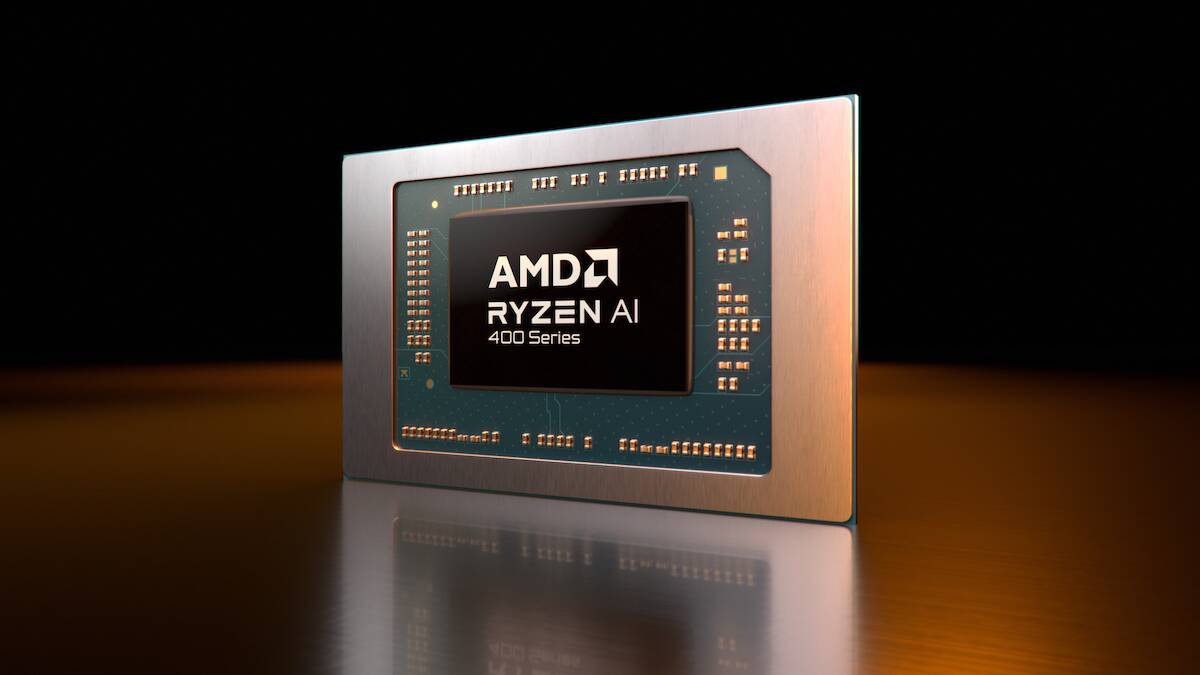
AMD used CES to roll out a suite of refreshed desktop and mobile processors aimed at casual users, creators, gamers and AI developers. The headline Ryzen AI 400 series offers up to 12 cores with a 5.2 GHz boost clock, an NPU rated at 60 TOPS and support for 8533 MT/s memory, but the chips share the same Zen 5 cores, XDNA 2 NPU design and RDNA 3.5 integrated GPU as the prior 300 series. AMD’s approach with these SKUs is primarily frequency bumps and slightly faster memory rather than microarchitectural changes. Separately, the company added two Ryzen AI Max+ SoCs (internal codename Strix Halo) under the flagship Max+ 395, keeping its 40-CU RDNA 3.5 GPU capable of 60 TFLOPS at BF16. AMD says refreshed CPUs and the new Max+ SKUs will reach OEM systems and small-form-factor workstations from multiple vendors in Q1.
Why it matters
- Frequency and memory speed increases can yield real-world performance gains even without new architectures.
- AMD is positioning more SKUs for local AI workloads, signaling continued focus on AI-capable PCs.
- OEM availability in Q1 means the refresh will reach consumers and businesses soon.
- Lack of microarchitectural change implies limited generational shift for buyers weighing upgrades.
- Value comparisons versus Nvidia highlight cost-per-token trade-offs in AI hardware procurement.
Key facts
- Ryzen AI 400 series: up to 12 cores, boost to 5.2 GHz, NPU rated at 60 TOPS, supports 8533 MT/s memory.
- 400-series chips use the same Zen 5 cores, XDNA 2 NPU architecture and RDNA 3.5 GPU as the 300 series; core counts unchanged.
- AMD’s naming refresh chiefly adds a '100' increment to existing SKUs to reflect higher clocks.
- New Ryzen AI Max+ additions include Max+ 392 (12-core) and Max+ 388 (8-core), internally Strix Halo.
- Max+ parts share a 40-CU RDNA 3.5 GPU and are rated at 60 TFLOPS peak AI throughput at BF16.
- AMD claims Max+ 395 delivers 1.5x–1.7x more tokens/sec/dollar than Nvidia DGX Spark on gpt-oss 20B and 120B workloads.
- The Register’s comparison referenced shows DGX Spark is roughly 2–3x faster at BF16 than Strix Halo in most GenAI workloads outside LLM inference.
- AMD plans ROCm machine-learning framework v7.2 for Windows 11 and Linux in February, which it says should boost generative AI on Windows.
- Ryzen 7 9850X3D is a 9800X3D with a 400 MHz higher boost clock to 5.6 GHz, otherwise identical (8 Zen 5 cores, 104 MB cache, 120 W TDP).
- AMD claims the 9850X3D delivers about 7% higher gaming performance; pricing was not disclosed and the parts are expected in Q1.
What to watch next
- Independent benchmark comparisons between the 400-series refresh and the prior 300-series across gaming, creative and AI workloads — not confirmed in the source.
- Real-world AI performance of the Max+ Strix Halo SKUs versus Nvidia systems in production GenAI tasks and inference — not confirmed in the source.
- Pricing for refreshed desktop and Max+ parts when OEMs list systems in Q1; MSRP details were not provided in the announcement.
- Customer uptake of small-form-factor AI workstations built around Max+ chips from OEMs listed for Q1 availability.
Quick glossary
- Zen 5: AMD’s processor microarchitecture family used for recent Ryzen CPUs, focusing on power and performance efficiency.
- NPU: Neural Processing Unit, a specialized component designed to accelerate AI and machine-learning workloads.
- TOPS: Tera Operations Per Second, a metric for raw throughput in AI accelerators indicating how many trillion operations they can perform each second.
- RDNA: AMD’s graphics architecture used in integrated and discrete GPUs, with successive revisions improving compute and shader performance.
- ROCm: AMD’s open software platform and libraries for machine learning and GPU compute on Linux and, increasingly, Windows.
Reader FAQ
Are these new AMD chips based on a new architecture?
No. The announcement indicates the 400-series and new Max+ SKUs reuse Zen 5 cores, XDNA 2 NPU design and RDNA 3.5 GPU; the changes are mainly higher clocks and faster memory.
When will systems with these refreshed chips be available?
AMD says systems and the new Max+ SKUs will arrive in Q1 from several OEMs.
How much faster are the refreshed parts?
AMD cites higher clocks and says the Ryzen 7 9850X3D yields roughly 7% better gaming performance; broader performance gains are implied from frequency boosts but independent results are not provided in the source.
How do these AMD AI parts compare to Nvidia’s DGX Spark?
AMD presented a tokens-per-dollar advantage for its Max+ 395 versus Nvidia’s DGX Spark on gpt-oss tests, but noted the DGX Spark is generally 2–3x faster at BF16 in many GenAI workloads according to the comparison referenced.
What is the pricing for these refreshed CPUs and Max+ SKUs?
Pricing details were not disclosed in the source.
SYSTEMS AMD clocks in with higher CPU speeds, leaves architecture untouched New chips same as the old chips Tobias Mann Tue 6 Jan 2026 // 03:30 UTC AMD kicked off CES on Monday by…
Sources
- AMD clocks in with higher CPU speeds, leaves architecture untouched
- AMD at CES 2026: Live updates from CEO Lisa Su's …
- AMD Secures Leading Positions With Its CPU Lineup …
- RESEARCH NOTE: AMD Goes Mainstream at CES 2024
Related posts
- HP unveils EliteBoard G1a: a full PC built into a business keyboard
- Alienware Developing New Ultra-Slim and Lower-Cost Gaming Laptops
- HP fits a full desktop PC inside a keyboard with AMD Ryzen AI chip