
TL;DR
In a conversation with Tatsuya Takahashi, Richard D. James (Aphex Twin) discussed how technical standards — from concert pitch to sample rates and mixer ergonomics — shape musical practice and instrument design. The interview touches on orchestral deviations from 440 Hz, the sonic character of nonstandard sampling, bodily perception of high frequencies, and the value of breaking conventions in creative work.
What happened
Tatsuya Takahashi and Richard D. James exchanged thoughts on several technical conventions in music and sound. They debated the role of the 440 Hz tuning standard and noted studies from Philips laboratories indicating orchestras often deviate by a few hertz, generally slightly below the standard. Takahashi declined to enter the 432 Hz versus 440 Hz controversy but advocated using whatever frequencies suit a piece. They also compared sample-rate conventions: 48 kHz as a common professional rate versus the Korg volca sample’s unusual 31.25 kHz, the latter giving a distinct coloration that appealed to James. Both discussed how sound is experienced beyond the eardrum — James suggested listeners still feel vibrations even if they can’t hear above 20 kHz. The pair rounded out the conversation with observations about inverted fader layouts on some keyboards and broadcast mixers, the historical influence of design conventions, and the creative risks of enforcing standards.
Why it matters
- Standards like 440 Hz or 48 kHz enable interoperability across instruments and systems, but they also constrain creative choices.
- Nonstandard hardware parameters (e.g., unusual sample rates) can produce distinctive sonic textures that artists exploit intentionally.
- Perception of sound involves more than audible frequency range; bodily vibrations and tactile experience can affect how recordings are perceived.
- Design conventions (control layouts, text orientation, UI paradigms) shape how musicians interact with gear and can influence musical outcomes.
Key facts
- 440 Hz has been adopted as a tuning standard to allow instruments to play together.
- Takahashi cites studies from Philips laboratories that measured orchestras’ average tuning deviating by a few hertz, usually slightly below 440 Hz.
- Takahashi says he won’t engage in the 432 Hz vs 440 Hz debate, but he supports using frequencies that feel right for a piece.
- The Volca Sample referenced uses a 31.25 kHz sample rate, which Takahashi suggested contributes to its unique sound.
- 48 kHz is mentioned as a common sample rate, with reference to the Nyquist theorem as underpinning that choice.
- Richard D. James noted people may not only hear but also feel ultrasonic content, and that recordings of one’s voice can sound different because bodily vibration is missing.
- James expressed a personal preference for lo-fi/’70s-like textures alongside an appreciation for extreme clarity.
- Takahashi and James observed inverted fader layouts on instruments like the Yamaha SK-10 and certain Calrec broadcast mixers; some mixers include a dip switch to reverse fader behavior.
- Calrec mixers are configured with downward-as-maximum in some broadcast settings reportedly to reduce the chance that a sleeping operator pushes faders up and causes overload.
What to watch next
- Whether more artists or manufacturers deliberately use nonstandard sample rates or tunings as a design choice — not confirmed in the source
- Any renewed interest in cymatics or workshops exploring physical resonances and visual sound patterns — not confirmed in the source
- How instrument and UI conventions (like fader orientation) evolve in new hardware designs — not confirmed in the source
Quick glossary
- 440 Hz (A4): A commonly adopted reference pitch for the musical note A above middle C; used to standardize tuning across instruments.
- Sample rate: The number of audio samples captured per second in digital audio; higher rates can represent higher frequencies and more detail.
- Nyquist theorem: A principle in signal processing stating that to accurately reproduce a signal, it must be sampled at least twice its highest frequency.
- Cymatics: The study and visualisation of sound vibrations, often showing how different frequencies produce distinct patterns in a medium.
- Fader: A linear control on mixers and instruments used to adjust signal level; some designs invert the physical movement for maximum.
Reader FAQ
Did Aphex Twin take a side in the 432 Hz vs 440 Hz debate?
He said he wouldn’t go into that debate and emphasised using whatever frequency feels right for the music.
Why did the Volca Sample sound different?
Takahashi noted it uses an atypical 31.25 kHz sample rate, and James said that distinctive rate was one of the first things he noticed.
Do orchestras strictly tune to 440 Hz in practice?
Takahashi referenced Philips laboratory studies showing orchestras’ tuning often deviates by a few hertz, typically slightly below 440 Hz.
Are listeners affected by frequencies above 20 kHz?
James suggested people may still ‘feel’ ultrasonic content through bodily vibration even if they can’t hear it, but detailed scientific claims are not provided in the source.
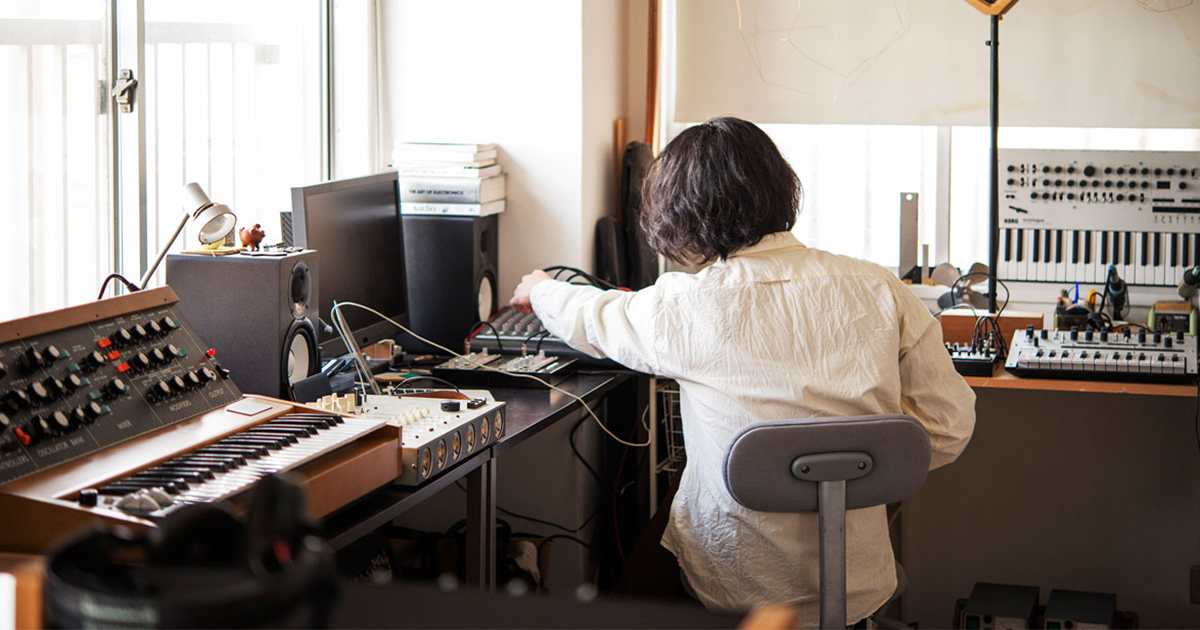
But I’ve also read studies from the old Philips laboratories in the Netherlands that show orchestras average deviation from 440 Hz was measured over many concerts and was seen to…
Sources
- Richard D. James aka Aphex Twin speaks to Tatsuya Takahashi (2017)
- Richard D. James speaks to Tatsuya Takahashi – Editorial
- Aphex Twin Talks to Tatsuya Takahashi About the Korg
- Aphex Twin Chats With Tatsuya
Related posts
- Embassy: A Rust-based, async-first framework for safe embedded applications
- Alaska Arrests Spotlight American Samoans’ Denied Voting Rights
- Aphex Twin on pitch standards, sample rates, cymatics and quirky hardware