
TL;DR
Apple is facing tougher competition for TSMC production slots as demand for AI-focused chips from Nvidia and others surges. TSMC’s revenue and margins surged in 2025 while the company ramps new nodes and raises capex to meet high-performance computing demand.
What happened
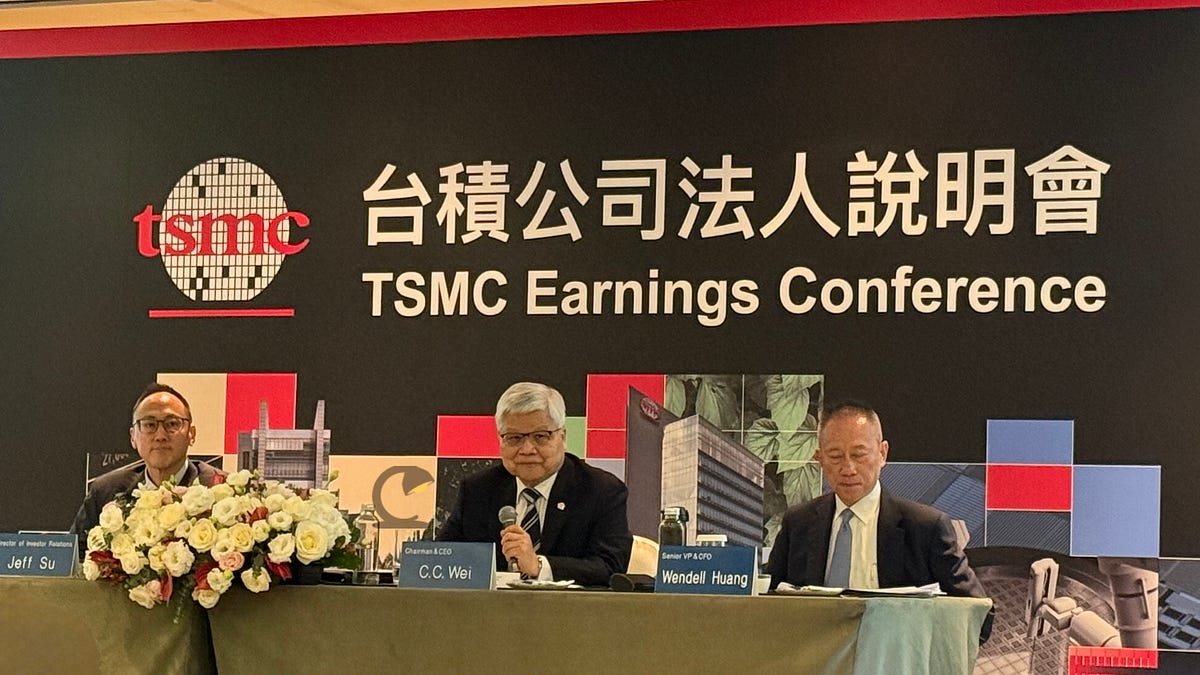
During a visit from TSMC CEO CC Wei to Apple last year, Apple was told to expect a significant price increase and—more importantly—tighter competition for wafer capacity. Sources consulted by Culpium and company data indicate Nvidia’s purchases expanded substantially in 2025, likely eclipsing Apple in one or two quarters, though final rankings will be disclosed in TSMC’s upcoming annual report. TSMC reported 2025 revenue of $122 billion, up 36%, driven by large gains in high-performance computing (HPC) chip sales. Apple’s product revenue growth has been modest by comparison. To satisfy booming AI demand, TSMC plans record capital expenditure of roughly $52–$56 billion in 2026 and is scaling production at its most advanced nodes (N2) while preparing N2P and A16 ramps later this year. Executives emphasize the difficulty and lead time—building a fab takes two to three years—so allocation decisions have long-term effects.
Why it matters
- Shifts in TSMC’s customer mix affect who gets priority for cutting-edge wafer capacity and can influence product road maps and launch timing.
- Higher prices and constrained capacity transfer cost pressure and scheduling risk to large buyers like Apple.
- Rapid growth in AI/HPC demand is changing TSMC’s revenue mix and justifying sharp increases in capital spending.
- Apple’s diversified chip footprint across many fabs provides stability, even as Nvidia’s concentrated demand favors leading-edge nodes.
Key facts
- TSMC reported 2025 revenue of $122 billion, a 36% increase year-over-year.
- Culpium estimates Nvidia sales rose about 62% for the fiscal year through January 2026.
- Culpium estimates Apple product revenue grew roughly 3.6% for the 12 months to December 2025.
- TSMC’s sales from high-performance computing rose 48% in the most recent year; smartphone-related revenue rose 11%.
- TSMC posted a gross margin of 62.3% in the December quarter, up 280 basis points from the prior period.
- TSMC expects 2026 capital expenditure of roughly $52–$56 billion, about a 32% increase year-over-year.
- TSMC is producing at scale on its 2nm family (N2) and plans to ramp N2P and A16 in the second half of 2026.
- TSMC typically builds new fabs for new nodes rather than repurposing older plants; constructing a fab takes two to three years.
- Apple remains a major buyer across numerous TSMC fabs, while Nvidia’s purchases are more concentrated near leading-edge nodes.
What to watch next
- TSMC’s upcoming annual report, which will disclose revenue contributions from its top clients and clarify whether Nvidia surpassed Apple for the full year.
- The ramp schedule and volume for N2P and A16 in the second half of 2026 and how capacity is allocated among customers.
- not confirmed in the source: indicators of a slowdown in AI/HPC chip demand that could ease capacity pressure and influence TSMC’s capex plans.
Quick glossary
- Foundry: A semiconductor factory that manufactures chips designed by other companies (fabless designers) without producing its own branded chips.
- Node (nanometer): A marketing and technical label used to describe a generation of semiconductor manufacturing technology, often associated with performance, density, and power characteristics.
- Wafer: A thin slice of semiconductor material on which integrated circuits are fabricated before being diced into individual chips.
- Capex: Capital expenditure: money spent by a company to build, maintain, or upgrade physical assets such as fabs and equipment.
Reader FAQ
Has Nvidia overtaken Apple as TSMC’s largest customer?
Culpium’s analysis and supply-chain sources indicate Nvidia likely led in one or two quarters of 2025, but final client rankings will be published in TSMC’s annual report.
Why is Apple facing tougher access to TSMC capacity?
Rising demand for AI and HPC chips consumes more wafer capacity at leading-edge nodes, shifting allocation toward GPU and datacenter customers and increasing competitive pressure for limited production slots.
Will Apple lose long-term importance to TSMC?
Not confirmed in the source. The report notes Apple’s broad manufacturing footprint and a planned A14 node intended for both mobile and HPC could restore balance over time.
How much is TSMC planning to spend on capex in 2026?
TSMC projected record capital expenditure of about $52–$56 billion for 2026.
Discover more from Culpium, by Tim Culpan Culpium: noun [U] — a cure for lack of knowledge, understanding or clarity. *taken by those seeking to improve comprehension of technology, semiconductors,…
Sources
- Apple is fighting for TSMC capacity as Nvidia takes center stage
- Apple-TSMC: The Partnership That Built Modern …
- Apple And NVIDIA To Turn Into Rivals Over TSMC …
- Apple and Nvidia Battle for A14 and A16 Nodes in TSMC …
Related posts
- New Apple external display (A3350) surfaces in Chinese regulatory filing
- Report: Apple now competing for TSMC capacity, facing steep price hikes
- Raspberry Pi’s AI HAT+ 2 adds 8GB RAM and Hailo 40 TOPS for Pi 5