
TL;DR
A recent hands-on review tested several current smart scales and singled out four models across price and capability tiers. Basic weight readings were consistent across devices, while higher-end and full-body scanners add more metrics and convenience at higher cost.
What happened
A comparative review evaluated contemporary smart scales, updating its list in December 2025 to include newer entries. The reviewer found that simple weight measurements were consistent across the units tested—max difference about 0.6 pounds—so inexpensive models suffice if you only need reliable weight. But the author spent most testing time on additional body metrics, connectivity, and app experience, which differentiate products. The Withings Body Comp was selected as the overall best for its broad biomarker set, color display and long-term data handling, despite a recurring heart-rate reading that tracked roughly 10 beats per minute high. Etekcity’s EFS-A591S-KUS was named runner-up for packing Wi‑Fi, a bright display, and extensive metrics into a midprice package. The Wyze Scale X stood out as the value option, and Runstar’s FG2015 represented the newer “full‑body” scanners that add hand electrodes to estimate limb-specific composition and include a rechargeable handle-mounted display.
Why it matters
- Most users can get accurate weight readings from relatively affordable smart scales, reducing the need to buy premium models solely for weight.
- Higher-end scales offer expanded biometrics and multiuser history, which matter for people focused on training or clinical-style monitoring.
- Connectivity and app quality shape the day-to-day usefulness—Wi‑Fi models sync to the cloud, while Bluetooth devices pair directly with phones.
- Full‑body scanners supply limb-level breakdowns that could be useful for targeted training, but their practical value varies by user.
Key facts
- Tested scales’ weight readings differed by no more than 0.6 pounds across units.
- Withings Body Comp is Wi‑Fi enabled, reports multiple biomarkers (including vascular age and electrodermal activity) and supports up to eight users; its heart-rate readout tended to be about 10 bpm fast in tests.
- Etekcity EFS-A591S-KUS offers Wi‑Fi, a customizable color display, tracks 14 biometrics, integrates with the VeSync app, and can interface with Alexa.
- Wyze Scale X is a Bluetooth-only, budget option; its LED shows weight while the Wyze app provides 13 additional metrics and modes for babies, pets, and luggage; it supports up to eight users.
- Runstar Smart Body Fat Scale (FG2015) is a rechargeable full‑body scanner with hand electrodes, tracks 20 metrics, supports 24 users, shows data on handle-mounted display, and charges via USB‑C for about three months of use.
- Smart scales typically use bioelectrical impedance analysis (BIA) to estimate body fat, water, muscle and related derived metrics.
- Wi‑Fi models sync readings to the cloud for broader access, while Bluetooth models pair directly with a phone; Wi‑Fi units tend to cost more.
- All tested scales can share data with Apple Health and Google’s Health Connect either directly or through their companion apps, according to the review.
- The category saw renewed product activity after earlier problems with connectivity and usability were reduced through newer hardware and firmware updates.
What to watch next
- Whether firmware and app updates continue to improve wireless reliability and metric accuracy (noted as improving already).
- How useful limb-specific data from full‑body scanners proves in real-world training and health tracking—the reviewer questioned its value for average users.
- Not confirmed in the source
Quick glossary
- Bioelectrical Impedance Analysis (BIA): A method that sends a tiny electrical signal through the body and estimates composition (fat, water, muscle) based on resistance encountered.
- BMI (Body Mass Index): A simple calculation using height and weight intended to classify body size categories; it does not measure body composition directly.
- Basal Metabolic Rate (BMR): An estimate of the calories your body uses at rest to maintain basic physiological functions.
- Electrodermal Activity: A measurement of skin conductance that can reflect sweat gland activity and is sometimes used as a proxy for physiological responses.
- Wi‑Fi vs Bluetooth: Wi‑Fi scales upload readings to the cloud via your home network for cross‑device access; Bluetooth scales sync directly to a nearby phone without cloud upload.
Reader FAQ
Are smart scales accurate?
For weight itself, yes: the review found weight differences across tested models of no more than about 0.6 pounds. Derived body-composition numbers come from BIA and should be interpreted with more caution.
Should I pick a Wi‑Fi or Bluetooth scale?
Wi‑Fi models cost more but sync to the cloud for broader access; Bluetooth models pair directly to a phone and are often cheaper.
Do these scales work with health apps?
Yes. The review reports that the tested scales can share data with Apple Health and Google’s Health Connect either directly or via companion apps.
Are full‑body scanners worth it?
They provide limb-level breakdowns and extra detail, but the reviewer suggested that for many users those features could be more than necessary.
When is the best time to weigh yourself?
Most experts recommend weighing first thing in the morning before eating and after using the restroom for consistent comparisons.
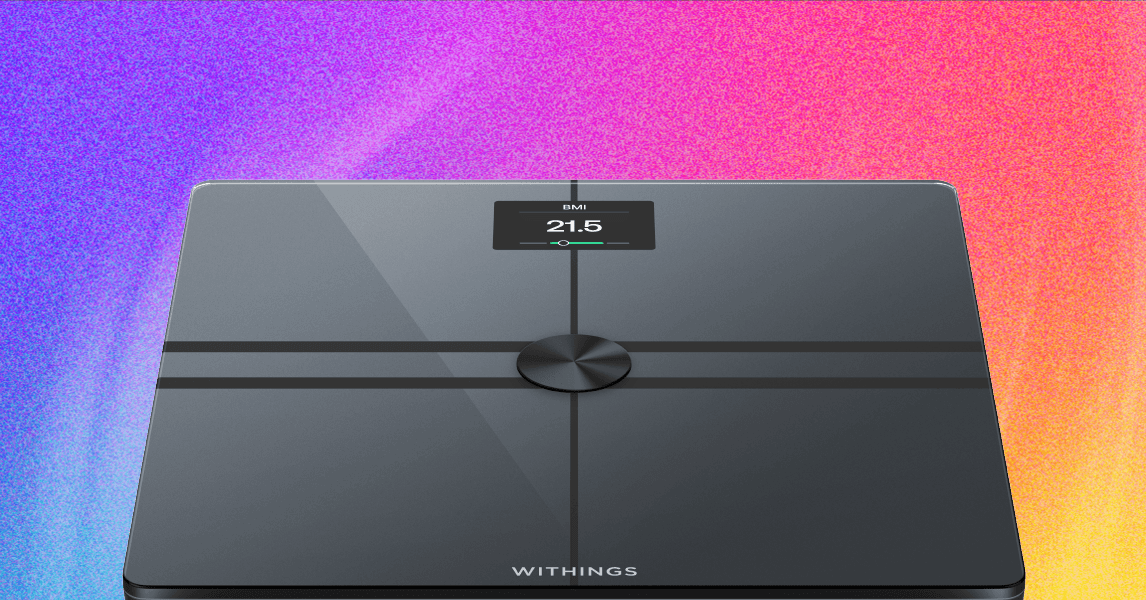
CHRISTOPHER NULL GEAR JAN 1, 2026 7:30 AM The Best Smart Scales If you’re ready to start tracking your weight, BMI, and other health data on your phone, we’ve weighed…
Sources
- 4 Best Smart Scales (2026), Tested and Reviewed
- The 7 Best Smart Scales of 2026, Expert-Approved
- The Best Smart Scales We've Tested for 2025
- We tested 14 models to find the best body composition …
Related posts
- VLC for Android looks dated — but remains the most trusted video player
- 14 Best Fitness Trackers and Activity Trackers, Tested and Reviewed (2025)
- Windows 11 Outperforms Linux on Lenovo ThinkPad P1 Gen 8 with Arrow Lake H