
TL;DR
WIRED’s January 2026 guide evaluates travel cameras across categories, from pocketable point‑and‑shoots to full‑frame bodies, updating picks and prices. Standouts include the Sony RX100 VII, Ricoh GR IV, Sony A7C R, Leica Q3 and Fujifilm X100 series, with notes on video, sensor size and portability.
What happened
WIRED updated its travel‑camera guide in January 2026, adding and revising picks after almost a decade of testing and the author’s years on the road refining a travel kit. The round‑up covers a range of cameras for different priorities: ultra‑compact zooms that fit in a pocket, minimalistic APS‑C shooters aimed at still photographers, small full‑frame options for high resolution, and fixed‑lens premium bodies. Notable entries include the Sony RX100 VII for pocketable zoom versatility, the pocketable Ricoh GR IV as a photographer‑focused APS‑C option, the compact full‑frame Sony A7C R for high‑resolution travel work, the Leica Q3 as a premium fixed‑lens choice, and the Fujifilm X100VI for a compact, film‑simulation–forward experience. The update also notes changes to accessory and alternative recommendations, such as a swap in the 360‑camera pick and a newly mentioned drone alternative.
Why it matters
- Selecting a travel camera involves tradeoffs between size, image quality and flexibility; this guide maps those choices to real models.
- Sensor size and lens selection strongly influence low‑light performance, depth of field and framing options while traveling.
- Video capabilities vary widely across picks, so travelers who shoot both stills and video need to weigh those specs alongside portability.
- Updated recommendations and price notes reflect recent product releases and availability as of January 2026.
Key facts
- Sony RX100 VII: pocketable camera with a 1‑inch sensor, 20.1‑MP capture, Zeiss 24–200mm f/2.8–4.5 zoom, pop‑up EVF and 4K/30 fps video support.
- Ricoh GR IV: described as a photographer’s pocket camera with a redesigned 28mm lens, a 25.7‑MP APS‑C sensor, improved autofocus and dust sealing; video tops out at 1080p.
- Sony A7C R: small full‑frame interchangeable‑lens body with a 61‑MP sensor, about 14.7 EV dynamic range, strong autofocus and support for 4K/60 fps (with a 1.2× crop) and various high‑bit video outputs.
- Leica Q3: full‑frame fixed 28mm f/1.7 camera with a 60‑MP sensor, about 15 stops of dynamic range, and a high‑resolution 5.76‑million‑dot OLED EVF; autofocus mixes phase and contrast detection.
- Fujifilm X100VI: compact fixed‑lens model highlighted for its 40‑MP APS‑C sensor, 35mm‑equivalent lens and film‑simulation options; text also references six stops of in‑body stabilization in relation to the X100V.
- The guide’s author emphasizes that the ‘‘best’’ travel camera depends on what you will actually carry, summing up that the right tool varies by user needs.
- January 2026 update: the Ricoh GR IV was added, the Fujifilm X‑E5 was noted as an alternative, the 360‑camera pick was changed to the GoPro Max 2, and the Hover Air X1 ProMax drone was added as an alternative to the DJI Mini 4.
- WIRED gives the GR IV an 8/10 and a ‘WIRED Recommends’ designation in the article.
What to watch next
- Which lenses photographers choose to pair with the Sony A7C R for travel — the article discusses lens tradeoffs but does not predict future combinations.
- Firmware updates, new lenses or price shifts that could affect these recommendations — not confirmed in the source.
- Availability changes for pocket and premium models as new camera generations are released — not confirmed in the source.
Quick glossary
- APS‑C sensor: A mid‑sized image sensor smaller than full frame; balances image quality and compact camera size.
- Full‑frame sensor: An image sensor roughly the same size as 35mm film, typically offering higher resolution and better low‑light performance.
- EVF (Electronic Viewfinder): A small screen inside the camera that shows a live electronic preview of the exposure and framing.
- IBIS (In‑Body Image Stabilization): A system inside the camera body that stabilizes the sensor to reduce blur from camera shake.
- Dynamic range: The range between the darkest and brightest values a sensor can capture while retaining detail.
Reader FAQ
Which camera in the guide is best for pocketable travel shooting?
The guide highlights the Sony RX100 VII and the Ricoh GR IV as top pocketable options, each favoring different priorities (zoom/video versus pure stills).
Is video capability a major factor in the recommendations?
Yes; the guide contrasts models with strong video specs (RX100 VII, A7C R) against cameras that deprioritize video (Ricoh GR IV).
Did the author list his personal travel kit in this excerpt?
Not confirmed in the source.
Does the guide recommend drones or 360 cameras?
The January 2026 update swaps the 360 pick to the GoPro Max 2 and adds the Hover Air X1 ProMax drone as an alternative to the DJI Mini 4.
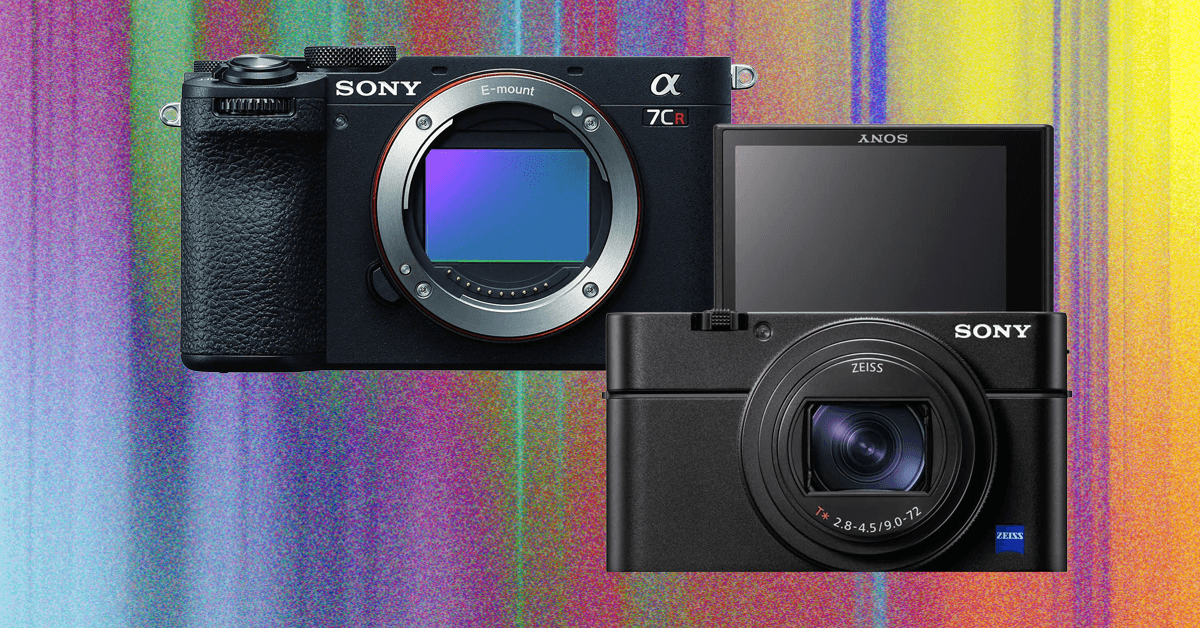
SCOTT GILBERTSON GEAR JAN 12, 2026 7:00 AM The 8 Best Travel Cameras We’ve found the best travel cameras—from point-and-shoot to full-frame—to help you bring home the perfect vacation photos….
Sources
- Best Travel Cameras (2026), Tested and Reviewed
- Best Compact Cameras for Travel Photography (2026)
- The Best Travel Cameras We've Tested for 2026
- 6 Best Digital Cameras to Take on Your Next Trip
Related posts
- iPhone market share edges past Samsung in 2025, not solely due to iPhone 17
- Best Pet Cameras of 2026: Tested Picks for Watching Your Pets
- Hyte X50 PC Case Review — A Rounded Glass Case That Makes PCs Cute