
TL;DR
Kenyan insect farm InsectiPro is rearing millions of black soldier fly larvae on mango waste, turning decay into high-protein biomass used for animal feed and soil amendment. Researchers and companies are exploring wider uses—including human foods—because the larvae grow fast, convert waste efficiently, and may improve animal gut health.
What happened
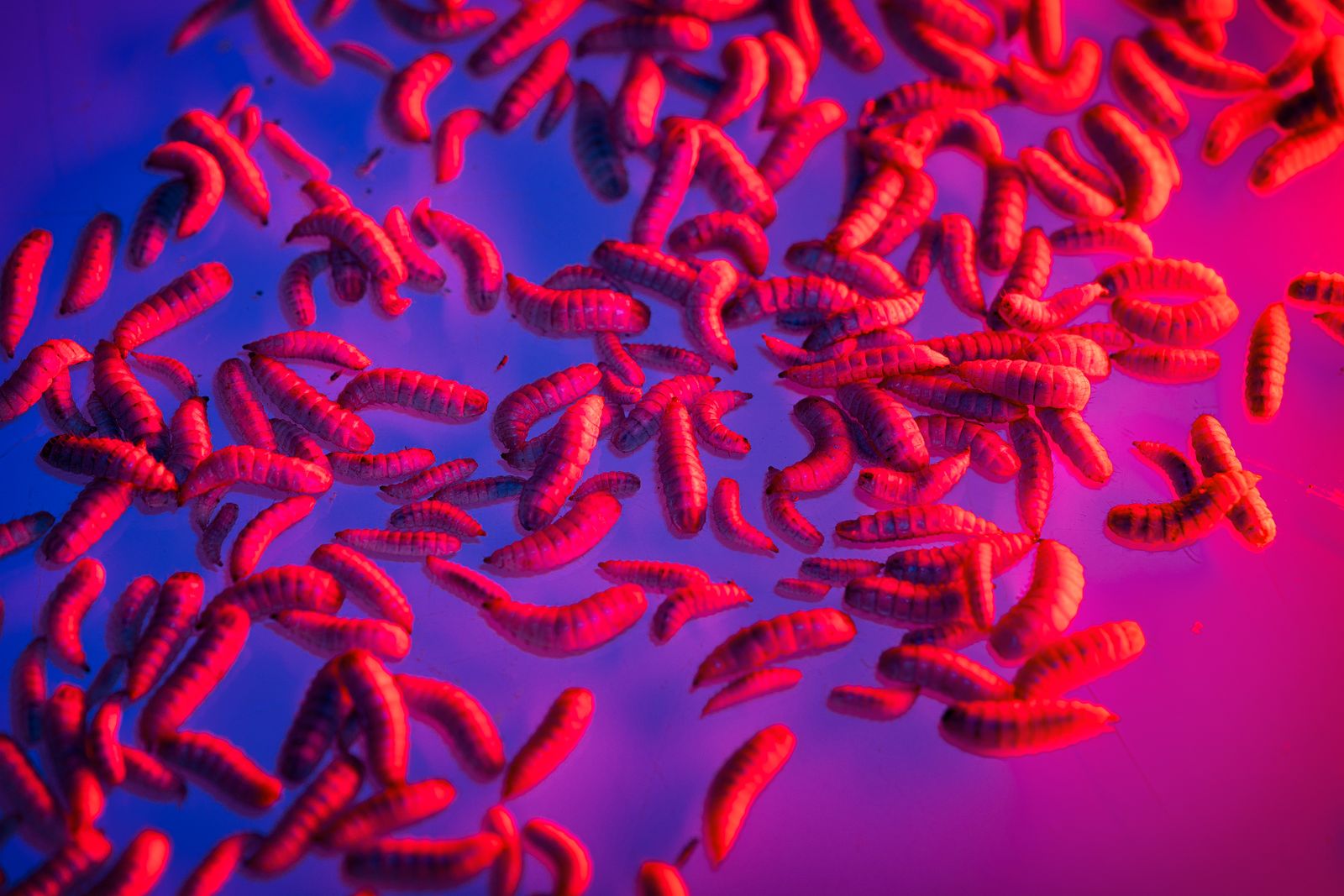
On the outskirts of Nairobi, InsectiPro operates greenhouses housing roughly 128 million black soldier fly larvae fed on mango processing waste. The operation converts about 16.5 tons of crop residue per day into larval biomass; once processed, that biomass is used mainly as protein meal for animal feed. The larvae pack substantial nutrition—up to half their body mass can be protein and as much as a third fat—and they grow rapidly, making them attractive for vertical insect farming. Frass (larval excrement) is collected and bagged as a soil amendment, and an experimental plot reportedly showed a 28% average yield increase. Investors have poured roughly $2 billion into insect farming to date, with more than half of that directed to black soldier fly operations. Researchers report that larvae-fed animals can show shifts in gut bacteria and some health benefits, and companies are experimenting with maggot-derived ingredients for human products such as bars, shakes and ice cream.
Why it matters
- Resource efficiency: larvae can turn low-value food waste into concentrated protein, potentially reducing pressure on land and feed crops.
- Waste reduction: black soldier fly operations can divert tons of crop residues from disposal streams each day.
- Animal health: studies cited in the source indicate larvae-derived feed can alter gut microbiomes and reduce some pathogenic bacteria in livestock.
- Economic circularity: frass can be reused as fertilizer, closing loops between food production and soil amendment—though market uptake is uneven.
- Investment and scaling: significant investor funding has prioritized black soldier fly farming, signaling commercial momentum.
Key facts
- InsectiPro’s Kenyan facility houses about 128 million black soldier fly larvae.
- The larvae at that farm consume roughly 16.5 tons of crop waste per day.
- Larvae composition: up to about 50% of body mass can be protein, and up to about 33% can be fat.
- A female black soldier fly can lay around 600 eggs; adult flies do not eat.
- More than $2 billion has been invested in insect farming to date, with over half supporting black soldier fly operations.
- Comparative feed conversion: chickens may have a feed conversion ratio of three to four; the source notes no published feed conversion ratio for humans.
- Frass from larvae is being processed and sold as a soil amendment; an experimental plot reportedly showed a 28% average yield increase.
- U.S. safety rules require commercial operations to feed larvae pre-consumer food waste to limit pathogen risks.
- Research cited reports that poultry fed black soldier fly larvae meal had lower counts of some harmful bacteria and higher counts of beneficial Lactobacillus.
What to watch next
- Whether insect-derived ingredients make the transition from pet and livestock feed into mainstream human foods—and on what timetable (not confirmed in the source).
- Regulatory developments governing what substrates larvae can be fed and how insect protein can be used in foods and feeds; U.S. rules currently require pre-consumer food waste for commercial operations.
- Market adoption for frass as fertilizer and whether demand scales to absorb current production levels (source notes demand has not yet matched supply).
Quick glossary
- Black soldier fly (Hermetia illucens): A common fly species whose larvae are used in waste conversion and protein production; adults do not feed and live briefly.
- Black soldier fly larvae (BSFL): The maggot stage of the black soldier fly, valued for fast growth and high protein and fat content; used in animal feed and investigated for other products.
- Frass: Organic waste produced by insect rearing (larval excrement and residual substrate) that can be processed and sold as a soil amendment or fertilizer.
- Feed conversion ratio (FCR): A metric expressing the amount of feed required to produce a unit of animal weight; lower numbers indicate greater efficiency.
- Vertical farming: A production method stacking cultivation units in multiple layers to increase output per square foot, often used for insects or plants in controlled environments.
Reader FAQ
Are maggots safe for humans to eat?
Not confirmed in the source. The article describes animal studies and commercial use in feed, and companies exploring human foods, but it does not state safety approvals for human consumption.
What do the larvae eat in commercial operations?
The larvae are commonly fed pre-consumer food waste such as fruit pulp and other organic residues; U.S. rules require pre-consumer substrates for commercial facilities.
Do larvae-based feeds change animal health?
Studies cited in the source report that poultry fed BSFL meal showed lower counts of certain harmful bacteria and higher counts of Lactobacillus, and piglets given BSFL supplements experienced fewer bouts of diarrhea in some studies.
Is insect farming economically supported?
Investment into insect farming totals about $2 billion so far, with more than half of that funding black soldier fly operations, indicating notable financial interest.
By Mary Roach Photographs by Justin Jin and Khadija Farah January/February 2026 Get our newsletter! It’s mango season in Kenya. Evidence of this fact is heaped two stories high outside…
Sources
- Maggots, an Efficient Source of Protein, May Become Next Superfood for Humans
- Black Soldier Fly Larvae as a Novel Protein Feed …
- Black Soldier Fly Larvae Meal as Protein for Atlantic Salmon
- BSFL: Comparing Sustainable Protein Sources
Related posts
- With ICE Taking a Harder Line, Trump No Longer Relies on Proud Boys
- Parents Can Now Set Time Limits for Kids on YouTube Shorts Feed
- Sid Meier’s Civilization VII Comes to Apple Arcade on February 5