
TL;DR
Caltrain replaced its diesel fleet with electric trains in September 2024 and has since reported faster, more frequent, and more reliable service that coincides with a large ridership rebound. Fiscal Year 2025 ridership rose 47% to 9.1 million, and weekend service and customer satisfaction have notably improved.
What happened
Caltrain completed a systemwide switch from diesel to electric rolling stock on its roughly 50-mile main line between San Francisco and San Jose in September 2024. The shift allowed higher-acceleration, higher-capacity seven-car trainsets and timetable changes that increased weekday service by about 20%, introduced regular clock-face departures, and established 30-minute off-peak frequencies. Express runs now cover San Francisco–San Jose in about an hour; local trips take roughly 75 minutes compared with nearly two hours on the prior diesel schedules. Fiscal Year 2025 ridership rose from 6.2 million to 9.1 million (a 47% jump), and Caltrain recorded monthly totals above one million in June, July and August 2025. Weekend departures were more than doubled to 33 trains in each direction, with weekend ridership more than doubling and exceeding pre-pandemic counts. Rider satisfaction scores also climbed, and the system recovers energy through regenerative braking.
Why it matters
- Electrification can materially shorten travel times and increase service frequency, making rail more useful beyond traditional rush hours.
- Higher capacity, faster trains and improved reliability can attract substantial ridership gains, easing road congestion and supporting transit-oriented growth.
- Energy recapture from regenerative braking and quieter operation contribute to environmental and local quality-of-life benefits.
- Stable, local funding mechanisms could lock in service improvements and enable further expansion of regional-rail networks.
Key facts
- Caltrain replaced diesel service with electric trains along its 50-mile main line in September 2024.
- Fiscal Year 2025 ridership reached 9.1 million, a 47% increase from the previous year (6.2 million).
- Caltrain recorded monthly ridership above 1 million in June, July and August 2025 for the first time since the pandemic.
- Weekday service increased by roughly 20%; new trainsets are seven-car configurations versus the previous five-car sets.
- Express runs between San Francisco and San Jose now take about 60 minutes; local trips about 75 minutes, down from nearly two hours before electrification.
- One train in each direction stops at every station at least every half-hour; certain stations see 15–20 minute service intervals.
- Weekend departures were raised to 33 trains in each direction, and weekend ridership more than doubled and exceeded pre-pandemic levels.
- A 2025 rider survey lifted Caltrain’s satisfaction score to 4.41 from 4.02 in 2024, the highest in 27 years of polling.
- Electrified trains return nearly a quarter of braking energy to the grid through regenerative braking technology.
- In December (year not specified in the source excerpt), the American Public Transportation Association named Caltrain the fastest-growing transit agency in the U.S.
What to watch next
- Whether the Bay Area transit funding referendum collects enough signatures to appear on the November ballot — not confirmed in the source.
- If the ballot measure reaches voters and is approved, how the proposed 1% San Francisco / 0.5% surrounding-county sales tax would be allocated and spent — not confirmed in the source.
- Whether Caltrain’s ridership trajectory continues upward toward full pre-pandemic recovery and how service levels evolve with funding changes — not confirmed in the source.
Quick glossary
- Regional rail: Passenger rail service that offers frequent, all-day connections across a metropolitan region, not limited to peak-hour commuter runs.
- Electrification: The process of replacing diesel-powered trains with electric trains and the supporting infrastructure to supply them with electricity.
- Regenerative braking: A system that captures kinetic energy during braking and returns some of it to the electrical grid or on-board systems instead of dissipating it as heat.
- Clock-face scheduling: A timetable structure where services depart at consistent, easy-to-remember intervals (for example, every 15 or 30 minutes at the same minute past the hour).
Reader FAQ
Did Caltrain fully replace its diesel fleet with electric trains?
Yes; the source reports that diesel service on the main line was replaced with electric trains in September 2024.
Has ridership returned to pre-pandemic levels?
Not fully; the source states overall 2025 ridership was about 60% of pre-pandemic levels, though weekend ridership now exceeds pre-pandemic counts.
Are the electrified trains more energy-efficient?
Yes; Caltrain’s electric trains use regenerative braking and reportedly return nearly a quarter of braking energy to the grid.
Will the Bay Area sales tax referendum appear on the ballot and pass?
Not confirmed in the source.
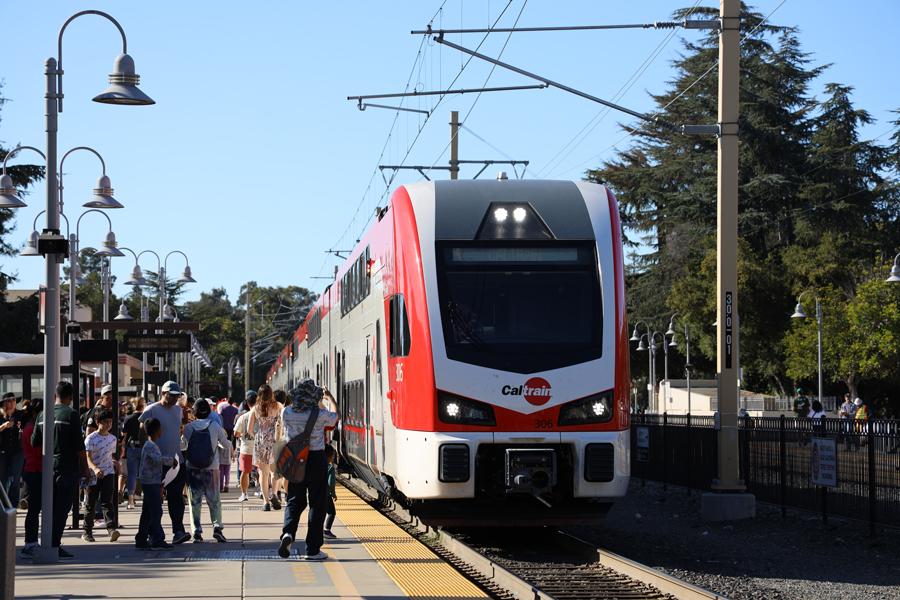
Caltrain Shows Why Every Region Should Be Moving Toward Regional Rail January 09, 2026 • California,electrification,Regional Rail,Southwest Faster speed, increased frequency, and more reliable service are causing ridership growth on Caltrain,…
Sources
Related posts
- Washington National Opera Announces Departure From the Kennedy Center Venue
- London–Calcutta Bus Service (1957–1976): the 50‑day, 10,000‑mile route
- How Markdown Took Over the World of Writing and the Web — A Plain-Text Takeover