
TL;DR
Mouse studies suggest a father’s diet, exercise and stress can alter sperm RNA, which in turn may change gene activity in embryos. A November 2025 Cell Metabolism paper links paternal exercise to sperm microRNAs that target mitochondrial and metabolic genes and reports similar RNA patterns in exercised men’s sperm.
What happened
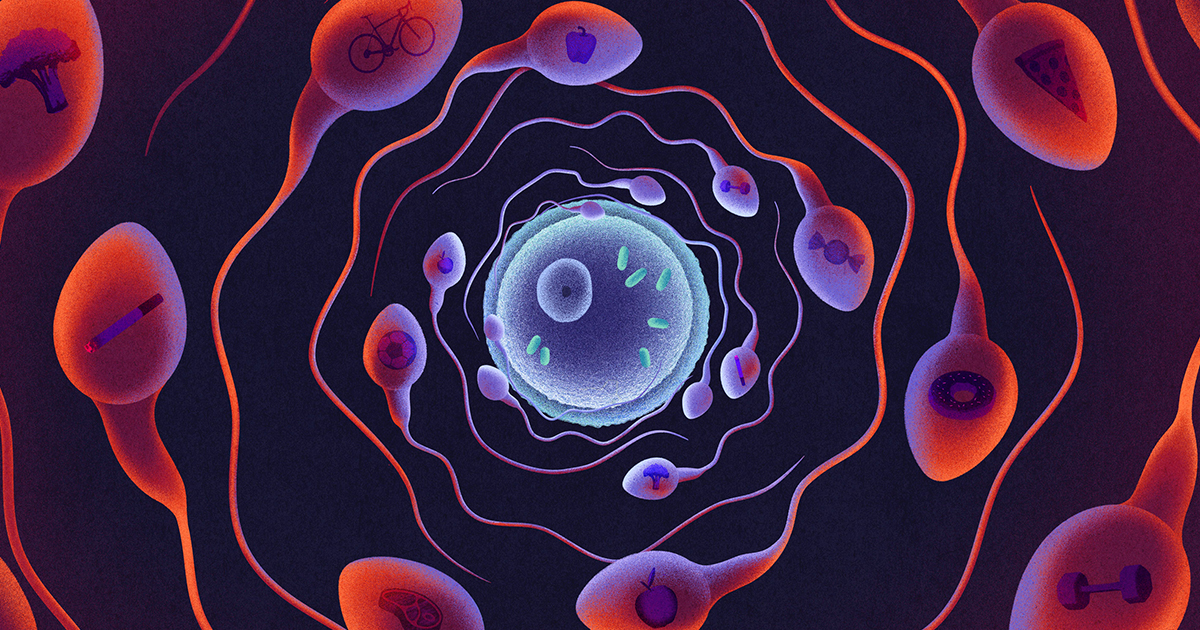
Over nearly two decades, multiple labs have accumulated evidence that sperm carry more than DNA: they can include RNA molecules that reflect a father’s recent physiological state and convey information to the zygote. Experiments in mice show paternal exposures — diets, exercise, stress and nicotine — correlate with altered sperm RNAs and with metabolic or behavioral changes in offspring. A comprehensive November 2025 study published in Cell Metabolism traced how a father mouse’s exercise regimen changed sperm microRNAs that target genes involved in mitochondrial function and metabolic regulation in the embryo. That study also found many of the same RNAs elevated in sperm samples from well-exercised human men. Researchers emphasize the work is largely in rodents, mechanistic steps remain unclear, and investigators are working to map how experience becomes molecular signals in sperm and how those signals influence early embryonic gene regulation.
Why it matters
- Challenges the simple view that sperm only deliver DNA by showing non-DNA molecular cargo may affect development.
- Points to a possible route by which parental environment and behavior could influence offspring physiology across generations.
- Could reshape understanding of heredity and lead researchers to study preconception paternal health more closely.
- Highlights gaps in mechanistic knowledge, prompting targeted molecular investigations that may reveal new developmental controls.
Key facts
- Decades of experiments—mostly in mice—report that paternal diet, exercise, stress and nicotine exposure can alter offspring traits.
- Sperm contain RNA molecules, including microRNAs and long noncoding RNAs, that reflect recent gene activity and can persist long enough to be relevant after fertilization.
- A November 2025 Cell Metabolism study linked paternal exercise in mice to altered sperm microRNAs targeting genes important for mitochondrial function and metabolism in embryos.
- That same study reported many of those exercise-associated RNAs were overexpressed in sperm from well-exercised human men.
- Researchers involved in the field caution that while transmission of RNA-based signals is supported, the exact molecular mechanisms by which sperm RNAs alter embryonic development are not yet understood.
- Eggs supply most of the cytoplasm, organelles and molecular machinery to a zygote, which has made maternal effects the historical focus of developmental studies.
- Epigenetics refers to heritable changes in gene expression that do not alter the underlying DNA sequence, and can involve chemical modifications or regulatory molecules like RNA.
- MicroRNAs, a class of small RNAs that modulate other RNAs, were central to discoveries that won the 2024 Nobel Prize in Physiology or Medicine.
What to watch next
- Ongoing laboratory efforts to trace the molecular pathway: how environmental signals become RNAs in the father and how those RNAs act in the embryo (researchers are actively pursuing this).
- Follow-up human studies to test whether the same RNA patterns observed in exercised men causally influence human embryonic development and offspring health (not confirmed in the source).
- Experiments that identify the specific RNA species and target genes responsible for particular inherited traits and show the mechanistic steps from sperm to embryo (researchers are working on this).
Quick glossary
- Epigenetics: Processes that alter gene activity or expression without changing the DNA sequence, often through chemical marks or regulatory molecules.
- RNA: Ribonucleic acid molecules that serve as temporary copies or regulators of genetic information and can influence protein production and gene regulation.
- MicroRNA: Short RNA molecules that regulate gene expression by binding to and repressing other RNAs, affecting which proteins are made.
- Zygote: A fertilized egg cell formed when sperm and egg merge, initiating embryonic development.
Reader FAQ
Do these findings mean a father’s lifestyle definitively changes his children?
In mice, paternal diet, exercise and stress correlate with altered sperm RNAs and measurable effects in offspring; similar RNA patterns have been observed in exercised men, but direct causal effects in humans are not established in the source.
Are the mechanisms by which sperm RNA affects embryos known?
No — researchers describe the mechanistic link as incomplete or 'hand-wavy' and are actively investigating how sperm RNAs influence early gene regulation.
Is this research mainly in humans or animals?
Most of the evidence comes from mouse models; the November 2025 study also reported parallel RNA findings in human sperm, but broader human causal data are not confirmed in the source.
Should prospective fathers change behavior before conception based on this research?
Not confirmed in the source.
Home How Dad’s Fitness May Be Packaged and Passed Down in Sperm RNA EPIGENETICS How Dad’s Fitness May Be Packaged and Passed Down in Sperm RNA By IVAN AMATO December…
Sources
- Dad's Fitness May Be Packaged and Passed Down in Sperm RNA
- Well-exercised male mice appear to pass fitness to their …
- Sperm microRNAs: Key regulators of the paternal …
- Paternal exercise confers endurance capacity to offspring …
Related posts
- Replacing JavaScript with Just HTML: Using Native HTML/CSS Patterns
- Why Reliability Requires Functional Programming and Algebraic Data Types
- Pfizer passed on early GLP‑1 research in the early 1990s, says Flier