
TL;DR
Uptime Institute warns that electrical generation and grid upgrades are not keeping pace with datacenter growth, making many expansion forecasts optimistic. Short-term fixes like on-site gas turbines and reuse of former crypto-mining sites are constrained, and emissions concerns push operators toward carbon capture options that are mostly immature.
What happened
Uptime Institute’s latest predictions argue that lack of additional grid and generation capacity will become the primary constraint on datacenter growth in 2026 and beyond. The surge in AI-related compute demand since late 2022 has accelerated plans for very large facilities, but the industry cannot add generation or grid upgrades at the same speed. Some regions have already imposed moratoriums or experienced project delays. Short-term strategies — deploying on-site gas turbines or using sites vacated by cryptocurrency miners — have limits: turbine equipment has long lead times and rising prices, and repurposable crypto-era sites are dwindling. Uptime estimates AI-associated datacenter load could reach about 10 GW by the end of 2026, and projects measured in hundreds of megawatts or gigawatts strain local sourcing timelines. At the same time, meeting increased power needs with fossil generation threatens operators’ net-zero commitments, prompting interest in carbon capture solutions that are largely still developing.
Why it matters
- Capacity shortfalls could blunt datacenter growth and make some market forecasts unrealistic.
- Reliance on natural gas to meet near-term demand risks undermining aggressive corporate net-zero pledges.
- Equipment and site supply bottlenecks (e.g., gas turbines, former crypto sites) limit quick scale-up options.
- Carbon capture readiness and available geological storage may shape future siting and contracting decisions.
Key facts
- Uptime Institute forecasts power will be a defining constraint on datacenter growth in 2026 and beyond.
- Estimated AI-related global datacenter power load: about 10 GW by end of 2026.
- Typical build times cited: large datacenter campuses ~3 years; large solar farms ~5 years; wind farms or gas turbine sites ~6 years; nuclear plants at least ~10 years.
- Lead times for gas turbine generator equipment are about three to four years, with prices doubling in some markets.
- Projected increase in server-farm power needs through 2030: roughly 75–125 GW.
- Of six carbon-capture technologies identified, only amine solvent systems are currently commercially available.
- Energy attribute certificates and offsets vary widely in price — the report cites a range of $10 to $1,000 per metric ton.
- Google has a power purchase agreement with a gas-fired generator using CCS in Illinois; Microsoft has indicated openness to purchasing electricity from CCS-equipped sites.
- Sites previously used for cryptocurrency mining in power-rich locations are becoming scarce as a source of quick capacity.
What to watch next
- Whether grid upgrades and new generation projects can be accelerated to match planned datacenter builds.
- Deployment and commercial scaling of carbon-capture technologies beyond amine solvent systems, and availability of permitted geological storage.
- Industry shift toward on-site gas generation with CCS and the frequency of PPAs tied to CCS-equipped plants.
- Not confirmed in the source: exact policy responses or new moratoriums that regulators might impose next.
Quick glossary
- Datacenter: A facility used to house computer systems and related components, such as servers, storage and networking equipment.
- Power purchase agreement (PPA): A contract to buy electricity directly from a generator over a set period, often used by large energy consumers to secure supply.
- Carbon capture and storage (CCS): Technologies that remove carbon dioxide from a power plant’s exhaust and store it, typically underground, to reduce emissions.
- Energy attribute certificate (EAC): A market instrument that represents proof that electricity was generated from a specific renewable or low-carbon source.
Reader FAQ
Will datacenter construction stop because of power shortages?
Not confirmed in the source; the report says power constraints will limit growth and make many forecasts optimistic, but it does not state that construction will stop outright.
Are carbon-capture systems ready to solve emissions from new generation?
Only amine solvent systems are commercially available; other approaches like solid sorbent and chilled ammonia are still in early development, per the report.
Are short-term fixes like on-site gas turbines viable?
They are being used, but turbine supply chains have three-to-four-year waits and rising prices, and these fixes face supply and cost limits.
Can buying offsets or EACs substitute for low-carbon power?
The report notes offsets and EAC prices vary widely ($10–$1,000/ton) and suggests electricity from CCS-equipped generators can be competitive with buying energy plus offsets.
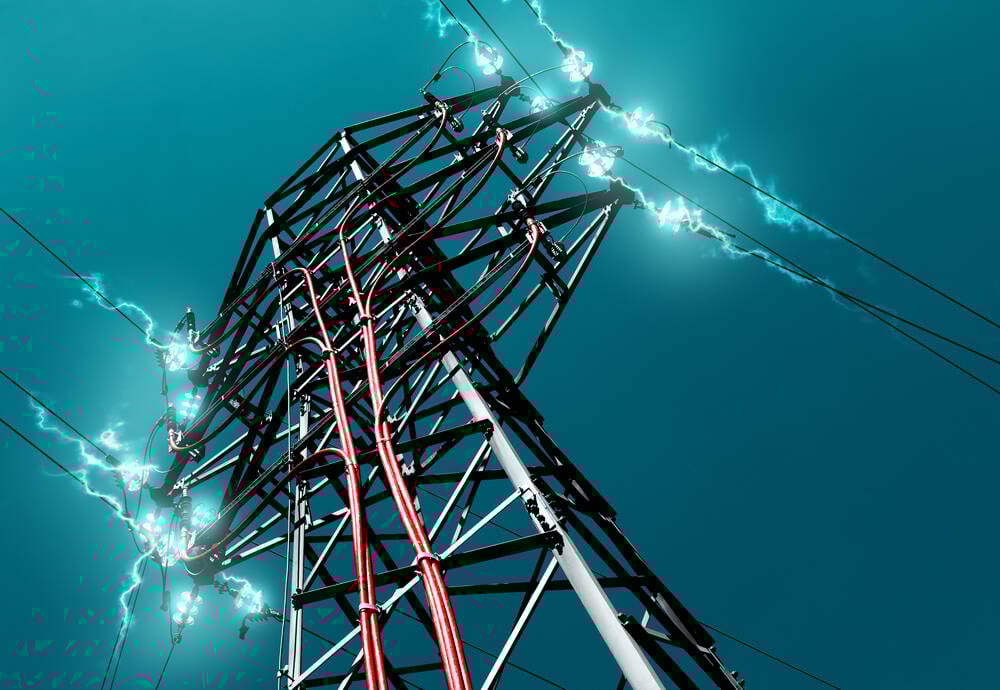
SYSTEMS Ignore rosy datacenter expansion projections – there isn't enough power Grid and generation capacity are not being added fast enough to support the scale of growth many forecasts assume…
Sources
- Ignore rosy datacenter expansion projections – there isn't enough power
- Powering the US Data Center Boom: Why Forecasting Can …
- Rising AI Power Demand Is Driving Electricity Prices …
- 'Phantom' data centres muddy forecasts for US power needs
Related posts
- Why Companies Are Cutting Junior Developers as AI Changes Engineering
- Xoscript: a lightweight server-side scripting language rebooted in 2026
- I built Vector. Now I’m answering the question observability vendors won’t