
TL;DR
Digg has opened its public beta, relaunching as a community-focused site where users can post, comment and upvote. The revived service, led by original founder Kevin Rose and Alexis Ohanian, is experimenting with AI and cryptographic tools to build trust and curb abuse without forcing traditional identity checks.
What happened
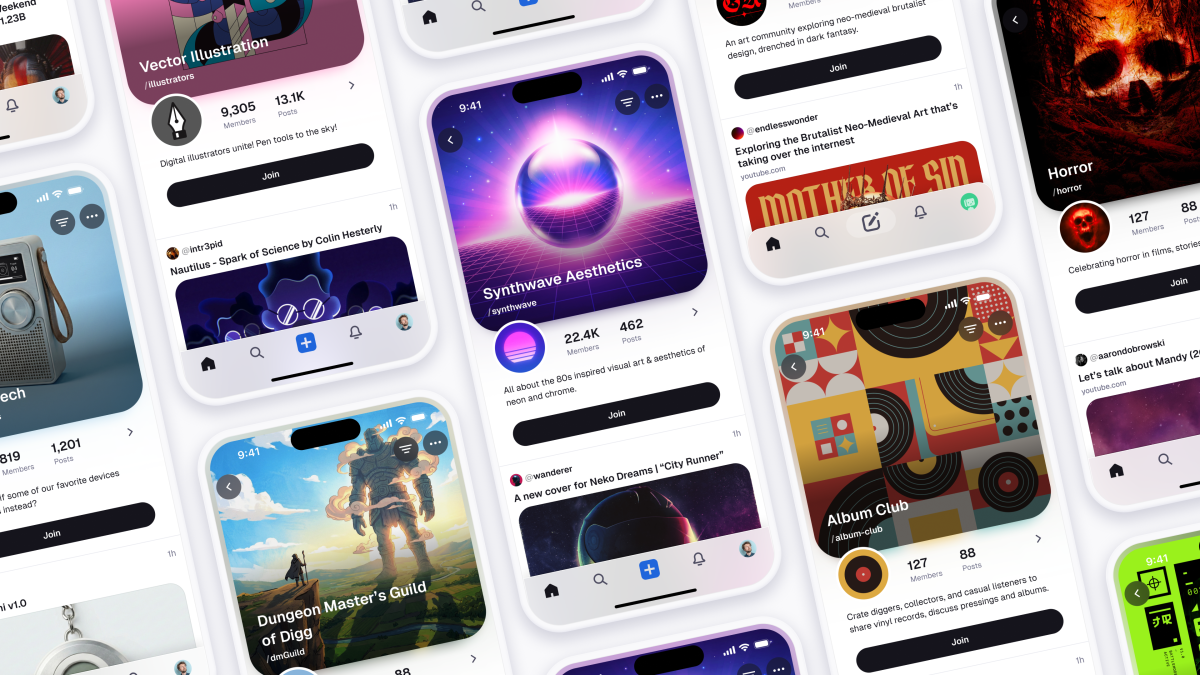
Digg announced the public beta of its relaunched social news site, positioning the product as a community-driven alternative to Reddit. The service — under the leadership of Kevin Rose and Alexis Ohanian and acquired last March via a leveraged buyout involving True Ventures, Seven Seven Six, Rose and Ohanian, and S32 — offers web and mobile apps where people can join communities, post, comment and upvote (branded on the site as “digg”). Before this public roll-out, Digg ran a private beta with roughly 67,000 invite-only users across about 21 general communities. The company has refreshed the interface with a pin-able sidebar and a visually focused main feed, and it will let anyone create nearly any community topic. Moderators will be able to set rules and have their moderation logs published. The team says it will iterate quickly, add customization and integrations over time, and explore cryptographic and device-signal methods to establish trust without imposing full KYC processes.
Why it matters
- Offers a new entrant in the large, community-centric social platform market and a direct alternative to Reddit.
- Attempts to address trust and abuse using cryptographic techniques and device-based signals rather than conventional identity verification.
- Public moderation logs and community control could change expectations for transparency and governance on social platforms.
- Digg’s small-team, rapid-iteration approach signals a product built to evolve with community feedback and moderator needs.
Key facts
- Public beta launched on Jan. 14, 2026 (reported date of the announcement).
- Ownership returned to founders Kevin Rose and Alexis Ohanian after a leveraged buyout last March; transaction participants include True Ventures, Seven Seven Six, and S32.
- Company has not publicly disclosed new funding details.
- Platform mirrors Reddit-style features: communities, posting, commenting, and an upvote mechanic called “digg.”
- Private beta included about 67,000 invited users and roughly 21 generalized communities before opening to the public.
- Users can now create communities on nearly any topic; community managers set rules and moderation logs are publicly visible.
- At launch, each community will have a single manager; additional management and customization tools are planned.
- Digg plans to experiment with zero-knowledge proofs and signals from mobile devices to assemble trust indicators without mandatory KYC.
- The site has added UI changes such as a pin-able sidebar and a visually optimized main feed, and expects to add integrations (example: item-level scores like Letterboxd) over time.
- The team has brought on some Reddit moderators as advisers and says it aims to improve the moderator experience, though compensation or a final model has not been detailed.
What to watch next
- Whether the cryptographic approaches (e.g., zero-knowledge proofs) and device-signal methods meaningfully reduce bot-driven abuse and impersonation.
- How Digg develops and funds a sustainable moderator model and whether moderators will be compensated or otherwise supported — not confirmed in the source.
- User adoption and retention compared with established community platforms like Reddit, and whether Digg’s iterative feature cadence attracts active community builders — not confirmed in the source.
Quick glossary
- Zero-knowledge proof: A cryptographic method that lets one party prove a fact to another without revealing the underlying data used to establish that fact.
- Moderation log: A record of moderator actions (such as removals or bans) that can be published to increase transparency about community governance.
- Public beta: A testing phase in which a product is opened to the general public to gather feedback and identify issues before a full release.
- Upvote (digg): A user interaction that signals approval or support for a post, typically affecting its visibility in feeds.
- KYC (Know Your Customer): Identity verification procedures used by organizations to confirm users’ identities; often used in financial contexts.
Reader FAQ
Is Digg available to the public now?
Yes. Digg moved from invite-only testing to a public beta as reported on Jan. 14, 2026.
Who owns and runs the relaunched Digg?
Kevin Rose and Alexis Ohanian are leading the relaunch; the acquisition last March involved True Ventures, Seven Seven Six, S32, and the two founders.
Has Digg disclosed its new funding?
No. The company has not publicly shared details about its funding in this relaunch.
Will Digg verify users with government ID or standard KYC?
The company says it does not intend to mandate broad KYC. Instead, it plans to trial a mix of trust signals, including cryptographic proofs and device-based signals, to verify membership in specific communities.
The reboot of the early internet online community Digg, a one-time rival to Reddit, is moving forward. The company, which is today back under the ownership of its original founder, Kevin…
Sources
- Digg launches its new Reddit rival to the public
- What will the Digg reboot look like? 9 predictions
- Here's your first look at the rebooted Digg
Related posts
- YouTube adds parental ‘Shorts’ kill switch and adjustable daily viewing limits
- Apple Creative Studio icons are unique — not applied to all standalone apps
- Ask HN: Share your personal website for a community directory