
TL;DR
Donut Lab announced an all‑solid‑state battery it says is ready for OEM production use, with the firm claiming Verge Motorcycles will ship models using the cells in Q1 2026. The company provided performance figures including 400 Wh/kg energy density, very fast full-charge times, long cycle life, and materials and safety claims.
What happened
At CES 2026, Donut Lab presented what it describes as the world’s first all‑solid‑state battery ready for deployment in production vehicles. The company said its Donut Battery is already installed in Verge Motorcycles’ 2026 lineup, with orders available now and first deliveries scheduled for Q1 2026. Donut Lab provided technical figures for the chemistry and performance, including an energy density of 400 Wh/kg, the ability to reach a full charge in around five minutes (with Verge motorcycles quoted as charging in under ten minutes and delivering roughly 60 km of range per minute of charging), and a design life stated at up to 100,000 cycles. Donut Lab emphasized safety advantages tied to the absence of liquid electrolytes, resistance to thermal runaway, and immunity to metallic dendrite formation. The company also outlined partnerships and use cases spanning modular EV platforms, smart trailers, defense platforms and drones, and described the cells as built from abundant materials at a lower cost than lithium‑ion.
Why it matters
- Higher energy density could enable longer ranges or lighter vehicle designs compared with current lithium‑ion packs.
- Much faster full charging would change charging behavior if validated and broadly available.
- Built‑in safety features and the absence of flammable liquid electrolytes could reduce fire risk and improve packaging options.
- Use of abundant, geopolitically secure materials and claimed lower cost could affect supply chains and procurement for OEMs.
- A production‑ready solid‑state cell could accelerate adoption of new vehicle architectures and non‑automotive applications if claims hold up in real world use.
Key facts
- Donut Lab announced the Donut Battery at CES 2026 and said it is ready for OEM vehicle manufacturing.
- The company reports an energy density of 400 Wh/kg for the all‑solid‑state cell.
- Donut Lab claims a full charge can be achieved in about five minutes and supports repeated full discharge safely.
- Design life is stated at up to 100,000 cycles, with minimal capacity fade over the battery’s lifetime.
- Performance testing cited retention of more than 99% capacity at –30°C and at temperatures above 100°C with no ignition or degradation reported.
- Safety attributes highlighted include no flammable liquid electrolytes, no thermal runaway chains, and no metallic dendrites.
- Verge Motorcycles is named as the first production vehicle partner; Verge’s bikes are said to charge in under ten minutes and can gain about 60 km of range per minute of charging, with a long‑range model quoted at 600 km per charge.
- Donut Lab lists additional partners and applications including WATT Electric Vehicles’ modular skateboard platform, a Cova Power smart trailer joint venture, and defense projects with ESOX Group.
- Donut Lab asserts the battery uses abundant, affordable materials and demonstrates a lower cost than lithium‑ion.
What to watch next
- Verification of on‑road performance and real‑world durability as Verge Motorcycles begin deliveries in Q1 2026.
- Scale‑up to major OEM volumes and supply‑chain readiness for broader automotive integration.
- Independent validation of charging speed, cycle life, safety claims and stated cost advantages.
Quick glossary
- All‑solid‑state battery: A battery that uses a solid electrolyte instead of a liquid or gel electrolyte, intended to improve safety and energy density.
- Energy density (Wh/kg): A measure of how much energy a battery stores for its weight; higher values often enable longer range or lighter packs.
- Thermal runaway: A rapid, uncontrolled increase in temperature that can lead to battery fires or explosions in cells with flammable components.
- Dendrite: Metallic filaments that can grow inside batteries during charge cycles and cause short circuits; some solid electrolytes aim to prevent their formation.
Reader FAQ
Is Donut Lab’s solid‑state battery already in production vehicles?
Donut Lab says Verge Motorcycles’ 2026 models are using the battery and that first deliveries are planned for Q1 2026.
How fast can the battery charge?
The company claims the cell can be charged to full in about five minutes and that Verge bikes can charge in under ten minutes; independent verification is not provided in the source.
Does the battery rely on rare or sensitive materials?
According to Donut Lab, the battery is made from abundant, affordable materials and does not rely on rare elements.
Are there independent test results or regulatory approvals cited?
Not confirmed in the source.
What is the expected lifetime of the battery?
Donut Lab reports a design life of up to 100,000 cycles with minimal capacity fade.
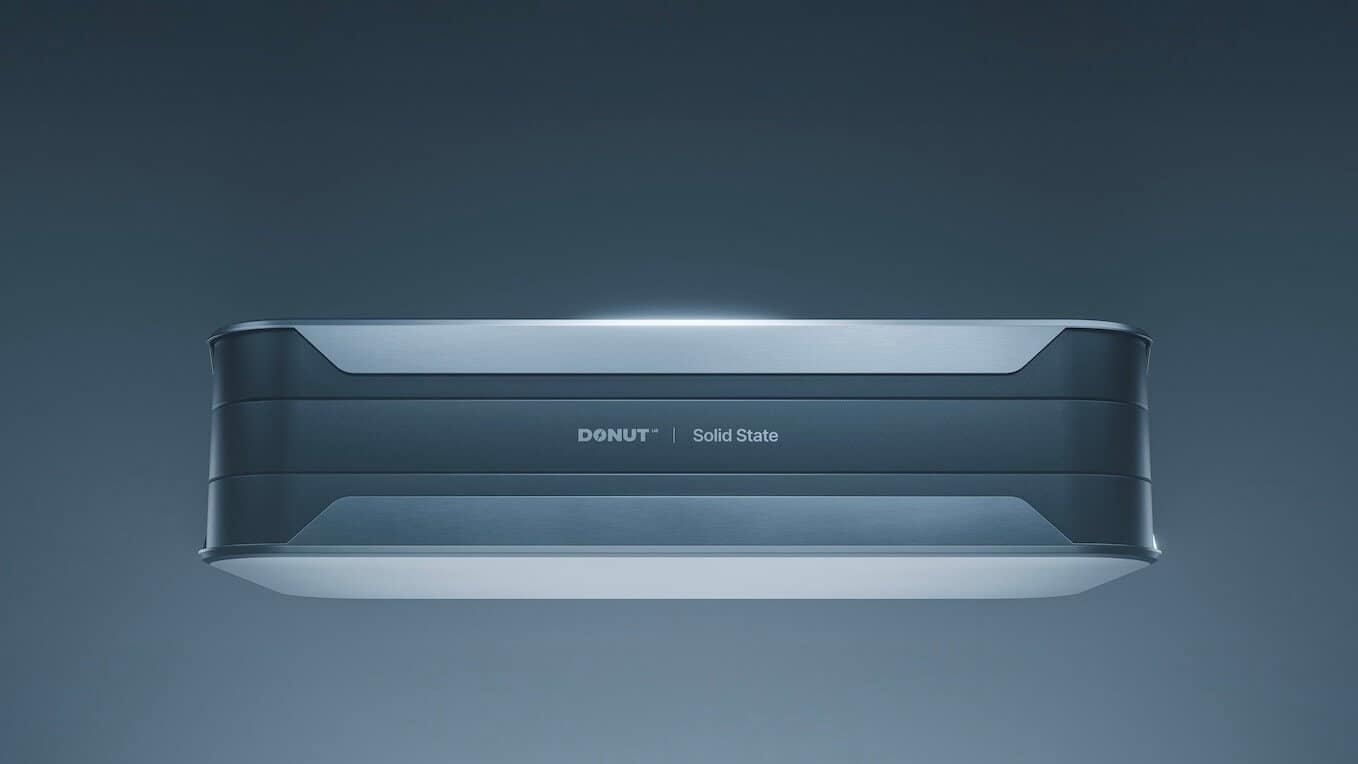
DONUT LAB INTRODUCES THE FUTURE OF ELECTRIFICATION AT CES PRESENTING WORLD’S FIRST ALL-SOLID-STATE BATTERY READY TO POWER UP PRODUCTION VEHICLES NOW 05/01/2026 The Future of Powering Electric Vehicles Is Here…
Sources
- Worlds's first all-solid-state battery ready to power up production vehicles now
- Donut Lab unveils world's first production-ready solid-state …
- Donut Lab Solid State Battery Production Ready
- This Phone-Sized Solid State Battery Is Already Powering …
Related posts
- Nvidia says DGX Spark performance has more than doubled since launch
- Intel launches Panther Lake Core Ultra Series 3, first chips on 18A
- Nvidia CEO Jensen Huang: Vera Rubin AI Chips Now in Full Production