
TL;DR
Apple acquired Dark Sky's team and technology in early 2020 and retired the Dark Sky mobile apps, with the iOS app turned off on January 1, 2023. The app is remembered for a design approach that turned weather data into context-sensitive graphics and hyperlocal forecasts that many users found uniquely useful.
What happened
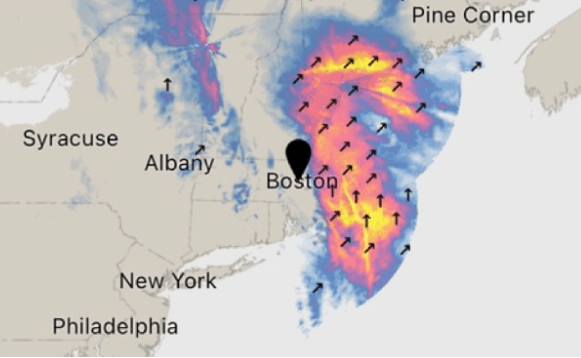
Dark Sky, a weather app praised for its information design, was purchased by Apple in early 2020. Over the following years Apple announced plans to retire the standalone Dark Sky applications—first on Android, then on iOS and web—and in 2022 said Dark Sky’s forecasting technology would be folded into the Apple Weather app with iOS 16. The Dark Sky iOS app was officially sunset on January 1, 2023. In retrospectives, designers highlighted how Dark Sky organized the default view around the next 12 hours at the user’s precise location, offered a Time Machine view for past weather, and emphasized micro-trends and hyperlocal differences between addresses. The app used design choices such as temperature “pills” that preserve magnitude, simplified categories for precipitation instead of overly precise numbers, contextual storm maps, and arrow-based wind indicators. Former users and commenters have said Apple Weather lacks some of Dark Sky’s clarity and specific visual widgets.
Why it matters
- Dark Sky showed how software can turn abundant weather data into immediately actionable, context-aware visuals.
- Its hyperlocal focus demonstrated the value of forecasts tied to precise locations rather than coarse city-level summaries.
- Design choices like reducing false precision and preserving magnitude helped users make real-world decisions quickly.
- The app’s retirement raises questions about whether mainstream platforms will retain specialized, data-dense features valued by power users.
Key facts
- Apple acquired the company behind Dark Sky in early 2020.
- Apple announced integration of Dark Sky forecasting technology into Apple Weather with iOS 16 in 2022.
- The Dark Sky mobile app on iOS was sunset on January 1, 2023.
- Dark Sky’s default view emphasized the next 12 hours at the user’s exact location.
- The app included a Time Machine feature to explore historical weather data.
- Design elements included temperature “pills” that keep magnitude visible rather than rescaling ranges.
- The app replaced precise precipitation numbers with rough categories to avoid a false sense of precision.
- Storm maps used simple color scales and arrows; wind direction was shown with arrows rather than text labels.
- Some former users said Apple Weather does not present information as efficiently and mentioned missing elements like cloud cover and the precipitation graph.
What to watch next
- Whether Apple Weather preserves or adopts specific Dark Sky visual elements (e.g., precipitation graph, temperature pills) — not confirmed in the source.
- If alternative apps emerge that explicitly replicate Dark Sky’s context-sensitive, hyperlocal approach — not confirmed in the source.
- Whether demand from former Dark Sky users drives third-party tools or features that restore the app’s distinctive visualizations — not confirmed in the source.
Quick glossary
- Context-sensitive information graphics: Visual displays that adapt to a user’s situation or location, showing data most relevant to the current context rather than a fixed static chart.
- Hyperlocal forecast: A weather prediction targeted to a very specific address or small area, rather than a broad city- or region-level forecast.
- Precipitation categories: A way of expressing chances or intensity of rain or snow using broad labels (e.g., light, moderate, heavy) instead of precise numeric amounts.
- Time Machine view: An interface feature that lets users explore historical weather data for past dates and times.
- Data visualization: The practice of presenting data through graphical means to make patterns, trends, and context easier to understand.
Reader FAQ
Why did Dark Sky shut down?
Apple purchased Dark Sky in early 2020 and subsequently retired the standalone Dark Sky apps; by January 1, 2023 the iOS app was sunset.
Is Dark Sky still available to use?
The source reports the Dark Sky mobile apps were shut down (Android earlier, and iOS/web later), with the iOS app sunset on January 1, 2023; other availability details are not confirmed in the source.
What design features set Dark Sky apart?
The app emphasized the next 12 hours at a precise location, used magnitude-preserving temperature visuals, simplified precipitation categories, contextual storm maps, and arrow-based wind indicators.
Did users notice differences after integration with Apple Weather?
Some former Dark Sky users and commenters said Apple Weather presents information less efficiently and lacks specific elements such as cloud cover and the Dark Sky precipitation graph.
NIGHTINGALE EDITORS Five Years of the Nightingale Community! In July 2019, a new publication emerged in the world of data visualization. Nightingale set out to fill a void in the…
Sources
- A Eulogy for Dark Sky, a Data Visualization Masterpiece (2023)
- A eulogy for Dark Sky, a data visualization masterpiece
- On Dark Sky and Apple's Weather – Numeric Citizen Blog
Related posts
- 5 Google Photos features that have no good open source app alternative (yet)
- Total Wireless Deals: Get 50% Off Select Plans and Free Device Offers
- OmniOutliner 6 launches with Liquid Glass, Apple Intelligence and more