
TL;DR
Apple acquired Dark Sky in early 2020 and retired the Dark Sky mobile app on January 1, 2023, after announcing plans to fold its forecasting technology into Apple Weather with iOS 16. Designers and users have highlighted Dark Sky’s focused, context-sensitive visual approach — particularly its hyperlocal forecasts, hourly emphasis, and simplified representations of uncertain data.
What happened
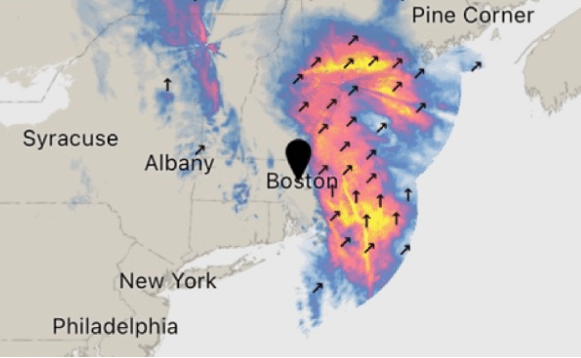
Dark Sky — a weather app widely admired for its information design — was discontinued on January 1, 2023 after Apple acquired the company in early 2020 and later said the underlying forecast technology would be integrated into Apple Weather with iOS 16. In a retrospective, Srini Kadamati argues that Dark Sky stood out because the product team aggressively treated nearly every screen as a context-aware information graphic, emphasizing what users needed to know right now. The app defaulted to a 12-hour, location-specific view, offered a Time Machine for past weather, and let users switch between temperature and precipitation emphasis. Design choices included preserving relative temperature magnitudes in weekly summaries, converting precise precipitation numbers into rough actionable categories, using arrows to convey wind direction, and stressing hyperlocal differences between addresses. The piece also captures user reactions: many former Dark Sky users reported that Apple Weather presents similar data in a less efficient way and misses some features they relied on.
Why it matters
- Demonstrates how context-sensitive visualization can make high-frequency data immediately actionable for everyday decisions.
- Shows the value of hyperlocal forecasting and location-specific presentation for personal planning.
- Highlights design strategies for communicating uncertainty (e.g., replacing precise numbers with categories).
- Points to a gap between data availability and software that effectively contextualizes that data for users.
Key facts
- Apple acquired the company behind Dark Sky in early 2020.
- Apple announced the shutdown of Dark Sky apps (Android first, then iOS and web) and said the forecast tech would be integrated into Apple Weather with iOS 16 in 2022.
- The Dark Sky mobile app was sunset on January 1, 2023.
- Default app experience emphasized the next 12 hours at the user’s precise location.
- Dark Sky included a Time Machine view for exploring past weather data.
- Weekly forecast visuals preserved temperature magnitudes instead of rescaling all days to the same visual range.
- Precipitation forecasts were often expressed as rough categories rather than precise small quantities to reduce false precision.
- Wind direction was shown with arrows rather than text labels to better convey changes over time.
- Author Srini Kadamati documented these design choices and noted that many former users find Apple Weather less efficient as a replacement.
What to watch next
- Whether Apple Weather will fully replicate Dark Sky’s visualization and contextual features — not confirmed in the source.
- Emergence of third-party apps or services aiming to reproduce Dark Sky’s specific hourly precipitation graph and hyperlocal focus — not confirmed in the source.
Quick glossary
- Context-sensitive information graphics: Visual displays that adapt to the user’s situation or environment so the most relevant data is emphasized.
- Hyperlocal forecast: Weather predictions tailored to a very specific location, such as an address or small neighborhood, rather than a whole city.
- Time Machine (in app design): A feature that lets users browse historical data to see past conditions and trends.
- Data-to-pixel mapping: The process of converting numerical values into visual elements (e.g., heights, lengths, colors) in a chart or UI.
Reader FAQ
Is the Dark Sky app still available?
No. The Dark Sky mobile app was sunset on January 1, 2023.
Did Apple keep Dark Sky’s forecasting technology?
Apple stated in 2022 that Dark Sky’s forecast technology would be integrated into Apple Weather with iOS 16.
What design elements made Dark Sky distinctive?
Dark Sky emphasized the next 12 hours at the user’s location, preserved temperature magnitudes in weekly views, used categorical precipitation cues to avoid false precision, and showed wind direction with arrows.
Are there replacements that match Dark Sky’s features?
Not confirmed in the source.
NIGHTINGALE EDITORS Five Years of the Nightingale Community! In July 2019, a new publication emerged in the world of data visualization. Nightingale set out to fill a void in the…
Sources
- Eulogy for Dark Sky, a data visualization masterpiece (2023)
- 'A Eulogy for Dark Sky, a Data Visualization Masterpiece'
- A eulogy for Dark Sky, a data visualization masterpiece
- A Eulogy for Dark Sky, a Data Visualization Masterpiece
Related posts
- My CES 2026 roundup: Apple-adjacent accessories for iPhone and Mac users
- Indie App Spotlight: Zephy makes plane spotting easy with AirTag-style UI
- What to expect from Apple Intelligence and the new Siri this spring