
TL;DR
Federal agents executed a search warrant at Washington Post reporter Hannah Natanson’s Virginia residence and seized multiple electronic devices in connection with an investigation into a government contractor accused of retaining classified materials. Press freedom organizations and the newspaper criticized the action as an unusually aggressive step with implications for source confidentiality.
What happened
Early on Wednesday the FBI, working with the Justice Department, conducted a search of Washington Post reporter Hannah Natanson’s home in Virginia. Agents examined her residence and took a Garmin watch, her phone and two laptop computers, one of which belonged to the Post. The newspaper reported that agents told Natanson she was not the target of the investigation and that she is not accused of wrongdoing. The warrant cited an inquiry into Aurelio Perez-Lugones, a Maryland system administrator holding a top-secret clearance who is alleged to have accessed and removed classified intelligence reports; investigators reportedly recovered documents from his lunchbox and basement, according to an affidavit. Attorney General Pam Bondi posted on X that the action was requested by the department of defense and framed it as a response to unlawful leaks from a Pentagon contractor. Press freedom groups and former editors criticized the search as invasive and warned it could chill reporting and source cooperation.
Why it matters
- Searches of journalists’ homes and devices are rare and raise concerns about the protection of confidential sources.
- Seizure of reporter communications could expose material unrelated to the specific probe, according to press freedom advocates.
- The action tests limits between national security investigations and legal protections for newsgathering.
- Public trust in both law enforcement procedures and press independence may be affected by how openly the government explains the basis for such searches.
Key facts
- The raid took place at Hannah Natanson’s home in Virginia early on Wednesday.
- Items seized included a Garmin watch, Natanson’s phone, and two laptops (one owned by the Washington Post).
- Agents informed Natanson she was not the focus of the probe and is not accused of a crime, the Post said.
- The search was tied to an investigation of Aurelio Perez-Lugones, a Maryland system administrator with top-secret clearance.
- Federal filings reportedly say investigators found classified documents in Perez-Lugones’s lunchbox and basement.
- Attorney General Pam Bondi said on X the raid was conducted at the request of the department of defense.
- Press freedom organizations—Reporters Committee for Freedom of the Press, Knight First Amendment Institute, Freedom of the Press Foundation and PEN America—condemned the search.
- The Washington Post described the move as ‘highly unusual and aggressive’ and said it is monitoring the situation.
What to watch next
- Whether the Justice Department releases the affidavit or other court documents explaining the legal basis for the search.
- Any public explanation from the DOJ or FBI clarifying why the search targeted a journalist’s home.
- Whether investigators access reporter-source communications seized during the search (not confirmed in the source).
- Whether additional legal action or charges will be brought relating to the seized material or the reporter (not confirmed in the source).
Quick glossary
- Search warrant: A court order authorizing law enforcement to search a specific location for evidence of a crime.
- Classified information: Government material that is restricted from public release for reasons of national security.
- Department of Justice (DOJ): The federal agency responsible for enforcement of the law and administration of justice in the United States.
- Source confidentiality: The protection journalists often afford to individuals who provide information on the condition their identities are kept private.
- Top-secret clearance: A security clearance level that permits access to information whose unauthorized disclosure could cause exceptionally grave damage to national security.
Reader FAQ
Was the reporter charged with a crime?
Agents told Natanson she was not the focus of the probe and she is not accused of any wrongdoing, according to the Washington Post.
What prompted the search warrant?
The warrant was connected to an investigation of Aurelio Perez-Lugones, accused of accessing and taking home classified intelligence reports.
Did the Justice Department explain the raid?
Attorney General Pam Bondi posted on X that the action was requested by the department of defense; no further DOJ explanation was provided in the source.
Did investigators allege the contractor leaked the documents to the reporter?
The criminal complaint against Perez-Lugones does not accuse him of leaking classified information, according to the Washington Post.
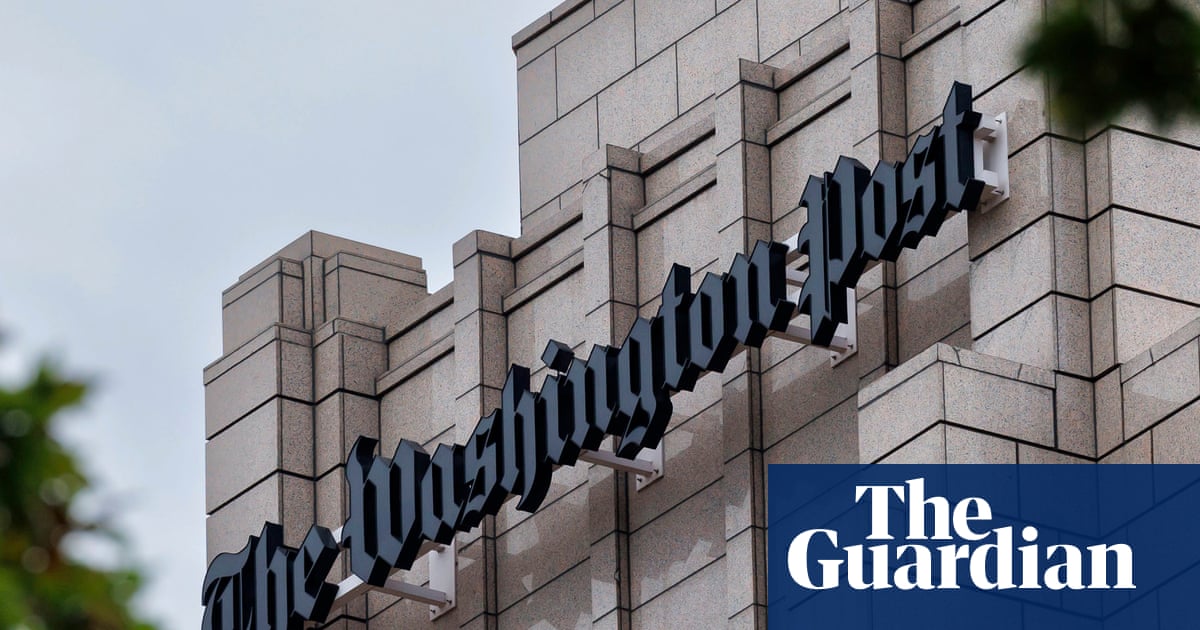
View image in fullscreen The Washington Post’s office in Washington DC on 27 June 2024. Photograph: Bloomberg/Getty Images US news FBI raids home of Washington Post reporter in ‘highly unusual…
Sources
- FBI raids Washington Post reporter's home
- FBI searches Washington Post reporter's home as part of …
- FBI agents search Washington Post reporter's home
- FBI searches home of Washington Post reporter
Related posts
- New UK tool flags pubs most at risk amid planned business rates revaluation
- Dutch court upholds €1.1M fine for Epic over Fortnite targeting children
- NPR checked 114 Walmart items: How prices changed over the past year