
TL;DR
Fujifilm's X-E5 packs a 40‑MP APS‑C X‑Trans sensor and in‑body image stabilization into a compact, rangefinder‑style body that recalls the X100VI but with interchangeable lenses. It delivers excellent JPEG color and image quality but omits weather sealing, has only one SD slot, limited video features, and a controversial film‑simulation dial.
What happened
Fujifilm released the X-E5 toward the end of 2025 as a compact, rangefinder‑style mirrorless camera that amounts to an interchangeable‑lens counterpart to the popular X100VI. The camera uses the 40‑megapixel APS‑C X‑Trans V sensor and Fujifilm's current processor, producing RAW files consistent with Fujifilm's X‑T5 and X‑T50 outputs and strong in‑camera color rendering. The X‑E5 adds in‑body image stabilization (claimed at seven stops), a sturdier single‑piece aluminum top plate, and a new dedicated film simulation dial with three programmable film simulation slots. Physical controls returned to a twin command‑dial layout and an AF mode switch, but there's no dedicated ISO dial. The reviewer noted solid stills performance, good subject recognition for people and animals, usable high‑ISO performance, and some compromises: no weather sealing, one SD card slot, a cramped viewfinder for some users, and video capabilities that trail other recent Fujifilm models.
Why it matters
- Brings a high‑resolution 40MP X‑Trans sensor and IBIS into a smaller, rangefinder‑style interchangeable‑lens body.
- Continues Fujifilm's well‑regarded color science and image quality in a lighter package preferred by street and travel shooters.
- Presents tradeoffs—missing weather sealing, single card slot and limited video—so buyers must weigh portability against professional features.
- Physical control changes (film simulation dial, lack of ISO dial) affect operation and customization, important for workflow and on‑camera control.
Key facts
- Released late 2025 as a compact, rangefinder‑style mirrorless camera.
- 40‑megapixel APS‑C X‑Trans V sensor and Fujifilm's current processor (same sensor family as X‑T5 and X100VI).
- In‑body image stabilization—Fujifilm claims seven stops of compensation.
- New dedicated film simulation dial with three assignable FS positions for custom film recipes.
- No dedicated ISO dial; reviewer used a customizable front control to access ISO.
- Uses W126s battery (shared with X100VI); Fujifilm's claimed shot count is 310 and real‑world use is lower.
- Only one SD card slot and no weather sealing.
- Autofocus is competent with good focus‑point selection and subject recognition for humans, animals (including eyes), birds, cars, motorcycles, bikes, planes and trains; continuous AF and tracking lag behind some competitors.
- Video features are reduced compared with some Fujifilm models—no RAW video option like the X‑T5.
- U.S. pricing at launch: $1,699 body only; $1,899 with the new 23mm f/2.8 pancake lens.
What to watch next
- Whether Fujifilm issues firmware updates to improve continuous AF and subject‑tracking performance (not confirmed in the source).
- Future pricing and availability compared with the X‑T5 and full‑frame alternatives such as the Sony a7C II, which were mentioned as comparisons in the review (not confirmed in the source).
- Any official announcements about further changes to the X‑series lineup or the X‑Pro line status beyond the reviewer's observations (not confirmed in the source).
Quick glossary
- IBIS: In‑body image stabilization: a system that moves the camera sensor to compensate for camera shake and allow slower shutter speeds handheld.
- X‑Trans sensor: A proprietary Fujifilm sensor design that uses a different color filter array than typical Bayer sensors, aimed at reducing moiré and improving image rendering.
- Film simulation: In‑camera color and tonal presets that emulate the look of classic film stocks; Fujifilm allows custom 'recipes' built from these settings.
- RAW video: Uncompressed or lightly compressed video data that preserves maximum sensor information for grading in postproduction; not all cameras offer RAW video capture.
Reader FAQ
Is the X‑E5 weather‑sealed?
No — the review notes the X‑E5 lacks weather sealing.
How many memory card slots does it have?
The camera has a single SD card slot, per the review.
Does it record RAW video?
No — the review says the X‑E5's video options do not include RAW video like the X‑T5.
Is the X‑E5 basically an interchangeable‑lens X100VI?
Yes — the reviewer describes it as essentially an interchangeable‑lens version of the X100VI.
What battery does it use and how long does it last?
It uses the W126s battery (same as the X100VI). Fujifilm's claimed shot count is 310, and the reviewer saw fewer shots in practice.
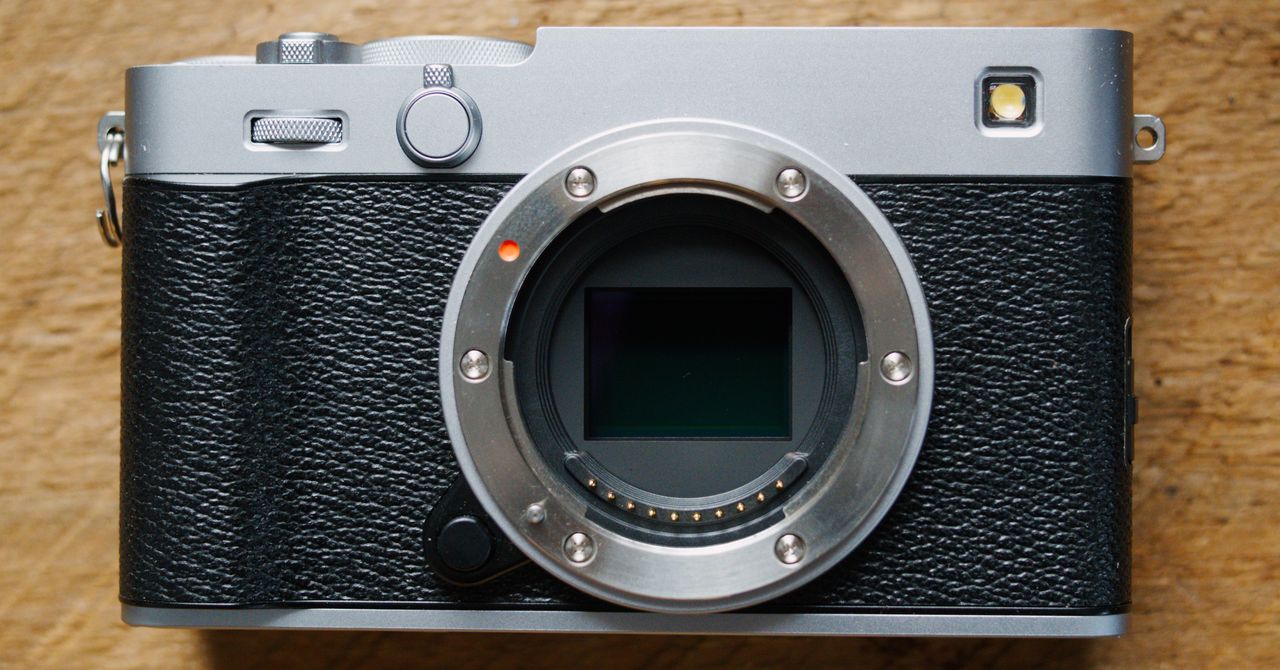
SCOTT GILBERTSON GEAR JAN 10, 2026 7:00 AM Review: Fujifilm X-E5 Mirrorless Camera Did you want the TikTok-popular X100VI, but with an interchangeable lens? The Fujifilm X-E5 has you covered….
Sources
- Fujifilm X-E5 Mirrorless Camera Review: Compact Color Science in a Retro Package
- Fujifilm X-E5 in-depth review
- Considering the Fujifilm X-E5
- The Fujifilm X-E5 Review – Best X100VI Competitor?
Related posts
- WIRED’s 50 Best Movies on Netflix Right Now — Top Picks to Watch Today
- WIRED’s Tested Picks: 12 Best Coffee Subscriptions to Try in 2026
- Shokz OpenFit Pro review: open‑ear earbuds attempt active noise control