
TL;DR
In 2025 wind and solar generated more electricity than coal worldwide for the first time, and plug-in vehicles made up over a quarter of new car sales. Rapid cost declines for wind, solar and batteries drove deployment even as U.S. federal support for renewables weakened.
What happened
Across 2025 the global energy transition reached several notable thresholds. Newly added wind and solar capacity supplied all of the year’s net new demand for electricity, and in the first half of the year renewables produced more power than coal on a global basis — a first. Battery prices, which have fallen about 90 percent over the past decade, amplified the value of wind and solar by improving storage and dispatchability. Electric vehicles also surged: plug-in models accounted for more than one quarter of new-car sales through the first ten months of 2025, and in China EVs represented a majority of new vehicles sold there. These shifts occurred alongside divergent policy patterns: global investment in clean energy rose to new highs, while U.S. federal support was curtailed and domestic investment slipped, a gap the International Energy Agency projects will slow U.S. renewables growth through the decade.
Why it matters
- Wind and solar overtaking coal reflects a major change in the global power mix and cost competitiveness of clean energy.
- Steep battery price declines are turning intermittent resources into more reliable, dispatchable supply, changing grid planning and operations.
- Rapid EV adoption signals a structural shift in the transportation sector that can materially reduce oil demand and transport emissions.
- Policy choices can still shape deployment: global momentum contrasts with weakening U.S. federal support, which may slow domestic clean-energy growth.
Key facts
- For the first time, wind and solar supplied more power than coal worldwide.
- Newly added wind and solar met all of the world’s new power demand in 2025.
- Battery costs have fallen roughly 90 percent over the last decade.
- Plug-in vehicles made up more than 25% of new-car sales in the first ten months of 2025.
- In China, electric vehicles accounted for over half of new-car sales.
- China’s rapid buildout of wind and solar is contributing to a decline in coal-fired generation and to flat or falling emissions over the past 18 months.
- Global investment in clean energy hit new highs while U.S. investment declined amid federal rollbacks of renewable support.
- The IEA projects U.S. renewables will grow about half as fast by the end of the decade compared with 2024 expectations.
- The journal Science named the rapid growth of clean energy its 2025 Breakthrough of the Year.
- A recent report cited in the source puts the world on a trajectory of roughly 2.8°C warming by century’s end, lower than pre-Paris Agreement estimates of 3.7–4.8°C.
What to watch next
- Whether U.S. federal policy changes reverse the recent decline in domestic clean-energy investment — not confirmed in the source.
- How continued battery cost declines affect the ability of solar and wind to provide firm, 'anytime' electricity — not confirmed in the source.
- Whether the pace of EV adoption outside China will match China’s momentum and push global oil demand down — not confirmed in the source.
Quick glossary
- Renewables: Energy sources that are naturally replenished, such as wind, solar, hydro, and geothermal, and that emit little or no greenhouse gases at the point of generation.
- Utility-scale solar: Large solar power installations designed to generate electricity for the grid rather than for individual homes or businesses.
- Onshore wind: Wind turbines installed on land that generate electricity from wind resources.
- Plug-in vehicles (EVs): Automobiles that run on electricity from onboard batteries which are charged from an external power source; includes battery-electric and plug-in hybrid models.
- Dispatchable electricity: Power generation that can be called upon on demand to meet grid needs, either by ramping output up or down or by storing and releasing energy.
Reader FAQ
Did wind and solar really generate more power than coal worldwide in 2025?
Yes. The source reports that wind and solar supplied more power than coal worldwide for the first time, with renewables producing more power than coal in the first half of 2025.
How big was the share of plug-in vehicles in new-car sales?
Plug-in vehicles accounted for more than one quarter of new-car sales in the first ten months of 2025; in China they made up over half of new-car registrations.
Is the U.S. keeping pace with global clean-energy investment?
No. According to the source, U.S. federal support for renewables was rolled back and domestic investment declined while global investment reached new highs.
Are emissions falling globally because of these trends?
Not confirmed in the source for the globe; the source notes that while global emissions continue to climb overall, China’s emissions have been flat or falling for the past year and a half.
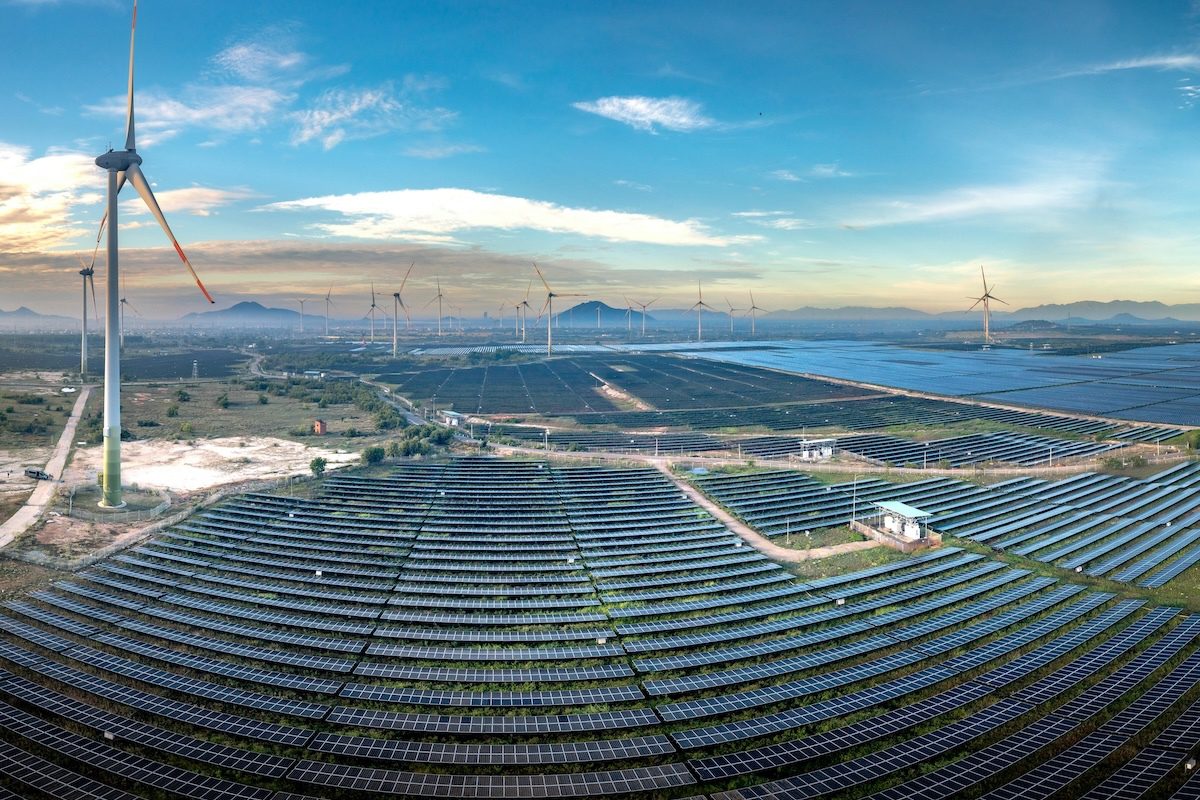
E360 DIGEST JANUARY 5, 2026 A Year of Clean Energy Milestones A solar and wind farm in Phan Rang-Tháp Chàm, Vietnam. PEXELS Even as the Trump administration rolled back support…
Sources
- A year of clean energy milestones
- Global renewable energy generation surpasses coal for …
- Renewable energy outpaces coal for electricity generation …
- Global Electricity Mid-Year Insights 2025 – Ember-energy.org
Related posts
- Author says Google refused DMCA de-indexing and challenged his copyright claim
- How to Reduce Dependence on US Tech Firms: A Practical, Nontechnical Guide
- A Year of Clean Energy Milestones: Wind, Solar and EVs Reshape 2025